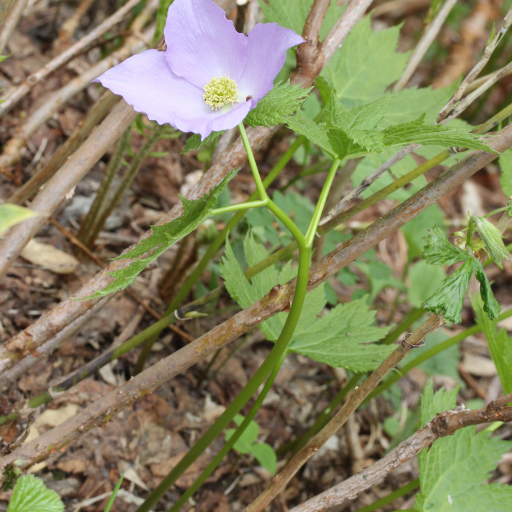
Plant Overview
Known as the Japanese Wood Poppy, this woodland aristocrat is a rare gem from the cool mountain forests of Japan. It is often considered a "Holy Grail" for shade gardeners because of its ethereal, crinkled blossoms and bold, architectural foliage. While it looks like a delicate forest fairy, it is a surprisingly long-lived perennial that brings a touch of ancient mountain mystery to any garden.
🔍 How to Identify
- 🍃 Lush Foliage: The leaves are massive, bright green, and deeply lobed—resembling a maple leaf or a wide, open palm (which is why it's named palmatum).
- 🌸 Satiny Blooms: Each stem carries large, cup-shaped flowers. Interestingly, what look like petals are actually four large, colorful sepals in shades of soft lavender, pale pink, or rare snowy white.
- ☀️ Golden Heart: At the center of each bloom sits a dense, fuzzy cluster of bright yellow stamens that glow against the cool-toned "petals."
🏡 In Your Garden
- 💧 Moisture Consistency: Originating from moist mountain ravines, this plant demands soil that stays consistently damp. It will wilt quickly if the soil dries out, but it requires high organic matter (like leaf mold) to ensure its roots don't sit in stagnant water.
- 🧘 Stability is Key: The Japanese Wood Poppy develops a deep, slow-growing root system. It notoriously hates being moved or divided; transplanting it often results in the plant "sulking" for a year or two without flowers. Pick its "forever home" in a shaded spot and leave it be.
⚠️ Safety & Toxicity
- 🐾 Pet Friendly: Good news for pet owners—this plant is generally considered non-toxic to cats, dogs, and horses.
- 🚫 Not for Eating: While it isn't dangerously poisonous like its cousins in the Buttercup family (like Monkshood), it is not edible. Ingesting any part of the plant may cause mild stomach upset or a bitter taste.
✨ Fun Fact
🧬 A Lonely Branch: Glaucidium palmatum is what botanists call a "monotypic" species. This means it is the only member of its entire genus! It has no close siblings in the plant kingdom, making it a unique evolutionary survivor.

Detailed Care Instructions
To grow Glaucidium palmatum, also known as Japanese wood poppy, you can follow these steps:
- Choose the right location: Glaucidium palmatum prefers partially shaded areas with well-draining soil. It does not tolerate extreme heat or full sun, so choose a spot that provides some protection.
- Prepare the soil: The soil should be rich in organic matter and well-draining. Add compost or well-rotted manure to improve the soil's fertility and drainage.
- Planting: Dig a hole slightly larger than the root ball of the plant. Place the plant in the hole and backfill with soil, gently firming it around the roots. Make sure the crown of the plant (where the stem meets the roots) is level with or slightly above the soil surface.
- Watering: Keep the soil consistently moist but not waterlogged. Glaucidium palmatum prefers evenly moist soil, so monitor the moisture levels regularly and water when needed. Avoid overwatering, as it can lead to root rot.
- Mulching: Apply a layer of organic mulch, such as wood chips or shredded leaves, around the base of the plant. This helps retain moisture, suppress weeds, and maintain a more stable temperature for the roots.
- Maintenance: Remove any weeds that compete for nutrients and water with the plant. If necessary, supplement the soil with organic fertilizer in early spring to promote healthy growth. Glaucidium palmatum doesn't require frequent pruning, but you can trim back any dead or damaged foliage in early spring.
- Protection from extreme temperatures: Provide some protection during cold winters, especially in areas with harsh winter climates. Apply a layer of mulch around the base of the plant and consider covering it with a frost cloth or burlap if temperatures drop significantly. This can help prevent frost damage.
- Propagation: Glaucidium palmatum can be propagated through division. Every few years, dig up the plant and carefully separate the root clumps, ensuring that each division has roots and foliage. Replant the divisions in the desired location, following the previous steps.
Remember that Glaucidium palmatum is a slow-growing plant and may take a couple of years to establish. Be patient and provide the necessary care, and you should see it thrive over time.

Place in a window with dappled sun or a spot in the middle of a room. Or directly in a window facing west or east.

To properly irrigate this particular plant, it is recommended to first check the soil moisture level by inserting a fingertip or a moisture meter into the top 1-2 inches of soil. If the soil feels dry, it is time to water.
When watering, it is important to provide a good soaking to the root system rather than just moistening the soil surface. To accomplish this, watering should be slow and steady, allowing time for the water to penetrate the soil and reach the roots.
It is recommended to use room temperature water and to water the plant thoroughly until water seeps out of the drainage holes at the bottom of the pot. It is important to allow the excess water to drain away to prevent the roots from sitting in standing water, which can lead to root rot.
It is also important to monitor the plant’s water requirements throughout the year and adjust watering frequency and volume accordingly. In hot, dry weather, the plant may require more water, while in cooler, more humid conditions, it may require less.
To fertilize this plant, mix a balanced, slow-release fertilizer into the soil in the early spring when new growth appears. Use a ratio of approximately 10-10-10 or 12-12-12, and follow the manufacturer's instructions for application rates. Water the plant immediately after fertilizing. Repeat the application every 4-6 weeks during the growing season, ceasing fertilizing in the fall. Avoid over-fertilizing, as it can cause damage to the plant.
Glaucidium Palmatum plant prefers acidic and well-draining soil that is rich in humus. The soil should be slightly moist but not waterlogged, and it should have good aeration. A mixture of peat moss, perlite, and organic compost may be used to create the ideal soil composition for this plant. The soil pH should be between 4.5 and 6.0, and the plant should be kept in a location with partial to full shade. Additionally, the soil should not be compacted, and it should be free of weeds and debris.
To propagate this plant, you will need to collect ripe seeds from the parent plant during its growing season. Soak the seeds in water for 24-48 hours to soften the hard outer coating and improve germination rates.
Next, prepare a sterile potting mix that is well-draining and retains moisture. Sow the seeds at a depth of 1/4 inch and cover lightly with soil. Water the soil thoroughly and keep it moist but not waterlogged.
Place the pot in a warm, brightly lit area but out of direct sunlight. Keep the temperature consistently between 68-77°F (20-25°C). Germination can take up to several weeks, but once the seedlings emerge, thin them out to ensure proper spacing and room for growth.
As the seedlings grow, gradually acclimate them to more light and outdoor conditions. After a year or two, they should be mature enough to transplant to their permanent location in well-draining soil and partial shade to full sun.








