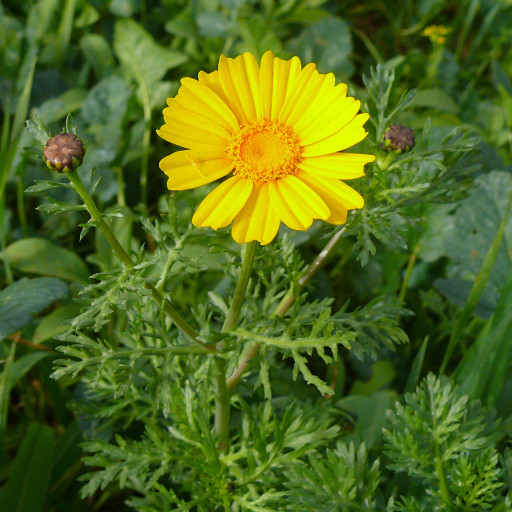
Plant Overview
Often called the Crown Daisy or Shungiku, this vibrant annual is a master of multitasking. Whether it’s gracing a Mediterranean field with sunny yellow-and-white blooms or sizzling in a traditional Asian hot pot, it is a plant that perfectly bridges the gap between the flower bed and the kitchen. Its cheerful appearance belies its hardy nature and its long history as a nutritious vegetable.
🔍 How to Identify
- 🌼 Petal Patterns: It features classic daisy-shaped flower heads that are often "bicolored," with a deep golden-yellow center ringed by creamy white or solid yellow ray florets.
- 🌿 Lacy Foliage: The leaves are its most distinct feature—they are deeply lobed, feathery, and bipinnate, looking somewhat like a cross between a fern and a carrot top.
- 📏 Growth Habit: It stands tall on sturdy, light-green stems, typically reaching 1 to 3 feet in height, creating a bushy, upright silhouette.
🏡 In Your Garden
- 🥗 The Culinary Window: If you are growing this for the kitchen, harvest the young, tender shoots early. Once the plant begins to produce its beautiful flowers, the foliage becomes tough and develops a strong, bitter resinous flavor.
- ☀️ Cool Weather Lover: Unlike many summer daisies, the Crown Daisy thrives in the mild temperatures of spring and autumn. It is prone to "bolting" (rushing to seed) as soon as the summer heat hits, so plant it early to enjoy the best growth.
- 🐝 Pollinator Magnet: In a decorative garden, these blooms are irresistible to hoverflies and bees, making it an excellent companion plant for vegetable patches that need a pollination boost.
⚠️ Safety & Toxicity
- 🐶 Toxic to Pets: Like many members of the Asteraceae family, this plant contains pyrethrins. It is considered toxic to dogs, cats, and horses, potentially causing vomiting, diarrhea, or incoordination if eaten.
- ✋ Skin Irritation: Some people may develop "Compositae dermatitis" after touching the leaves or stems. If you have sensitive skin, it’s best to wear gloves when pruning or harvesting.
- 🍽️ Human Consumption: While the leaves and stems are a delicious staple in many cultures, ensure they are grown in clean soil, as the plant can accumulate nitrates if over-fertilized.
✨ Fun Fact
In Japan, this plant is known as Shungiku, which translates to "Spring Chrysanthemum." It is so beloved for its unique, peppery-herbal aroma that it is a mandatory ingredient in traditional Sukiyaki and Nabe (one-pot) dishes.

Detailed Care Instructions
No, it’s not the same. Crown daisy is a plant in the daisy family. Its former botanical name was Chrysanthemum coronarium, which led to the confusion with chrysanthemum.
Is crown daisy perennial or annual?
It is an edible annual plant grown for its greens and edible flowers.
What is Chinese crown daisy?
Chinese crown daisy is the same as crown daisy, a leaf green in the daisy family. Its Chinese name is called tong ho, and in Chinese cuisine it is used in vegetable stir fries.
Are crown daisy flowers edible?
They are edible flowers but make sure that they have not been sprayed with any pesticides or insecticides that are often applied to ornamentals because those make the flowers unsafe for consumption. Also, correctly identifying edible flowers before eating them is crucial.
| Color | Yellow And White |
| Soil Ph | Acidic To Alkaline (6.1-7.8) |
| Soil Type | Sandy, Clay, Silt, Loam, Well-Drained |
| Bloom Time | Summer |
| Plant Type | Annual |
| Mature Size | 2 To 4 Ft. Tall, 1 To 2 Ft. Wide |
| Native Area | Mediterranean |
| Sun Exposure | Full Sun, Part Shade |
| Hardiness Zones | 5-9 |
To successfully grow Glebionis coronaria (also known as Chrysanthemum coronarium or Crown Daisy), follow these steps:
- Climate: This plant thrives in temperate climates and prefers full sun or light shade. Ensure that the average temperature ranges between 50-75°F (10-24°C).
- Soil: Choose well-draining soil with a pH level between 6.0 and 7.5. The soil should have good fertility and organic matter content. Amend the soil with compost or well-rotted manure before planting.
- Planting: Sow the seeds directly into the garden bed or in containers. Clear any weeds and create small furrows or holes about 1/4 inch deep. Space the plants approximately 12-18 inches apart to allow for proper growth. Cover the seeds lightly with soil.
- Watering: Keep the soil consistently moist but not waterlogged. Water the plants regularly, especially during dry spells or hot weather. However, avoid overwatering to prevent waterlogging the soil, which can lead to root rot.
- Fertilization: Glebionis coronaria plants thrive on moderate fertility. Use a balanced, slow-release fertilizer or a diluted liquid fertilizer once a month throughout the growing season. Be sure to follow the package instructions for proper application rates.
- Mulching: Apply a layer of organic mulch around the plants to retain soil moisture, suppress weed growth, and provide insulation during extreme temperatures.
- Pruning: Pinch back the growing tips of the plants when they reach 6-8 inches in height. This encourages bushier growth and prevents them from becoming leggy. Deadhead the spent flowers to promote continuous blooming.
- Pest and disease control: Monitor the plants for common pests like aphids, slugs, and snails. Treat any infestations promptly using organic insecticides or other pest control methods. Proper plant spacing and good air circulation can help prevent diseases like powdery mildew.
- Harvesting: Harvest the young leaves and tender stems when they reach about 6-8 inches in height. These tender greens are edible and commonly used in salads or stir-fries.
- Propagation: If you want to propagate more plants, collect the seeds once the flowers have dried. Store the seeds in a cool, dry place until the next planting season. Alternatively, you can also divide mature plants in early spring or late fall.
By following these guidelines, you can successfully grow Glebionis coronaria plants and enjoy their beautiful flowers and nutritious leaves.

Place in a bright room that is sun drenched almost all day. Or directly in a south-facing window.

To properly water the Glebionis Coronaria plant, it is essential to ensure that the soil is moist but not waterlogged. This can be achieved by watering the plant deeply but infrequently, allowing the soil to dry out slightly between waterings. When watering, it is important to avoid getting water on the leaves, as this can promote fungal growth and disease. Instead, water at the base of the plant, using a watering can or hose with a gentle spray head. Ideally, the water should be at room temperature or slightly cool, rather than cold or hot. Overall, taking care to water the Glebionis Coronaria plant correctly will help it to thrive and maintain good health.
To properly fertilize this plant, apply a balanced fertilizer (such as 10-10-10) in early spring before new growth begins. You can also apply a slow-release fertilizer once a month during the growing season. Be sure to follow package instructions for proper dosage and application method. Avoid fertilizing when the soil is dry, and water the plant after fertilizing to allow the nutrients to soak in and prevent burning.
The soil suitable for the Glebionis Coronaria plant should be well-drained and moist, with a pH level between 6.0 to 7.5. The soil should also be rich in organic matter and should not be too compacted, as the plant's roots need to breathe. Sandy loam soil is an ideal option for this plant as it provides good drainage, air circulation, and nutrient availability. Also, it is suggested to prepare the soil by adding compost or well-rotted manure before planting to improve the soil quality. Avoid using heavy clay or alkaline soil as it can lead to root rot and plant damage.
To propagate this plant, you will need to take softwood cuttings during the spring or summer months. Choose healthy stems that are approximately 4 to 6 inches long and make a clean cut with a sharp pair of scissors or pruning shears.
Remove the leaves from the bottom 2 inches of the stem, leaving just a few leaves at the top. Dip the cut end of the stem into rooting hormone powder, which will help it develop roots more quickly.
Plant the cutting in a well-draining soil mixture and cover it with a plastic bag to create a mini-greenhouse effect. Keep the soil moist and place the cutting in a warm, bright spot, but out of direct sunlight.
After a few weeks, check the cutting for signs of new growth and roots. Once it has developed roots and new growth, you can remove the plastic bag and provide it with regular care like you would with a mature plant.








