Plant Overview
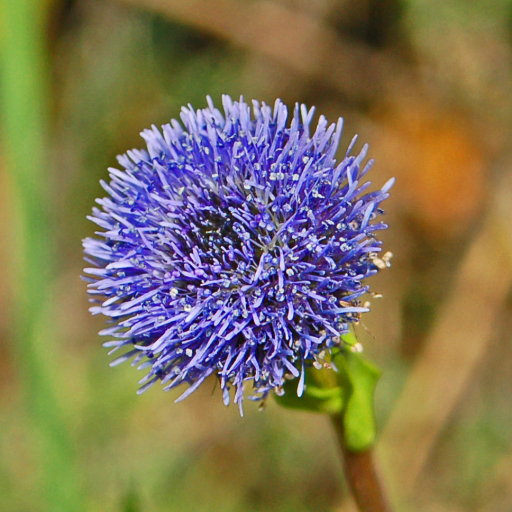
Often called the Common Globularia or the Blue Button, this hardy perennial looks like it stepped right out of a miniature fairytale forest. Native to the sun-drenched, rocky slopes of Europe, it forms low-growing mats of green that suddenly sprout perfectly spherical, "fluffy" blue flower heads in late spring. It is the quintessential choice for gardeners who want to add a touch of geometric whimsy to their landscape.
🔍 How to Identify
- 💙 The "Pom-Pom" Flower: The standout feature is the dense, globular cluster of tiny blue to violet flowers. These spherical heads appear almost fuzzy from a distance.
- 🥄 Spoon-Shaped Foliage: The base of the plant consists of a tight "rosette" of dark green, leathery leaves that are rounded or notched at the tips, resembling a small spoon.
- 📏 Sturdy Stalks: The flower heads sit atop unbranched, mostly leafless stems that rise about 10–25 cm above the ground, making the blooms look like they are floating.
🏡 In Your Garden
- 🪨 The Limestone Lover: This plant is a "calciphile," meaning it thrives in alkaline soils rich in lime. If your garden is rocky or has poor, thin soil where other plants struggle, the Globularia will feel right at home.
- ☀️ Drought Warrior: Because it evolved on dry, windswept hillsides, it has a deep taproot that hates being moved. Once planted in a sunny spot, leave it alone—it prefers "neglect" and sharp drainage over frequent watering and pampering.
⚠️ Safety & Toxicity
- 🟢 General Safety: Globularia bisnagarica is generally considered non-toxic to humans and common household pets.
- 👐 Handle with Care: While not poisonous, the leathery leaves can be tough. If you have very sensitive skin, it is always a good practice to wear gloves when pruning to avoid any minor mechanical irritation.
✨ Fun Fact
The name Globularia comes directly from the Latin globulus, meaning "small sphere." Historically, in some parts of Europe, these plants were used in traditional folk medicine as a "purgative," though modern gardeners value them much more for their unique "blue button" beauty than their medicinal history!

Detailed Care Instructions
To grow Globularia bisnagarica plants, you can follow these steps:
- Obtain seeds or young plants: You can purchase seeds online or at a local garden center. Alternatively, you can propagate the plant from cuttings or divisions.
- Choose a suitable location: Globularia bisnagarica prefer full sun to partial shade. Select a spot in your garden that receives at least 6-8 hours of direct sunlight per day.
- Prepare the soil: The plant thrives in well-draining soil. Loosen the soil and amend it with organic matter such as compost or well-rotted manure to improve its fertility and drainage.
- Sow seeds or plant seedlings: If using seeds, scatter them over the prepared soil surface and lightly press them into the soil. Keep the soil slightly moist until the seeds germinate. If using seedlings, dig holes as wide and deep as the plant's root ball and gently place the seedlings in the holes.
- Water regularly: Globularia bisnagarica plants prefer consistently moist soil, but not waterlogged. Water the plants regularly, especially during dry periods. Aim to keep the soil evenly moist, but not saturated.
- Mulch the soil: Apply a layer of organic mulch such as wood chips or straw around the plants to help retain moisture, suppress weed growth, and maintain a more even soil temperature.
- Prune if necessary: Globularia bisnagarica plants generally don't require extensive pruning. However, you can remove dead or damaged leaves and flowers to promote new growth and maintain a tidy appearance.
- Fertilize sparingly: Globularia bisnagarica plants don't have high nutrient requirements. If necessary, apply a balanced, slow-release fertilizer in early spring, following the package instructions.
- Protect from extreme weather: These plants are generally hardy but may need protection from extreme cold or heat. Cover them with a frost cloth during freezing temperatures and provide some shade during hot summer days if needed.
- Monitor for pests and diseases: Keep an eye out for any signs of pests or diseases, such as aphids or powdery mildew. If identified, treat the plant accordingly with organic or chemical pest control methods.
By following these steps, you should be able to successfully grow and cultivate Globularia bisnagarica plants in your garden.

Place in a bright room that is sun drenched almost all day. Or directly in a south-facing window.

Globularia Bisnagarica is a type of plant that requires specific care when it comes to watering. To ensure the health and well-being of this plant, there are several things you need to keep in mind.
Firstly, it's important to note the type of soil that the plant is growing in. Ideally, the soil should be well-draining, so that excess water can easily drain away from the roots. If the soil is clay-based or retains too much water, it can lead to root rot and other problems.
When watering the plant, you should aim to keep the soil evenly moist, without letting it become waterlogged. This can be achieved by watering deeply, but infrequently, rather than giving the plant a small amount of water every day.
It's also important to water the plant at the base, rather than from above. This helps to prevent the foliage from becoming wet, which can encourage fungal growth and other problems.
In order to determine when the plant needs watering, you should check the soil regularly. Stick your finger into the soil up to the second knuckle - if it feels dry at this depth, it's time to water the plant.
Overall, proper watering is essential for the health and vitality of your Globularia Bisnagarica plant, and by following these tips, you can ensure that it thrives.
To fertilize this plant, first make sure the soil is moist. Apply a balanced fertilizer with equal parts nitrogen, phosphorus, and potassium. Use a slow-release fertilizer or apply a liquid fertilizer every 4-6 weeks during the growing season. Avoid over-fertilizing as this can damage the plant's roots.
Globularia bisnagarica is a plant that prefers well-draining soil with a neutral to slightly alkaline pH. The soil should be a mixture of coarse sand, loam, and peat moss. A soil blend that is high in organic material will help retain moisture and provide the plant with the necessary nutrients. It is important to avoid soil that is waterlogged or has high salts or organic matter content. The soil should be slightly moist but not too wet, as the plant may be prone to root rot if overwatered. Adding perlite or vermiculite to the soil mix can improve drainage and aeration. The best planting location for this plant is in full sun to light shade.
Globularia Bisnagarica is a perennial plant that can be propagated through seed germination or stem cuttings.
To propagate through seed germination, collect seeds from the mature plant when they are fully ripened. Sow the seeds in a potting mix that drains well and place the pot in a bright, warm area. Keep the soil consistently moist and ensure the pot is covered to maintain humidity. Seed germination can take up to 4-6 weeks, and once seedlings are large enough, they can be transplanted into individual pots.
To propagate through stem cuttings, take a stem from the mature plant that is approximately 4 inches long and remove all the leaves except for the top two sets. Dip the cut end into rooting hormone and plant it in a potting mix that drains well. Place the pot in a bright, warm area and keep the soil consistently moist. The cutting should develop roots in 4-6 weeks and can then be transplanted into individual pots.








