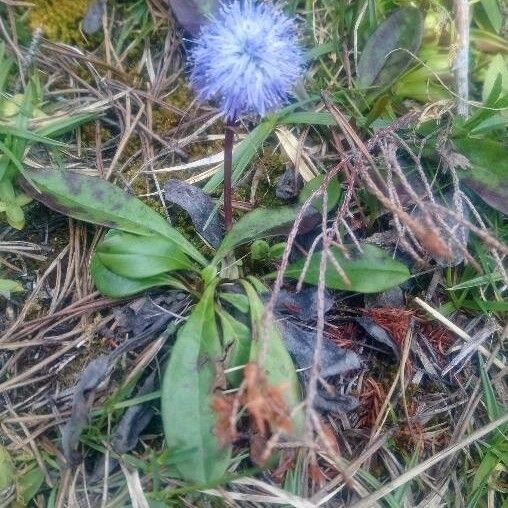
Plant Overview
Often called the Naked-stalked Globe Daisy, this charming alpine perennial looks like something plucked from a botanical fairytale. It forms low, evergreen carpets of leathery foliage that suddenly erupt with vibrant blue "pom-poms" swaying on slender, leafless stems. Native to the limestone crags of the Alps and Pyrenees, it is a master of survival in harsh, rocky terrains where other plants might struggle.
🔍 How to Identify
- 🔵 The "Pom-Poms": Dense, spherical flower heads in shades of lavender-blue or deep violet, appearing in late spring to early summer.
- 🌱 Naked Stems: The flowering stalks are notably "naked" or leafless (hence the name nudicaulis), rising 6–10 inches above the ground.
- 🍃 Spoon-Shaped Leaves: Dark green, leathery, and evergreen leaves arranged in a tidy basal rosette that stays close to the earth.
🏡 In Your Garden
- ⛰️ Rock Garden Royalty: Because it naturally grows in mountain crevices, it craves "sharp" drainage. It will thrive in gravelly soil or rock gardens where water never sits around the roots.
- ☀️ Cool Sun: While it loves bright light, it prefers "cool" sun. In hotter climates, a layer of stone mulch helps keep its root system cool, mimicking the temperature-regulating mountain stones of its home.
⚠️ Safety & Toxicity
- ✅ Low Risk: Globularia nudicaulis is generally considered non-toxic to humans and is not known for causing skin irritation.
- 🐾 Pet Caution: While not listed as a major poisonous plant, it contains certain compounds (iridoid glucosides) that may cause mild stomach upset if a curious pet decides to graze on it.
✨ Fun Fact
The name Globularia comes from the Latin word for "small ball," a perfect description of its blossoms. Historically, some species in this genus were used in traditional European folk medicine as a "purge," though modern gardeners strictly appreciate them for their ornamental beauty!

Detailed Care Instructions
| Humidity | Normal |
| Lighting | Full Sun |
| Difficulty | Medium |
| Hardiness Zones | 5 - 7 |
To grow a Globularia Nudicaulis plant, also known as the Naked-Stalked Globe Daisy, you can follow the steps below:
- Climate and Location: Ensure that your climate is suitable for growing this plant. Globularia Nudicaulis prefers a cool, mountainous environment, so it might not thrive in warmer regions. Provide a location with well-drained soil and partial shade.
- Propagation: You can start with seeds or purchase young plants from a nursery. If starting from seeds, sow them in a seed tray or small pots in the early spring. Cover the seeds lightly with soil and keep them moist. Germination can take several weeks.
- Transplanting: Once the seedlings have grown a few sets of true leaves and are large enough to handle, transplant them into individual pots or directly into your garden bed. Make sure to space them at least 6 inches apart to give them room to spread.
- Soil: The soil should be well-draining and slightly acidic. If your soil is heavy or clayey, you can improve its drainage by adding some organic matter like compost or peat moss.
- Watering: It is important to keep the soil consistently moist, but not waterlogged. Water the plants deeply when the top layer of soil feels dry, and avoid overhead watering to prevent waterlogging and fungal diseases.
- Mulching: Apply a layer of organic mulch around the base of the plants to help retain moisture, control weeds, and regulate soil temperature. This is particularly important during the hot summer months.
- Fertilization: Globularia Nudicaulis does not usually require heavy fertilization. A balanced, slow-release fertilizer applied in spring should be sufficient. Follow the instructions provided on the fertilizer packaging for application rates.
- Pruning and Maintenance: This plant is generally low-maintenance. Remove any dead or damaged foliage to maintain its appearance. After the first bloom, you can deadhead the spent flowers to encourage additional blooms.
- Winter Care: In colder climates, provide protection for the plants during winter. Apply a layer of mulch to insulate the roots and protect them from freezing temperatures.
Remember to observe and maintain good gardening practices, such as regular monitoring for pests and diseases, and adapt the care instructions above to suit your specific climate and growing conditions.

Place in a bright room that is sun drenched almost all day. Or directly in a south-facing window.

Globularia Nudicaulis plant requires adequate watering to thrive properly. To water this plant effectively, first, you need to ensure that the soil is dry before watering. Then, you should water slowly and deeply, making sure that the water is penetrating down to the roots. It is recommended to use room temperature water. Do not allow the plant to sit in water, as this can lead to over-watering and cause root rot. It is best to water this plant in the mornings or evenings, avoiding the hottest part of the day, especially during summer. If the plant is in a container, make sure the drainage holes are not blocked to allow excess water to drain out. Regularly monitoring the moisture level of the soil and adjusting the watering schedule accordingly can help ensure the plant gets the right amount of water at the right time.
To ensure proper growth and nutrition for this plant, it is important to fertilize it regularly with a balanced fertilizer during the growing season. This can be done every 4-6 weeks. When applying the fertilizer, make sure to follow the manufacturer's instructions and avoid getting any on the leaves or stems. Additionally, this plant prefers slightly acidic soil, so consider adding a slow-release fertilizer that is formulated for acidic-loving plants. Finally, be sure to water the plant thoroughly after fertilizing to help the nutrients reach the roots.
Globularia Nudicaulis plant prefers a well-drained soil with good fertility and a pH range of 6.0 to 7.5. The soil should be slightly loamy and rich in organic matter. The plant can tolerate some level of acidity in the soil but it should not be too much. The ideal soil for Globularia Nudicaulis plant should be able to retain moisture but not too much that it promotes waterlogging. The soil should be able to allow air to circulate around the plant roots. It is recommended to use a specially formulated soil mix that is designed for alpine plants as Globularia Nudicaulis is a high-altitude plant and it requires a specific soil type to thrive. Such soil mixes usually contain a blend of peat moss, sand, perlite, and vermiculite to create a light, porous, and well-draining soil.
To propagate this plant, you would first need to take softwood or semi-hardwood cuttings from a healthy mother plant. Use a sharp, sterilized knife to make a diagonal cut just below a node on a stem that is 4-6 inches long. Remove any leaves from the bottom half of the cutting.
Dip the cut end in rooting hormone and place it in a pot filled with a well-draining mix of perlite and peat moss. Water the cutting and cover the pot with a clear plastic bag to create a greenhouse effect.
Put the pot in indirect light and keep the soil moist but not waterlogged. In about 4-6 weeks, the cutting should start to root. Once new growth appears, remove the plastic bag and gradually acclimate the new plant to normal conditions.
When the plant has matured enough, repot into a larger container or outside garden bed with well-draining soil.








