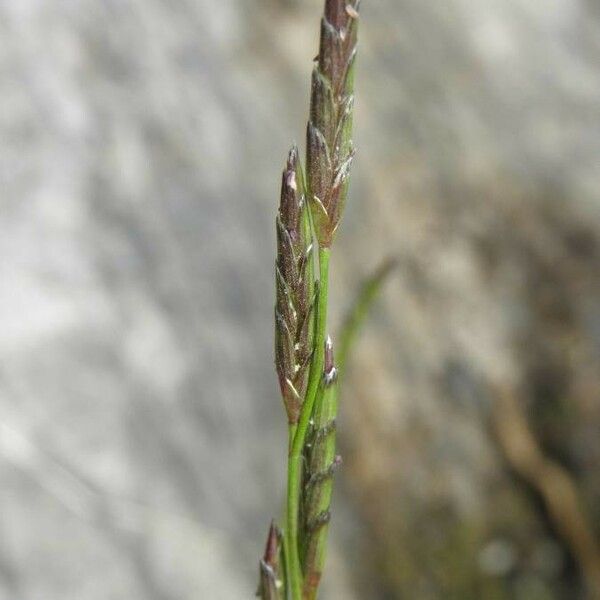
Plant Overview
Often called the Lowland Manna Grass, this moisture-loving perennial acts as a soft, blue-green carpet for the world’s wettest corners. It is a specialist of the "muddy zone," thriving in shallow water and boggy ditches where most other grasses would simply drown. While it may look like a humble weed to the untrained eye, it plays a vital role in stabilizing pond edges and providing cover for tiny amphibians.
🔍 How to Identify
- 🍃 Blue-Green Foliage: The leaves possess a distinct greyish or glaucous-green tint, remaining folded when young and feeling slightly rough to the touch.
- 🌾 Streamlined Seed Heads: It produces a long, narrow flowering stalk (panicle) where the branches stay pressed close to the main stem, rather than spreading out like a fan.
- 🦷 Toothed Lemmas: Under a magnifying glass, the "lemmas" (the husks protecting the seeds) reveal three to five tiny, sharp teeth at their tips—a key feature that distinguishes it from its taller cousins.
🏡 In Your Garden
- 💧 The "Wet Feet" Specialist: This grass doesn't just tolerate dampness; it demands it. It is an excellent choice for a wildlife pond edge or a rain garden, as it thrives in heavy, saturated clay soils that other plants find suffocating.
- 🌱 Low-Profile Groundcover: Because its stems are "decumbent" (meaning they trail along the ground before curving upward), it creates a low, creeping mat that is perfect for hiding the black liners of garden ponds or preventing erosion on muddy banks.
⚠️ Safety & Toxicity
- ✅ Generally Safe: Glyceria declinata is considered non-toxic to humans, cats, and dogs.
- 🐄 Livestock Caution: While safe for garden pets, some species in the Manna Grass family can occasionally accumulate cyanogenic glycosides if the plant is severely wilted or stressed. This is primarily a concern for farmers with grazing cattle, rather than home gardeners.
✨ Fun Fact
The genus name Glyceria is derived from the Greek word glykeros, which means "sweet." This refers to the surprisingly sweet taste of the seeds, which were historically harvested in parts of Europe to be boiled into nutritious dessert porridges!

Detailed Care Instructions

Place in a bright room that is sun drenched almost all day. Or directly in a south-facing window.

Some plants require more regular watering than others, which should be done every few days. It's critical to maintain the soil moist all of the time. The water requirements of the same plant placed in pots with varying sizes will differ. Because the water in the smaller pot evaporates faster than the water in the larger pot, it will require more watering. Regardless of pot size, the surface should constantly be maintained moist.








