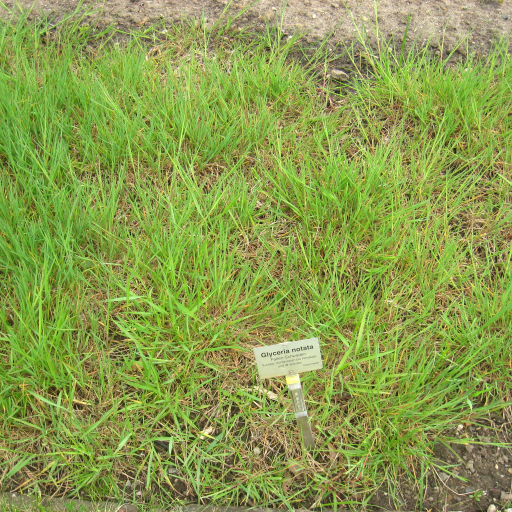
Plant Overview
Known as the Plicate Sweet-grass or Marked Manna-grass, this elegant perennial is a true water-lover. Often found decorating the muddy fringes of ponds and slow-moving streams, it earns its "sweet" nickname from the sugary taste of its seeds. It acts as a natural architect for wetlands, bridging the gap between the deep water and the dry shore.
🔍 How to Identify
- 🍃 Pleated Leaves: The most striking feature is the way the young leaves are folded (plicate) lengthwise in the bud, giving them a distinct "V" shape or a pleated appearance.
- 🌾 Spikelet Markings: Its scientific name, notata, refers to the subtle markings on its long, slender spikelets, which are typically longer and more numerous than those of its close relatives.
- 📏 Creeping Habit: Look for stems that sprawl across the mud (prostrate) before curving upward to reach heights of up to 3 feet.
🏡 In Your Garden
- 💧 Wet Feet Only: This grass is an "obligate wetland plant," meaning it cannot survive in standard garden soil. It requires saturated mud or shallow standing water, making it perfect for the margins of a wildlife pond or a bog garden.
- 🦆 A Natural Buffet: If you are trying to attract biodiversity, this is a top-tier choice. The seeds are a favorite high-energy snack for ducks and other waterfowl, while the submerged stems provide a nursery for aquatic insects.
⚠️ Safety & Toxicity
- ✅ Safe for All: Glyceria notata is generally considered non-toxic to humans, cats, dogs, and horses.
- 🌾 Fungal Watch: While the plant itself is safe, like many wild grasses, it can occasionally host Ergot, a dark, horn-shaped fungus that grows on the seed heads. If you notice black, soot-like growths among the seeds, ensure pets or livestock do not graze on it.
✨ Fun Fact
The "Manna" in its name isn't just for show! In the past, the tiny seeds of Glyceria species were gathered by hand in parts of Europe and sold as "Polish Manna." When boiled in milk, the seeds release a natural sweetness, creating a traditional porridge that was considered a delicacy.

Detailed Care Instructions

Place in a bright room that is sun drenched almost all day. Or directly in a south-facing window.

Some plants require more regular watering than others, which should be done every few days. It's critical to maintain the soil moist all of the time. The water requirements of the same plant placed in pots with varying sizes will differ. Because the water in the smaller pot evaporates faster than the water in the larger pot, it will require more watering. Regardless of pot size, the surface should constantly be maintained moist.








