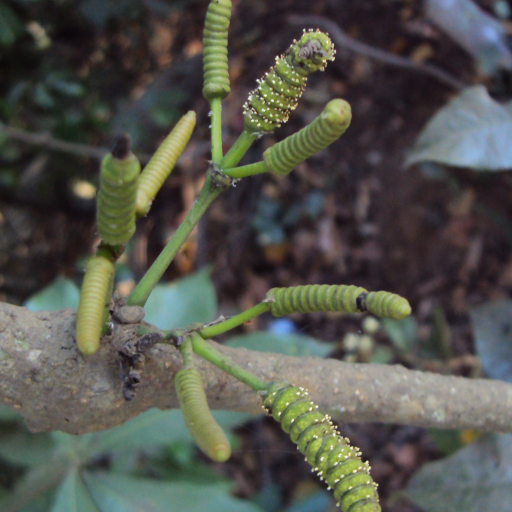
Plant Overview
Often called the "Joint-fir" or simply "Umbli" in its native India, Gnetum ula is a living link between the ancient past and the present. Despite having broad, green leaves that look like a typical garden shrub, it is actually a gymnosperm, making it a distant relative of pine trees and cycads. This prehistoric woody climber is famous for its thick, rope-like vines that drape through the canopy of tropical evergreen forests.
🔍 How to Identify
- 🌿 Woody Liana: It grows as a massive climber with a thick, corky, and deeply fissured bark. The stems often appear "jointed" or swollen at the nodes, giving it its common name.
- 🍃 Deceptive Foliage: Unlike most gymnosperms (which have needles or scales), its leaves are large, oval, and leathery, looking remarkably like those of a common flowering tree.
- 🍓 Fleshy Cones: It does not produce flowers. Instead, it grows whorls of small, cone-like structures (strobili) that develop into bright orange-to-red fleshy seeds that resemble small fruits.
🏡 In Your Garden
- 🧗 Support is Key: Because this is a vigorous liana, it requires a very sturdy trellis or a large, established tree to climb. It is a slow-growing giant that is not suited for small containers or indoor shelves.
- 💧 Tropical Humidity: It thrives in moist, well-draining soil and high humidity, mimicking the damp understory of the Western Ghats. It hates "wet feet" (waterlogged roots) but dislikes dry, arid winds even more.
⚠️ Safety & Toxicity
- 🟢 Generally Safe: There are no major reports of severe toxicity to humans. In its native range, the seeds are actually harvested, roasted, and eaten as a snack.
- 🐾 Pet Caution: While not listed as a high-risk toxic plant, the leathery leaves and raw seeds can cause mild digestive upset in curious cats or dogs. It is best kept out of reach of nibbling pets.
✨ Fun Fact
Gnetum ula is a botanical rebel! Even though it belongs to the same general group as conifers, its wood contains "vessels"—specialized water-conducting tubes that are almost exclusively found in advanced flowering plants. This makes it a primary subject for scientists studying the evolution of plant life.

Detailed Care Instructions
To grow Gnetum Ula plant, also known as Belinjau or Melinjo, you can follow these steps:
- Climate and location: Gnetum Ula plants thrive in tropical and subtropical regions. They require warmth and high humidity levels. Choose a location that receives partial sunlight or dappled shade.
- Soil preparation: Gnetum Ula plants prefer well-draining soil with organic matter. Prepare the soil by removing weeds and adding compost or well-rotted manure.
- Propagation: Gnetum Ula is usually propagated through seeds or stem cuttings. You can start from seeds collected from mature fruits or purchase them from a reputable source. Soak the seeds in water overnight before planting.
- Planting: If using seeds, plant them in pots or seed trays filled with a well-draining potting mix. Bury them about 1 cm deep and water gently. Keep the soil consistently moist but not waterlogged. If using stem cuttings, take a 10-15 cm long stem cutting and plant it directly in the soil.
- Growth and care: Regularly water the plants to maintain soil moisture. Gnetum Ula plants require high humidity, so misting the foliage or placing a humidity tray nearby can be beneficial. Fertilize the plants with a balanced, slow-release fertilizer every few months. Prune the plants to shape and remove any dead or damaged branches.
- Support: Gnetum Ula plants grow as vines, so providing a support structure like a trellis or wooden poles can help them climb and establish.
- Harvesting: Gnetum Ula plants typically produce edible seeds that can be harvested when mature. The seeds need to be processed and prepared before consumption.
Note: Gnetum Ula plants are not very common in cultivation and may require specific expertise or resources to grow successfully. It is recommended to consult local experts or botanical gardens for more detailed guidance in your specific region.
Gnetum Ula is a tropical plant that requires consistent watering to thrive. It should be watered deeply once or twice a week, depending on the humidity and temperature of its environment. The soil should not be allowed to dry out completely, but it should not be kept consistently wet either. It is important to follow a regular watering schedule and to not overwater, as this can lead to root rot and other issues. The plant should be watered at the base, avoiding the leaves and stems. The soil should be well-draining, and any excess water should be allowed to drain away. A layer of mulch on top of the soil can help retain moisture and prevent evaporation. Overall, it is important to keep the soil consistently moist, but not waterlogged.
To fertilize the Gnetum Ula plant, use a balanced, slow-release fertilizer every two to three months during the growing season. Apply the fertilizer evenly around the base of the plant, avoiding contact with the leaves or stem. Water the plant generously after fertilizing to ensure proper absorption. Avoid over-fertilizing, as this can damage the plant and lead to nutrient deficiencies. Monitor the plant regularly for signs of nutrient stress and adjust fertilization as needed.
To propagate this specific plant, you will need to collect mature healthy seeds from the plant. Once collected, you will need to soak the seeds in warm water to soften the outer layer. After soaking, plant the seeds in a pot or seed tray filled with well-draining soil, making sure to cover the seeds with a light layer of soil. Water the soil well and place the pot or tray in a warm, humid environment with indirect sunlight. Continue to water the soil regularly to keep it moist, but not water-logged. In about 2-4 weeks, you should start to see seedlings sprouting from the soil. Once the seedlings have grown a few inches tall with several leaves, they can be transplanted into larger containers or directly into the ground.








