Plant Overview
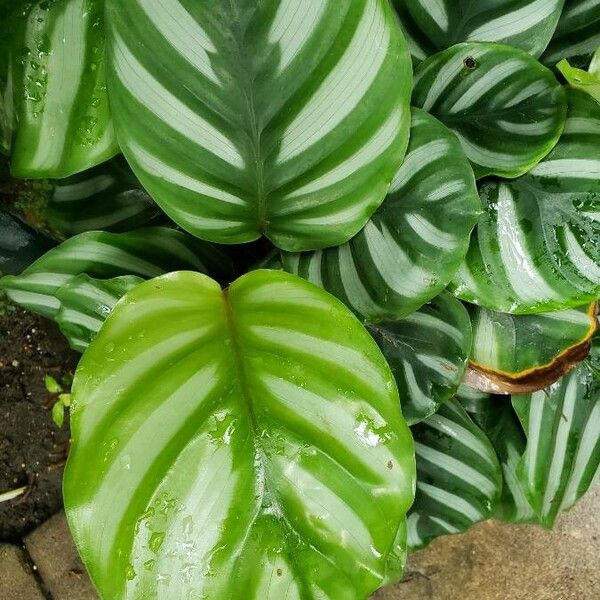
Hailing from the dense, humid understory of the Brazilian rainforest, Goeppertia fasciata (formerly and still commonly known as Calathea fasciata) is a living masterpiece of geometric precision. Known for its oversized, rounded leaves that look as if they were hand-painted with silvery-green stripes, this plant is a favorite for those looking to add a touch of "jungle chic" to their interior. Like its cousins in the Marantaceae family, it is a "Prayer Plant," meaning it performs a subtle dance every single day.
🔍 How to Identify
- 🍃 The Foliage: Large, almost perfectly circular leaves that feel remarkably thick and leathery compared to other prayer plants.
- 🎨 The Pattern: Bold, dark green "bands" (where it gets the name fasciata) radiate from the central vein toward the margins, alternating with a lighter, silvery-green background.
- 🖌️ The Underside: Unlike many Goeppertia species that have deep purple undersides, the fasciata typically displays a clean, pale green or grayish-green reverse, making the upper patterns pop even more.
🏡 In Your Garden & Home
- ☁️ Humidity is King: This plant thrives in "soft" air. If the leaf edges begin to turn brown and crispy, it’s usually a cry for more humidity rather than more water in the soil.
- 💧 The "Pure" Water Rule: It is notoriously sensitive to the minerals and fluoride found in city tap water. To keep the leaves pristine, many enthusiasts use distilled water or rainwater to prevent "chemical burn" on the leaf tips.
- 🌑 Low-Light Specialist: Because its ancestors lived on the dark forest floor, it hates direct sun, which will bleach its beautiful patterns. It is one of the best choices for those "dim" corners of a room.
⚠️ Safety & Toxicity
- ✅ Status: Non-toxic and safe.
- 🐾 Details: Great news for pet owners and parents! Goeppertia fasciata is considered non-toxic to cats, dogs, and humans. While it shouldn't be a snack, an accidental nibble won't cause a trip to the emergency room.
✨ Fun Fact
This plant possesses a "joint" called a pulvinus at the base of its leaves. This allows it to perform nyctinasty: it raises its leaves vertically at night like hands in prayer and lowers them during the day to catch every possible photon of light!

Detailed Care Instructions
To grow a Goeppertia Fasciata plant, also known as the Calathea Fasciata or Zebra Plant, follow these steps:
- Choose the right location: The Goeppertia Fasciata thrives in bright, indirect light. Avoid exposing it to direct sunlight as this can scorch the leaves. It also prefers temperatures between 60-85°F (15-29°C).
- Select a suitable pot: Use a pot with good drainage holes to prevent waterlogging. The size should be proportionate to the plant's root system, allowing it to grow without being overcrowded.
- Soil and potting mix: Use a well-draining soil mix with peat moss, perlite, or vermiculite. This plant prefers slightly acidic soil with a pH level around 5.5-6.5.
- Watering: Keep the soil evenly moist, never allowing it to dry out completely. However, be careful not to overwater, as this can lead to root rot. Wait until the top inch of soil is dry before watering again. Ensure the pot has proper drainage to avoid water accumulation.
- Humidity: Goeppertia Fasciata plants thrive in high humidity. Create a humid environment by placing a tray filled with water near the plant or use a humidifier. Misting the leaves regularly can also help maintain humidity.
- Fertilization: Feed the plant with a balanced liquid fertilizer once a month during the growing season (spring and summer). Follow the instructions on the fertilizer package for proper dilution and application.
- Pruning: Remove any yellowed or damaged leaves to maintain the plant's health and appearance. You can also trim any leggy or straggly growth to encourage bushier growth.
- Propagation: Goeppertia Fasciata can be propagated through division. Carefully separate the plant into smaller clumps, ensuring that each division has both roots and leaves. Plant the divisions in separate pots and provide the same care as the parent plant.
- Pests and diseases: Keep an eye out for pests such as spider mites, mealybugs, and aphids. Treat any infestations immediately with an appropriate insecticide. Ensure good air circulation and avoid overwatering to prevent fungal diseases.
- Rotate the plant: Rotate the plant periodically to ensure even growth and prevent one side from receiving more light than the other.
Remember, Goeppertia Fasciata plants can be finicky and may take time to adjust to their new environment. With proper care, patience, and attention to their specific needs, you can successfully grow and enjoy the beauty of this stunning plant.

Place in a window with dappled sun or a spot in the middle of a room. Or directly in a window facing west or east.

To water this plant, you should first check the soil moisture level by inserting your finger about an inch deep into the soil. If the soil feels dry, it's time to water the plant. Use a watering can or a jug to water it slowly, making sure the water saturates the soil evenly. Avoid overwatering, as this can lead to root rot. Allow the soil to dry out slightly before watering again. In general, this plant prefers slightly moist soil, so you may need to water it more frequently during the warmer months and less frequently in cooler months.
To fertilize your Goeppertia Fasciata, you can follow these instructions:
- Choose a balanced, water-soluble fertilizer specifically formulated for houseplants.
- Dilute the fertilizer according to the instructions on the package, usually at half the recommended strength.
- Ensure that the soil is moist before applying fertilizer.
- Pour the diluted fertilizer evenly over the soil around the base of the plant, avoiding direct contact with the leaves.
- Allow the excess fertilizer solution to drain out of the pot.
- Avoid fertilizing during the winter months when the plant is in its dormant phase.
- Fertilize your Goeppertia Fasciata every four to six weeks during the growing season (spring and summer).
- Monitor the plant for any signs of over-fertilization, such as yellowing leaves or leaf burn. If these symptoms appear, reduce the frequency or strength of fertilization.
- Water the plant thoroughly after fertilizing to help distribute the nutrients evenly throughout the soil.
- Always follow the specific instructions provided by the fertilizer manufacturer for best results.
The best type of soil to use for the Goeppertia Fasciata plant is a well-draining and nutrient-rich soil. The soil should have a pH range between 5.5 to 7.0 and should be slightly acidic. The soil should also be able to retain moisture but not become waterlogged, as this can cause root rot and other fungal diseases. It's recommended to add perlite or sand to the soil mix to improve drainage. Additionally, adding organic matter such as compost or leaf mold can provide important nutrients for the plant's growth and development. Avoid using heavy clay soils or soils that are too sandy, as these may not provide the ideal growing conditions for the Goeppertia Fasciata plant.
To propagate Goeppertia Fasciata, you can follow these steps:
- Prepare a healthy parent plant: Ensure the parent plant is in good health and disease-free. Choose a mature and well-established specimen for the best chances of successful propagation.
- Dividing rhizomes: This method involves separating the rhizomes or underground stems of the plant to create new plants. Carefully dig up the parent plant and examine the root system. Locate a healthy rhizome with several leaves and roots attached.
- Separating rhizomes: Gently separate the selected rhizome from the parent plant, ensuring each divided section has enough roots and leaves to support growth. You may use your hands or a sterilized knife or gardening shears to separate the rhizomes.
- Preparing new containers: Fill small pots or containers with a well-draining potting mix. The mix should be slightly moist but not waterlogged. Create a small hole in the center of each pot for planting the divided rhizome.
- Planting the divisions: Place each rhizome division into an individual container, ensuring the roots are spread out naturally. Cover the rhizome with soil, leaving the leaves exposed.
- Providing optimal conditions: Place the newly potted divisions in a warm and bright location, preferably with indirect sunlight. Maintain a temperature of around 65-75°F (18-24°C) for optimal growth. Avoid placing them in direct sunlight as it may scorch the leaves.
- Watering and humidity: Water the divisions thoroughly after planting, ensuring the soil is evenly moist but not waterlogged. Maintain adequate humidity by misting the leaves regularly or using a humidity tray to create a moist environment around the plant.
- Care and maintenance: Keep a close eye on the divisions to ensure they remain healthy and free from pests or diseases. Regularly check the moisture level of the soil and water when it starts to dry out. Fertilize the divisions every few weeks during the growing season with a balanced houseplant fertilizer to encourage healthy growth.
- Root development: Over time, the divided rhizomes will develop roots and establish themselves in their new containers. You can gently tug on the plant to check for resistance, indicating the development of a strong root system.
- Transplanting: Once the divisions have established roots and are growing well, you can consider transplanting them into larger containers or into the garden if the conditions are suitable. Be sure to acclimate the plants gradually to avoid shock.
Remember, some plants may have specific requirements for successful propagation, so it's essential to research and understand the specific needs of Goeppertia Fasciata before attempting propagation.
Common pests of the goeppertia fasciata include Mealybugs, spider mites, thrips. Make a habit of checking your goeppertia fasciata frequently for pests so that any infestations can be caught and managed early.








