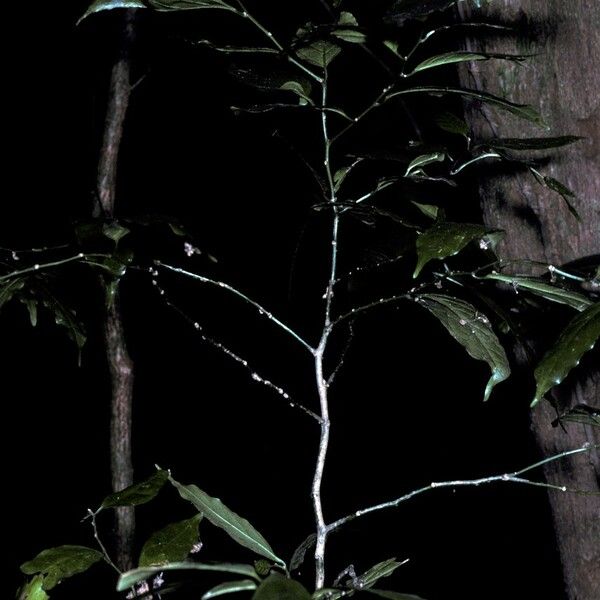
Plant Overview
Known as a resilient evergreen shrub native to the misty tropical forests of Southeast Asia and Southern India, Gomphandra tetrandra is a master of the shadows. Often found thriving in the deep shade of mountain valleys, this plant is a silent backbone of forest biodiversity. While it lacks a flashy common nickname in the West, it is respected in its native range for its understated elegance and its role in traditional forest medicine.
🔍 How to Identify
- 🍃 The Foliage: Look for smooth, leathery leaves that are elliptical in shape. They typically have a glossy, deep green finish that helps them capture minimal light on the forest floor.
- 🌼 The Blooms: It produces small, subtle clusters of greenish-white or pale yellow flowers. These blossoms are "tetrandrous," meaning they have four distinct stamens, which gives the plant its scientific name.
- 🍒 The Fruit: The plant develops small, oblong drupes (fleshy fruits with a single stone). These fruits often transition from green to a pale, waxy white or yellowish hue as they ripen.
🏡 In Your Garden
- ☁️ Shadow Dweller: Because this plant evolved in the understory of dense forests, it is highly sensitive to direct afternoon sun. It performs best in "dappled" light or full shade, making it a great choice for those tricky, dark corners of a tropical-themed garden.
- 💧 Humidity is Key: Gomphandra tetrandra thrives in moist, well-draining soil. It is not drought-tolerant; if the soil dries out completely, the plant may drop its leaves rapidly as a stress response.
⚠️ Safety & Toxicity
- 🐾 Caution Recommended: While there is limited data on its toxicity to common household pets like cats and dogs, most members of the Stemonuraceae family are not considered edible.
- 🚫 Do Not Ingest: The berries and leaves should be kept away from children and curious pets. Ingestion may cause stomach upset, and the plant is best enjoyed as a visual addition to your collection rather than a culinary one.
✨ Fun Fact
In various regions of Southeast Asia, parts of the Gomphandra plant have been used in traditional folk medicine for centuries, particularly in "forest-tonics" believed to help with postpartum recovery and reducing fevers.

Detailed Care Instructions

Place in a window with dappled sun or a spot in the middle of a room. Or directly in a window facing west or east.

When the top few inches of soil dry out, water your plants. If the top few inches of soil are still moist, do not water your plant. Wait a few days, then poke your finger into the soil to see if anything has changed. Overwatering poses a disease risk, such as the development of fungal diseases in the roots. These plants have adaptations in there leaves that allow them to survive in low water supply.








