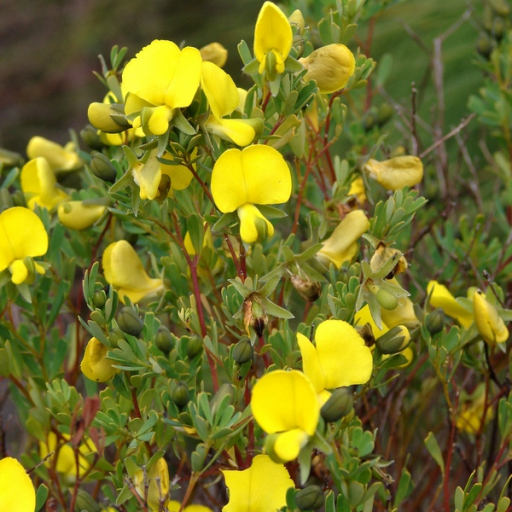
Plant Overview
Known as the Leafy Wedge Pea, this charming Australian native is like a splash of bottled sunshine for the coastal heathlands. It belongs to the pea family and is beloved for its bright, classic blooms that signal the arrival of spring in the eastern states of Australia. In the wild, it forms a graceful, upright shrub that adds a delicate, airy texture to the landscape.
🔍 How to Identify
- 🌼 Sunny Blooms: It produces large, bright yellow pea-shaped flowers, sometimes featuring subtle reddish or greenish tints on the back of the "standard" petal.
- 🍃 Slender Foliage: The leaves are very narrow, stiff, and linear. They typically grow in groups of three (trifoliate), creating a fine-textured, needle-like appearance.
- 🎈 Wedge Pods: After the flowers fade, you will see distinctive, plump, and slightly inflated seed pods that look like tiny green footballs before they dry.
🏡 In Your Garden
- 🏖️ Sand Specialist: This plant is a specialist for sandy or light, well-draining soils. It is particularly well-suited for coastal gardens or "bush-style" landscapes where drainage is high.
- 🧤 Root Sensitive: Like many members of its family, the Leafy Wedge Pea has a sensitive root system. It generally "hates" being moved once planted, so it is best to avoid transplanting it once it has settled in.
- 🐝 Bee Buffet: The vibrant yellow hue is a primary color target for native bees, making this a fantastic choice for supporting local pollinators.
⚠️ Safety & Toxicity
- ✅ Generally Safe: There are no widespread reports of Gompholobium virgatum being highly toxic to humans or common household pets.
- 🚫 Ingestion Caution: While not considered "poisonous," the seeds and pods of most wild legumes can cause mild stomach upset if eaten in large quantities. It is always best to keep curious pets and toddlers from snacking on the foliage.
✨ Fun Fact
The name Gompholobium is derived from the Greek words gomphos (a bolt or nail) and lobos (a pod). This refers to the way the seed pods are shaped—they look like they have been "bolted" onto the stem and appear strangely inflated compared to the thin leaves!

Detailed Care Instructions

Some plants require more regular watering than others, which should be done every few days. It's critical to maintain the soil moist all of the time. The water requirements of the same plant placed in pots with varying sizes will differ. Because the water in the smaller pot evaporates faster than the water in the larger pot, it will require more watering. Regardless of pot size, the surface should constantly be maintained moist.








