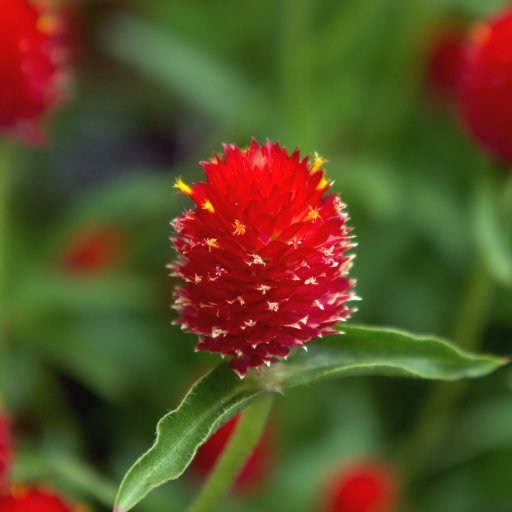
Plant Overview
Often called "Strawberry Fields" because of its fiery red, clover-like blossoms, Gomphrena haageana is a tough-as-nails beauty native to Texas and Mexico. It is a favorite for gardeners in hot, sunny climates who want vibrant color without a high-maintenance watering schedule. In the language of flowers, these "everlastings" represent unfading love because they keep their brilliant hue long after they are cut and dried.
🔍 How to Identify
- 🍓 The "Strawberry" Globes: The flower heads are actually stiff, papery leaf-like structures called bracts. They form a distinct globe shape, most famously in a brilliant, saturated red or burnt orange.
- 🌿 The Foliage: Look for narrow, lance-shaped leaves that are a dusty sage-green. The leaves and stems are often covered in fine, white hairs that help the plant conserve water.
- 📏 Growth Habit: Unlike the common globe amaranth, this species is more upright and airy, reaching up to 2 feet tall with thin, wiry stems that dance in the wind.
🏡 In Your Garden
- ☀️ Heat Hero: This plant thrives in "blast furnace" conditions. It is extremely drought-tolerant once established and actually prefers lean, sandy soil over rich, heavy compost.
- 🦋 The Pollinator Beacon: While the red globes catch your eye, tiny yellow "stars" poke out from between the bracts—these are the actual flowers, and they are a magnet for butterflies and bees.
- ✂️ Drying Potential: Because the flowers have very little moisture content, they are perfect for dried arrangements. Simply cut them when the heads are at their peak and hang them upside down in a dark spot.
⚠️ Safety & Toxicity
- 🐾 Pet Friendly: Gomphrena haageana is generally considered non-toxic to cats, dogs, and horses, making it a "worry-free" addition to your backyard.
- 👶 General Safety: There are no known skin irritants or poison risks associated with this plant, though the dried stems can be a bit scratchy for toddlers with sensitive skin.
✨ Fun Fact
The "everlasting" nature of these flowers is so legendary that they were historically used in funeral wreaths and memorials in various cultures to symbolize a spirit that never dies.

Detailed Care Instructions
To grow Gomphrena Haageana (also known as Fireworks), follow these steps:
- Choose a location: Gomphrena Haageana prefers full sun, so select a location in your garden that receives at least 6-8 hours of direct sunlight.
- Soil preparation: Ensure the soil is well-draining. If your soil is heavy or clay-like, add organic matter such as compost or well-rotted manure to improve drainage.
- Seed starting: Gomphrena Haageana can be started from seeds indoors 6-8 weeks before the last frost date or sown directly into the garden after the last frost has passed. If starting seeds indoors, use seed-starting trays or pots filled with a well-draining potting mix. Sow the seeds 1/8 inch deep and lightly cover them with soil. Keep the soil consistently moist until germination, which usually takes 7-14 days.
- Transplanting: If you started the seeds indoors, transplant the seedlings into the garden when they have grown to about 3-4 inches tall and all risk of frost has passed. Space the plants about 12-18 inches apart.
- Watering: Gomphrena Haageana prefers moderate watering. Water the plants deeply and allow the top few inches of soil to dry out between waterings. Avoid over-watering as it may lead to root rot.
- Fertilization: Apply a balanced, slow-release fertilizer or a liquid fertilizer formulated for flowering plants according to the manufacturer's instructions. Alternatively, you can work a granular, balanced fertilizer into the soil at planting time.
- Mulching: Apply a layer of organic mulch around the base of the plants to help retain moisture and suppress weed growth.
- Pruning: Gomphrena Haageana is a low-maintenance plant, but you can pinch off the spent flowers or deadhead them to encourage continuous blooming.
- Pests and diseases: Gomphrena Haageana is relatively pest and disease-resistant. However, keep an eye out for common garden pests such as aphids or whiteflies. If necessary, treat the pests with organic insecticidal soap or neem oil.
- Enjoy the blooms: Gomphrena Haageana should start blooming in mid-summer and continue until the first frost. The vibrant, globe-shaped flowers will attract butterflies and bees to your garden.
Remember to follow the specific care instructions provided with your particular plant, as variations in climate and growing conditions may require slightly different care.

Place in a bright room that is sun drenched almost all day. Or directly in a south-facing window.

To properly water this plant, it is important to take into account the environment that it is growing in. The soil should be moist, but not waterlogged, and should be allowed to dry slightly between waterings to avoid root rot. Watering should be done at the base of the plant to avoid wetting the foliage, which can lead to fungal disease. In hot and dry weather conditions, the plant may require more frequent watering. However, it is important to avoid over-watering as this can also affect the health of the plant.
To fertilize this plant, apply a balanced fertilizer with equal parts nitrogen, phosphorus, and potassium. It is important to avoid over-fertilization, which can lead to burnt leaves or stunted growth. Apply the fertilizer every four to six weeks during the growing season, which typically runs from spring to fall. Use a slow-release fertilizer if possible, as this will release nutrients gradually over time. Finally, be sure to water the plant well after fertilizing to help the nutrients soak into the soil.
When selecting soil for the Gomphrena Haageana plant, it is important to choose a well-draining soil that will not retain too much water. A sandy loam soil with a pH of 6.0 to 7.0 is recommended for optimal growth. This type of soil will allow for good air circulation and proper root development. A soil with high organic matter content is also beneficial, as it will provide essential nutrients and promote healthy soil structure. It is important to avoid heavy clay soils that can become waterlogged and lead to root rot. Additionally, the plant should be fertilized regularly with a balanced fertilizer to further support healthy growth.
To propagate this particular plant, one can collect its seeds and sow them in well-draining soil. It is best to start the seeds indoors in small pots and then transplant them outdoors once they have developed some strong roots and leaves. It is also possible to propagate this plant through stem cuttings. Cut a healthy stem about 4-6 inches long and remove the lower leaves. Dip the cut end of the stem in rooting hormone and place it in a container with moist soil. Keep it in a warm, humid location and water it regularly. In a few weeks, roots should start to develop, and once they have grown sufficiently, the stem can be transplanted to its desired location.








