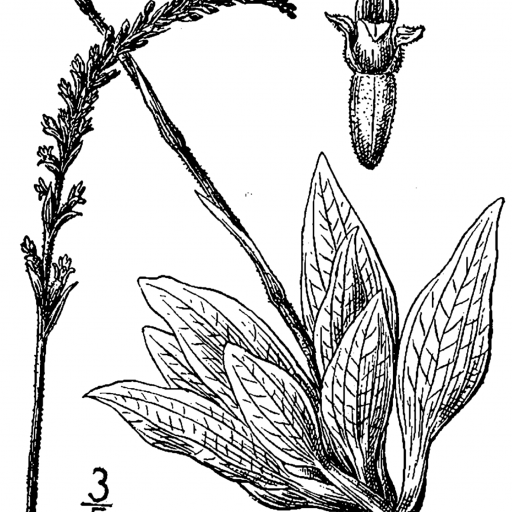
Plant Overview
Hidden on the forest floor like a secret emerald mosaic, the Tessellated Rattlesnake Plantain is one of North America’s most charming wild orchids. Despite its name, it has nothing to do with actual plantains; its nickname comes from its patterned leaves, which early settlers thought resembled the scales of a rattlesnake. Folklore once suggested that these leaves could even cure snakebites, though today we simply admire them for their intricate beauty.
🔍 How to Identify
- 🍃 The Foliage: The standout feature is the basal rosette of blue-green leaves, intricately "tessellated" (veined) with white or pale green lines that create a checkered, snake-skin appearance.
- 🌸 The Blooms: In mid-to-late summer, it sends up a single, fuzzy stalk topped with tiny, translucent white flowers that look like miniature hoods or crystalline slippers.
- 📏 Growth Habit: This is a low-growing terrestrial orchid that spreads slowly via underground stems (rhizomes), often forming small, stunning colonies in the moss.
🌲 Habitat & Ecology
- 🍄 Fungal Friendships: Like many wild orchids, this plant is "mycorrhizal," meaning it relies on a complex relationship with soil fungi to survive. Because of this, it is almost impossible to transplant and should never be dug up from the wild.
- 🌲 The Pine Connection: It thrives in the dappled shade of coniferous or mixed forests, particularly where the ground is carpeted in acidic needles from Hemlock or Pine trees.
- 💧 Moisture Balance: It prefers "goldilocks" conditions—consistently cool, moist soil that never stays soggy, often tucked away in shaded ravines or damp woodland slopes.
⚠️ Safety & Toxicity
- ✅ Status: Non-toxic and generally safe.
- 🐾 Pets & People: While not known to be poisonous to cats, dogs, or humans, it is a rare wild orchid and should never be consumed. Touching the plant is safe, but because it is sensitive to oils and salts on human skin, it's best to admire its beauty without handling the leaves.
✨ Fun Fact
Even though it looks like a common woodland weed when not in bloom, the Tessellated Rattlesnake Plantain is a true orchid! If you look at the tiny flowers through a magnifying glass, you’ll see they have the same complex "lip" and structure as the exotic orchids found in tropical rainforests.

Detailed Care Instructions
To grow a Goodyera Tesselata plant, also known as the rattlesnake orchid or western rattlesnake plantain, you can follow these steps:
- Site selection: Choose a location with indirect or filtered sunlight. These orchids prefer partially shaded areas, such as under trees or near north-facing windows. The temperature should be kept fairly consistent.
- Soil preparation: Use a well-draining potting mix suitable for orchids. It should have a mix of organic matter, such as bark or sphagnum moss, to ensure good drainage.
- Planting: If using a pot, make sure it has drainage holes at the bottom to prevent waterlogging. Place the Goodyera Tesselata plant in the pot, ensuring the roots are covered but the pseudobulbs remain exposed. Leave some space for growth.
- Watering: Keep the soil or potting mix moist but not waterlogged. During periods of active growth, water regularly, allowing the top inch of soil to dry out slightly between waterings. Reduce watering during winter dormancy.
- Humidity: Increase humidity levels by placing a tray of water near the plant or using a humidifier. Avoid misting the leaves directly, as this can lead to fungal diseases.
- Fertilization: Use a balanced, water-soluble orchid fertilizer during the growing season. Follow the instructions on the label for dosage and frequency. Reduce or stop fertilizing during the dormant period.
- Temperature and ventilation: Maintain a temperature range of about 60-80°F (15-27°C) during the day and cooler temperatures, around 50-60°F (10-15°C), at night. Good air circulation is important but avoid placing the plant in drafty areas.
- Repotting: Every 2-3 years, when the plant outgrows the current pot, repot it in fresh potting mix. This will provide fresh nutrients and allow for root growth.
- Pest and disease control: Keep an eye out for common orchid pests like aphids, mealybugs, and spider mites. If infestations occur, remove or treat them with appropriate organic or chemical methods.
- Dormancy: Some Goodyera Tesselata plants may enter a dormant period during winter. Reduce watering and fertilization during this time and provide cooler temperatures to allow them to rest.
By following these guidelines, you can successfully grow and care for your Goodyera Tesselata plant.

Goodyera Tesselata is a type of orchid that requires specific watering techniques to thrive. It is essential to know how to water this plant correctly to avoid over or underwatering. When watering Goodyera Tesselata, it is important to follow these steps:
1. Observe the soil moisture - Before watering, check the soil's moisture level by sticking your finger into the soil about an inch. If it's dry, then it's time to water. If it's moist, wait a few days and check again.
2. Watering frequency - Goodyera Tesselata requires consistent watering, and you should aim to water it once a week. However, this may vary depending on the humidity levels of your home.
3. Watering method - Water the plant thoroughly, making sure to soak the soil throughout the pot. Ensure that water does not sit on the leaves or in the pot's base as this can cause rotting or fungal diseases.
4. Drainage - The pot must have proper drainage to allow excess water to escape, preventing stagnant water from accumulating around the roots.
5. Prevent underwatering - Drooping or wilted leaves can indicate that the plant is underwatered. If this happens, give the plant a good drink until water drains out of the pot's bottom.
6. Prevent overwatering - Overwatering can cause the roots to rot. If your plant starts to yellow and wilt, the soil might be too wet, and you should adjust your watering accordingly.
By following these watering tips, you can ensure your Goodyera Tesselata orchid remains healthy and beautiful.
To fertilize this plant, use a balanced fertilizer with equal parts nitrogen, phosphorus, and potassium. Apply the fertilizer every two weeks during the growing season, and reduce frequency during the dormant period. Dilute the fertilizer to half strength and apply it to the soil around the base of the plant, avoiding direct contact with the leaves. Water the plant thoroughly after fertilizing to ensure that the nutrients are properly absorbed by the roots.
Goodyera Tesselata is a species of terrestrial orchid that requires well-draining soil with adequate moisture retention and nutrient content. For optimal growth, use a soil mix that consists of a blend of peat moss, perlite, and vermiculite, with a pH range of 5.5 to 6.5. The soil should be airy to allow for proper oxygenation of the plant's roots and should not become waterlogged. Adding a slow-release fertilizer with balanced nutrients can provide the necessary nutrition for healthy growth. It is essential to avoid using soil mixes that contain a high percentage of organic matter, as it can retain excess moisture and lead to root rot.
To propagate this particular plant, you will need to carefully divide the rhizomes of an established plant during the late spring or early summer. It is important to use a sharp and sterilized tool to avoid damaging the rhizome or introducing disease. Once the rhizomes are divided, make sure to replant each section in a well-draining soil mixture and water thoroughly. It is also recommended to keep newly propagated plants in a shaded area until they have taken root and begun to grow.








