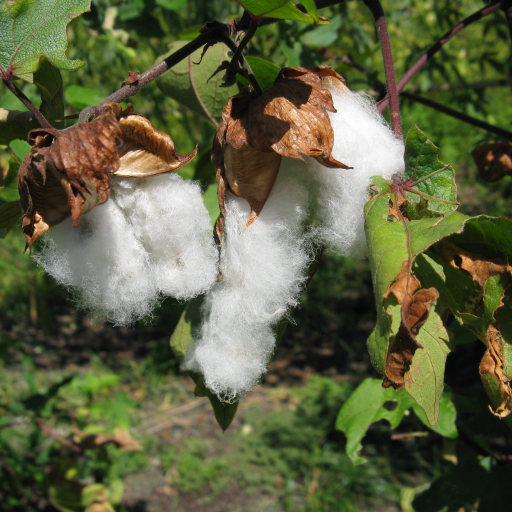
Plant Overview
Known as "Tree Cotton" or "Kapas," Gossypium arboreum is a cultural icon of the Indian subcontinent and one of the oldest textile sources in human history. Unlike the low-growing annual cotton common in modern industrial farming, this species is a long-lived, woody shrub that can reach the height of a small tree. It belongs to the Mallow family, making it a close relative of the Hibiscus, which is evident in its stunning, painterly flowers.
🔍 How to Identify
- 🍃 Lobed Foliage: The leaves are deeply divided into 5 to 7 narrow, pointed lobes, giving the plant a delicate, star-like appearance compared to other cotton species.
- 🌸 Showy Blooms: It produces beautiful, bell-shaped flowers that are typically creamy yellow with a distinct, deep maroon or purple "eye" at the base of the petals.
- ☁️ The Cotton Boll: After the flowers fade, they develop into green, pointed capsules (bolls). When mature, these burst open to reveal thick, snowy-white fibers wrapped around dark seeds.
🏡 In Your Garden
- ☀️ Sun Worshiper: This plant thrives in intense heat and full sun. It is remarkably drought-tolerant once established, making it an excellent choice for ornamental "edible" or "utility" landscapes in frost-free regions.
- 🪴 Taproot Sensitivity: Tree Cotton develops a deep taproot early in its life. It famously "hates" being moved, so it is best to plant it in its permanent location while it is still a small seedling to avoid transplant shock.
⚠️ Safety & Toxicity
- 🐾 Caution for Pets: While the fluffy white cotton itself is harmless, the seeds and roots contain a natural phenol called gossypol.
- 🚫 Ingestion Risks: If consumed in large quantities by pets or livestock, the seeds can cause heart or liver distress. It is best to keep the raw seeds away from curious chewers.
✨ Fun Fact
- 📜 Gossypium arboreum is the "ancestral thread" of the textile world. It was the primary source of cotton for the ancient Indus Valley Civilization as far back as 3000 BCE, long before the "New World" cotton varieties dominated the global market.

Detailed Care Instructions
To grow Gossypium arboreum, also known as cotton plant, follow these steps:
- Climate and soil requirements: Cotton plants thrive in warm climates with temperatures between 60-95°F (15-35°C). They require full sun exposure for at least six hours a day. The soil should be well-draining loam or sandy soil with a pH range of 6-7.
- Seed selection: Obtain cotton seeds from a reputable supplier or purchase them online. Make sure the seeds are fresh and viable.
- Seed preparation: Soak the seeds in warm water for about 12-24 hours before planting. This will help soften the seed coat and improve germination.
- Planting:
a. Choose a suitable location in your garden or prepare pots for indoor growing.
b. If planting outdoors, wait until the danger of frost has passed and the soil has warmed up. In cooler regions, start the seeds indoors and transplant them outside once the temperature is suitable.
c. Sow the seeds about 1 inch (2.5 cm) deep into the soil, spacing them 3-6 inches (7-15 cm) apart. If planting in pots, use well-draining soil and keep only a few plants per pot.
d. Water the seeds lightly after planting and keep the soil evenly moist but not waterlogged.
- Care and maintenance:
a. Watering: The plants require regular watering, especially during dry spells. Avoid overwatering as it can lead to root rot.
b. Fertilizer: Apply a balanced organic fertilizer or cotton-specific fertilizer every 4-6 weeks during the growing season. Follow the instructions on the packaging for the correct dosage.
c. Weed control: Remove weeds regularly, as they can inhibit the growth of cotton plants and compete for nutrients.
d. Pests and diseases: Monitor the plants for pests like aphids, mites, and cotton bollworms. Treat any infestations promptly with organic insecticides or insecticidal soap. Protect the plants from fungal diseases by providing adequate spacing, good air circulation, and avoiding overhead watering.
- Harvesting: Cotton plants typically take around 5-6 months to mature. Harvesting time varies depending on the cultivar and location. Harvest when the bolls are swollen, and the cotton fibers are fully developed. Pick the bolls carefully to avoid damaging the fibers.
Remember that growing cotton plants requires patience, as it is a long and labor-intensive process. Ensure you check local regulations or obtain permits if growing cotton is restricted in your area.

Place in a bright room that is sun drenched almost all day. Or directly in a south-facing window.

To water this plant, it is important to always check the moisture level of the soil prior to watering. Watering should be done sparingly, only when the soil has become slightly dry to the touch. Over-watering should be avoided at all costs as it can lead to root rot or other diseases. Additionally, the plant should be watered gently and evenly, ensuring that the water reaches the roots without causing any damage to the leaves or stems. It is recommended to use a watering can with a narrow spout or a drip irrigation system.
- Choose a well-draining soil that is rich in organic matter.
- Add nitrogen-rich fertilizer to the soil before planting, to ensure healthy growth.
- After planting, fertilize every two weeks with a balanced fertilizer containing equal amounts of nitrogen, phosphorus, and potassium.
- Water the plant thoroughly after each fertilization to help distribute the nutrients evenly throughout the soil.
- In the pre-bloom stage, switch to a higher phosphorus fertilizer to encourage flower formation.
- During the blooming stage, use a fertilizer high in potassium to promote fruit growth.
- Avoid fertilizing during periods of drought or extreme heat, as this can damage the plant.
- Monitor the plant regularly for signs of over-fertilization, such as yellowing leaves, and adjust fertilization accordingly.
When cultivating Gossypium Arboreum plants, it is advisable to use soil that is well-draining and loamy in texture. The soil should have a pH level that ranges from neutral to slightly acidic. It is recommended to use soil that is rich in organic matter, such as compost and well-rotted manure. This will help improve soil structure and fertility, and provide essential nutrients to the plant. When planting the Gossypium Arboreum, it is important to ensure that the soil is well-watered and has adequate drainage to prevent waterlogging. Additionally, regular fertilization with a balanced fertilizer can help promote healthy growth and flowering of the plant.
To propagate this plant, first, take a cutting from a healthy and mature plant. The cutting should be around 4 to 6 inches long and should have several nodes. Remove any leaves from the lower part of the cutting.
Next, prepare a pot with well-draining soil and water it thoroughly. Then, dip the end of the cutting in rooting hormone and insert it into the soil. Make sure the cutting is planted deep enough to provide stability.
Water the cutting regularly, keeping the soil moist but not waterlogged. It may take several weeks for roots to form and for the cutting to start growing.
Once the cutting has established roots and is growing well, it can be transplanted into a larger pot or into the garden if the weather and soil conditions are appropriate.
Common pests of the tree cotton include Spider mites, aphids, thrips, larvae. Make a habit of checking your tree cotton frequently for pests so that any infestations can be caught and managed early.








