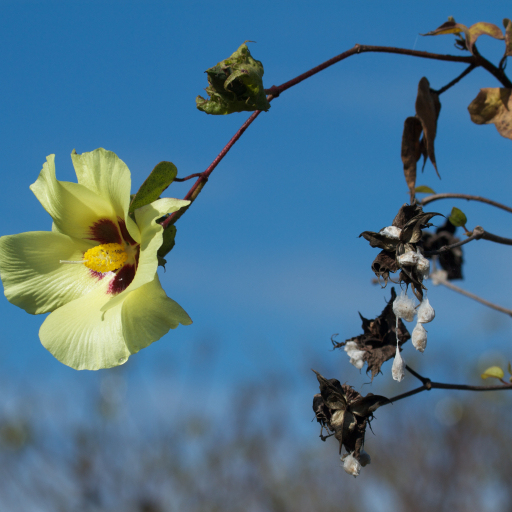
Plant Overview
Known as "White Gold," the Gossypium genus has shaped human history more than almost any other plant. From the ancient Indus Valley to modern high-street fashion, these sun-loving shrubs produce the soft, fluffy fiber we wear every day. While typically seen on massive agricultural scales, they are becoming popular curiosities for home gardeners who want to witness the magical "cloud-to-cloth" process in their own backyard.
🔍 How to Identify
- 🍃 Lobate Leaves: Broad, heart-shaped leaves that are usually divided into three to five pointed lobes, often covered in tiny, soft hairs.
- 🌸 Color-Shifting Blooms: Large, hibiscus-like flowers that typically open as a creamy white or pale yellow and transition to a deep pink or purple after a single day of pollination.
- ☁️ The "Boll": After the flower falls, a green, egg-shaped capsule forms. When mature, this "boll" splits into sections to reveal an explosion of snowy white cellulose fibers.
🏡 In Your Garden
- ☀️ Sun Worshipers: These plants are true children of the sun. They require intense, direct light and high temperatures to produce fiber; they will often refuse to bloom if kept in shady or cool microclimates.
- 🌱 Taproot Sensitivity: Cotton develops a deep, sturdy taproot very early in its life. It strongly dislikes being moved once established, so it is best to sow seeds directly into a large pot or their final garden spot to avoid "transplant shock."
- 🦋 Pollinator Magnet: Because they are part of the Mallow family (related to Hibiscus and Okra), their nectar-rich flowers are irresistible to bees and butterflies, making them great for biodiversity.
⚠️ Safety & Toxicity
- 🚫 Seed Toxicity: The seeds of the cotton plant contain a natural compound called gossypol. While the fluffy fiber is harmless, the seeds should never be ingested by humans, dogs, or cats, as they can cause heart and liver distress.
- 🧤 Sharp Textures: Once the cotton boll dries and opens, the outer casing (the bur) becomes very hard, woody, and sharp. Use caution when "harvesting" the fluff to avoid small cuts on your fingers.
✨ Fun Fact
In the Middle Ages, Europeans who had never seen a cotton plant heard rumors of its "wool." This led to the mythical belief in the "Vegetable Lamb of Tartary"—a plant that people believed literally grew tiny, living sheep on its branches!

Detailed Care Instructions

Place in a bright room that is sun drenched almost all day. Or directly in a south-facing window.

The presence of a dry surface layer of soil does not indicate that the plant requires water. Instead, stick your finger 1-2" (3-5 cm) deep in the soil to feel dampness or moisture content. If the soil seems dry, it's time to water your greens. If the soil is still moist, however, it is better not to water your plant and instead wait a day or two. Overwatering or waterlogging raises the risk of root rot. So if the soil takes longer than a week to dry, check the light conditions because it's likely that the plant isn't getting enough light. It's fine if the upper layer of soil is dry between waterings, but the deeper soil layer should always have some moisture.
These plants can thrive without taking help from any fertilizer. However, if the medium of growth is something other than soil for instance sand then you may need to add little fertilizer. The best way to know if your plants need fertilizer or not is to check for yellowing of leaves. If the leaves start to turn yellow it’s fertilizing time.







