Plant Overview
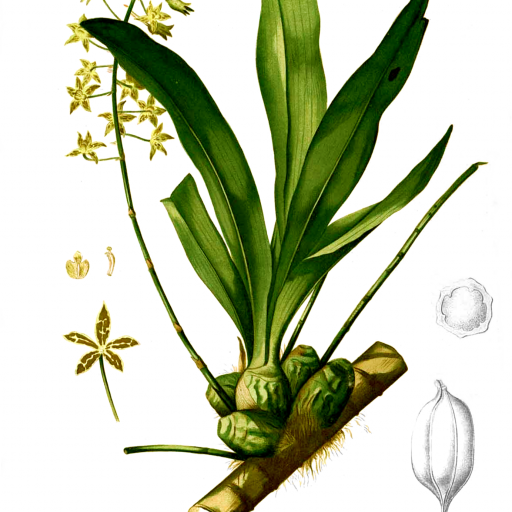
The Grammatophyllum scriptum, affectionately known as the Bell Orchid or Script Orchid, is a show-stopping giant of the orchid world. Native to the lush islands of Southeast Asia and the Southwest Pacific, it is prized for its massive flower spikes and waxy, long-lasting blooms. Its name comes from the mysterious, dark markings on its petals that look remarkably like ancient calligraphy or "script."
🔍 How to Identify
- 🌸 Calligraphy Blooms: The flowers are typically a vibrant yellowish-green, heavily dappled with dark brown or burgundy spots and streaks that resemble written characters.
- 🍍 Robust Pseudobulbs: This orchid features large, thickened, onion-like pseudobulbs at the base, which act as water reservoirs to help the plant survive dry spells.
- 🍃 Strap-shaped Leaves: Its foliage consists of long, leathery, sword-like leaves that can grow up to two feet long, arching gracefully from the top of the pseudobulbs.
- 🎋 Towering Spikes: During blooming season, it produces thick, upright or arching flower stalks that can carry dozens of individual blossoms simultaneously.
🏡 In Your Garden
- 🌞 Light-Hungry Giants: To trigger those magnificent blooms, this plant needs significant light. It thrives in bright, indirect sunlight—think of the dappled light found under a tropical canopy. If the leaves turn dark green, it’s likely not getting enough light to flower.
- 🌬️ Air and Drainage: As an epiphyte (a plant that grows on trees), it absolutely loathes "wet feet." It requires a very chunky potting mix—like coarse bark, charcoal, and perlite—to ensure the roots can breathe.
- 📏 Space Planning: Be prepared! This is a "mega-orchid." Over time, a single specimen can become quite heavy and wide, eventually requiring a large wooden basket or a sturdy permanent spot on a patio.
⚠️ Safety & Toxicity
- ✅ Pet and Child Friendly: The Grammatophyllum scriptum is generally considered non-toxic to cats, dogs, and humans.
- 👐 Contact Caution: While not poisonous, some gardeners with highly sensitive skin may experience mild irritation from the sap if a stem is broken or from the fine hairs on the roots. Wearing gloves during repotting is a simple precaution.
✨ Fun Fact
The name Grammatophyllum is derived from the Greek words gramma (a letter) and phyllon (leaf), referring to the "written" markings on the flowers. It is a close relative of the "Giant Orchid," which is the largest orchid species in the world!

Detailed Care Instructions
To grow a Grammatophyllum Scriptum plant, follow these steps:
- Choose a suitable location: The plant requires a warm and humid environment, so select a spot with indirect sunlight or filtered light. Ensure the temperature remains above 60°F (15.5°C) throughout the year.
- Provide proper humidity: Grammatophyllum Scriptum plants thrive in high humidity. Place a humidity tray filled with water or use a humidifier near the plant to maintain humidity levels between 50% to 70%.
- Use well-draining soil: Use a potting mix that drains well and allows air circulation around the roots. A mixture of orchid bark, sphagnum moss, and perlite is commonly used.
- Select a suitable container: Use a pot or basket with good drainage holes, as these plants do not tolerate excessive moisture around their roots.
- Watering: Water the plant thoroughly when the top inch (2.5 cm) of soil feels dry. Avoid overwatering, as it can lead to root rot. Ideally, water the plant in the morning to allow the foliage to dry during the day.
- Fertilization: Use a balanced orchid fertilizer, diluted to half the recommended strength, once a month during the growing season (spring and summer). Reduce or stop fertilizing during the winter months.
- Repotting: Repot the plant every 2-3 years or when the pot becomes crowded with roots. Be gentle while repotting to avoid damaging the delicate roots.
- Provide support: Grammatophyllum Scriptum plants produce long, arching flower spikes. It is advisable to provide stakes or supports to ensure the flowers do not bend or break.
- Pruning: Remove any dead or diseased parts of the plant to maintain its health and appearance. Cut back the flower stalks after they have finished blooming.
- Pest control: Keep an eye out for common orchid pests, such as aphids, mealybugs, or spider mites. Treat any infestations promptly to prevent damage to the plant.
Remember that growing Grammatophyllum Scriptum can be challenging, and it may take some time for the plant to bloom. Patience and consistent care are key to successful growth.

Place in a window with dappled sun or a spot in the middle of a room. Or directly in a window facing west or east.

Grammatophyllum Scriptum is a plant that requires a consistent watering schedule to ensure its optimal growth. When providing water for this plant, it is important to water it thoroughly, allowing the soil to become fully saturated. Once it has been watered, it is recommended to allow the top layer of soil to dry out before watering again, as overwatering can lead to root rot and other issues. It is also important to ensure that the soil has good drainage to avoid standing water. When watering, it is recommended to avoid getting water on the leaves and flowers of the plant, as this can lead to mold or fungal growth. Overall, providing consistent, thorough watering with well-draining soil is essential for the successful growth of Grammatophyllum Scriptum.
To fertilize this plant, use a balanced fertilizer with a N-P-K ratio of 20-20-20. Dilute the fertilizer to half strength and apply every two weeks during the growing season. During the dormant period, reduce fertilizer to once per month. Water the plant thoroughly before fertilizing to avoid root burn. Additionally, ensure that the plant is getting enough light and air movement for optimal growth.
The ideal soil for a Grammatophyllum Scriptum plant should be a well-draining, loose mixture that is slightly acidic with pH ranging between 5.5 to 6.5. The soil should have a good amount of organic matter and nutrient content to support the plant's growth. It is recommended to mix bark, sphagnum moss, perlite, and charcoal to create a suitable mixture. The soil should be free of any pests or diseases that could harm the plant. The plant prefers moist soil but should not be over-watered, as this can cause root rot.
To propagate this plant, start by selecting a healthy and mature specimen. Using sterilized pruning shears, cut a piece of stem that is at least six inches long, making sure it has several nodes and a few leaves.
Next, prepare a container with well-draining soil or orchid mix. Make a small hole in the soil, and insert the cutting, making sure the bottom node is buried and the top of the cutting is above the soil surface.
Water the cutting thoroughly, and cover the container loosely with clear plastic or a plastic bag. Place the container in a bright, indirect light location and maintain a warm, humid environment by misting the cutting occasionally.
Within a few weeks, new growth should appear at the nodes, indicating successful rooting. Once the new growth is established, gradually reduce the humidity and begin fertilizing the plant regularly. Transplant the new plant into a larger container or outside once it has reached maturity.
Common pests of the written grammatophyllum include Scale insect, mealybugs, spider mites, thrips. Make a habit of checking your written grammatophyllum frequently for pests so that any infestations can be caught and managed early.








