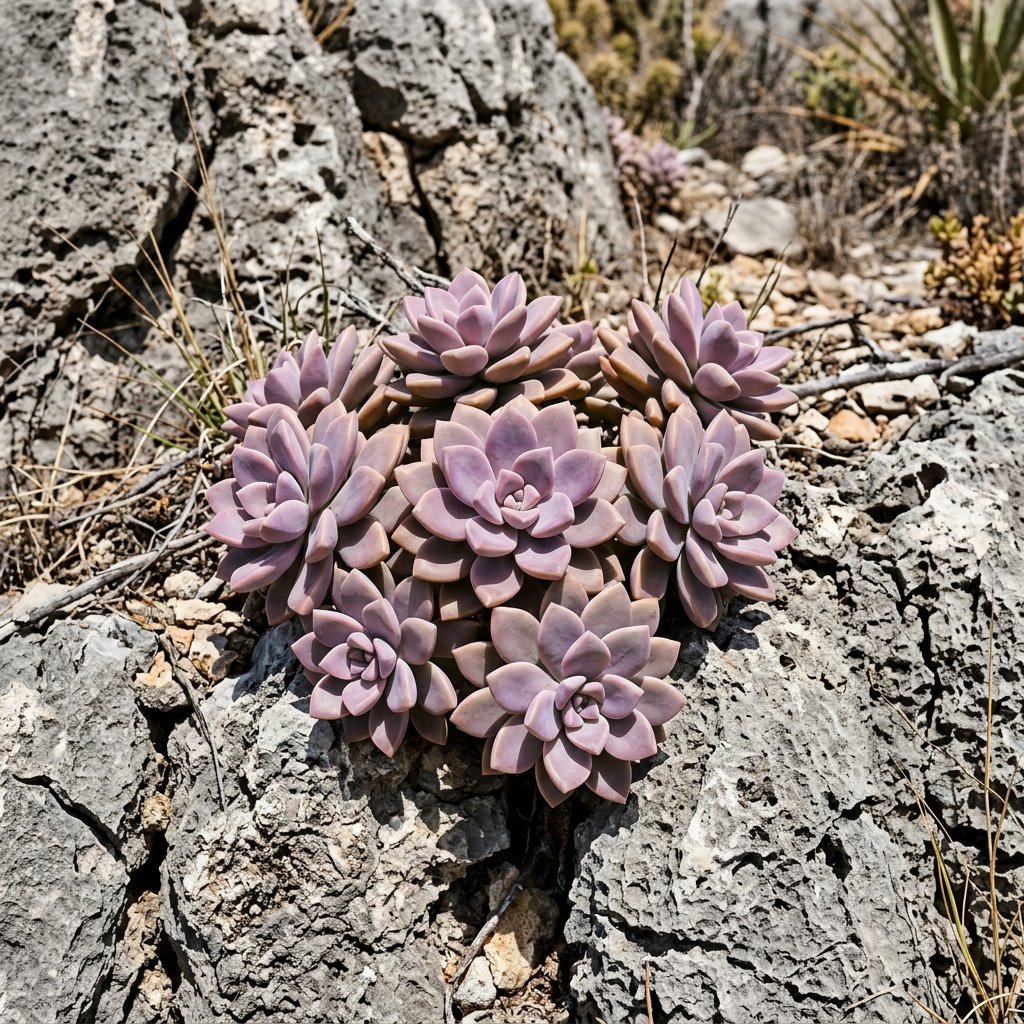
Plant Overview
Known as the "Lavender Pebbles," this Mexican succulent looks like smooth river stones dipped in pastel paint. Its thick, egg-shaped leaves create an ethereal aesthetic that makes it a centerpiece in any "moon garden" or minimalist succulent arrangement. Despite its stone-like appearance, it is a delicate gem that rewards patient gardeners with stunning colors.
🔍 How to Identify
- 🍃 Pebble-Like Leaves: Unlike many succulents with flat or pointed foliage, these leaves are exceptionally plump, rounded, and look like oversized grapes or polished stones.
- 🎨 Pastel Palette: The leaves display a dreamy gradient of soft lavender, powdery pink, and silvery-blue, depending on how much light the plant receives.
- ✨ Farina Coating: The entire plant is covered in a thick, waxy powder called farina, which gives it a soft, matte finish and protects the "skin" from intense sunlight.
🏡 In Your Garden
- ☀️ The "Blush" Factor: This plant is a master of color transformation. To maintain those deep lavender hues, it needs bright, direct light; in low light, the plant will stretch out and turn a dull grey-green.
- 🖐️ Fragile Beauty: The leaves are notoriously easy to knock off—even a heavy gust of wind or a curious cat can cause them to drop. It’s best to "set it and forget it" in a location where it won't be brushed against.
- 🏜️ Drought Specialist: Because the leaves are so thick, they store a massive amount of water. This means the plant prefers to stay dry for long periods and will quickly rot if the soil stays damp for more than a day or two.
⚠️ Safety & Toxicity
- ✅ Non-Toxic: Graptopetalum amethystinum is generally considered safe and non-toxic for both cats and dogs.
- 👶 Choking Hazard: While the plant isn't poisonous, the small, rounded leaves pop off easily and can be a choking hazard for toddlers who might mistake them for pieces of candy.
✨ Fun Fact
The white powdery "farina" on the leaves acts like a permanent sunscreen and a raincoat, but it’s very sensitive. If you touch the leaves, your fingerprints will leave permanent marks because the powder does not regenerate!

Detailed Care Instructions
| Soil Ph | 6.1-7.8 |
| Humidity | Normal |
| Lighting | Full Sun |
| Soil Type | Sandy Or A Light Potting Mix |
| Bloom Time | Spring |
| Difficulty | Easy |
| Plant Type | Perennial Succulent |
| Hibernation | Cold Period |
| Mature Size | 6–7 In. |
| Native Area | Mexico |
| Sun Exposure | Full To Partial Sun |
| Hardiness Zones | 7-11 |
To grow Graptopetalum amethystinum, follow these steps:
- Choose a suitable container: Graptopetalum amethystinum can be grown in a pot or a hanging basket. Ensure that the container has drainage holes at the bottom.
- Soil: Use a well-draining soil mix suitable for succulent plants. You can make your own mix by combining equal parts of regular potting soil, coarse sand, and perlite or pumice.
- Planting: Gently remove the plant from its nursery pot and loosen the roots. Place the plant in the new pot, making sure it is centered, then fill the remaining space with the prepared soil mix. Leave some space at the top for watering.
- Light and temperature: Graptopetalum amethystinum prefer bright, indirect light. Place the pot in a location with partial shade or filtered sunlight. They can tolerate high temperatures but prefer cooler temperatures between 60-75°F (15-24°C). Protect them from frost and extreme heat.
- Watering: Allow the soil to dry out completely between waterings. Graptopetalum amethystinum is drought-tolerant, and overwatering can lead to root rot. Water thoroughly and let excess water drain away. Avoid getting water on the leaves, as this may lead to rot or fungal issues.
- Fertilizing: Feed the plant with a balanced fertilizer diluted to half strength during the growing season (spring to summer). Do not fertilize during the winter months.
- Propagation: Graptopetalum amethystinum can be propagated from stem or leaf cuttings. Allow the cuttings to dry for a few days, then plant them in well-draining soil. Keep the soil slightly moist until new roots develop.
- Pruning: Remove any dead or damaged leaves to maintain a tidy appearance. Graptopetalum amethystinum may also produce offsets or "pups" that can be gently separated and replanted.
- Pests and diseases: Graptopetalum amethystinum is generally resistant to pests and diseases. However, you should regularly inspect the plant for signs of mealybugs, aphids, or fungus gnats. Treat any infestations promptly using appropriate insecticides or natural remedies.
Remember, Graptopetalum amethystinum is a slow-growing plant, so be patient and provide it with the proper care.

Place in a bright room that is sun drenched almost all day. Or directly in a south-facing window.

To water this plant, it is important to check the soil moisture level before watering. Stick your finger into the soil about an inch deep and if it feels dry, it is time to water. Water the plant thoroughly, making sure the water penetrates the soil and reaches the roots. Allow the soil to dry out completely before watering again. Avoid getting water on the leaves or in the rosette as this can lead to rot. This plant prefers well-draining soil and can go long periods without watering.
To fertilize this plant, use a balanced, water-soluble fertilizer once a month during the growing season. Dilute the fertilizer to half the recommended strength and water the soil thoroughly after application. Avoid fertilizing during the dormant season to prevent damage to the plant.
The ideal soil for the Graptopetalum Amethystinum plant should be well-draining and slightly acidic with a pH level between 6.0-7.0. It should contain a mixture of organic matter such as peat moss, perlite, and coarse sand. The soil should be able to retain moisture while allowing excess water to drain away quickly to prevent the roots from rotting. It is essential to avoid using heavy soil that holds water because it can drown the plant's roots. Additionally, adding a slow-release fertilizer to the soil would help provide nutrients to the plant for longer periods.
Graptopetalum Amethystinum is a succulent plant that can be propagated through a variety of methods.
One way to propagate the plant is through leaf cuttings. To do this, select a healthy leaf from the parent plant and gently twist it off the stem. Make sure the leaf is fully intact and free of any damage. Let the leaf dry for a day or two so that the end callus over.
Once the leaf has callused over, place it in a pot filled with well-draining soil. Water the soil lightly and place the pot in a sunny location. It is important not to overwater the plant, as this can cause the leaf to rot.
Another way to propagate Graptopetalum Amethystinum is through stem cuttings. Use a sharp knife or scissors to cut a section of the stem from the parent plant. Again, make sure that the section is healthy and free of any damage.
Place the stem cutting in soil and water it lightly. It is important to keep the soil moist, but not waterlogged. Over time, the stem cutting will develop roots and begin to grow.
In addition to leaf and stem cuttings, Graptopetalum Amethystinum can also be propagated through offsets. Offsets are new plants that grow off of the parent plant. Simply separate the offset from the parent plant and transplant it into its own pot.
Overall, Graptopetalum Amethystinum is a relatively easy plant to propagate, and with proper care, the new plants will thrive.
Common pests of the jewel-leaf-plant include Scale insect, mealybugs, thrips. Make a habit of checking your jewel-leaf-plant frequently for pests so that any infestations can be caught and managed early.








