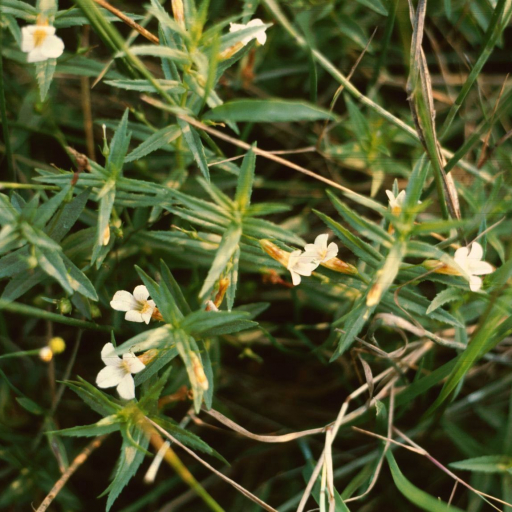
Plant Overview
Often called the "Hedge Hyssop" or historically known as the "Grace of God," Gratiola officinalis has a storied past rooted in European folklore and monastic medicine. This elegant wetland perennial is native to the damp meadows and marshes of Europe and Western Asia. While its delicate, pale blooms suggest a gentle nature, it is a hardy survivor that thrives where other plants might rot.
🔍 How to Identify
- 🌸 Tubular Blooms: The flowers are small, funnel-shaped, and usually white or pale yellow, often featuring subtle violet or pinkish veins in the throat.
- 🍃 Serrated Leaves: Its leaves are lance-shaped, sitting opposite one another along the stem. If you look closely, the upper halves of the leaves usually feature fine, saw-like teeth.
- 📏 Square Stems: Like many bog-dwelling plants, it features upright, hollow, and somewhat square stems that can reach up to 20-50 cm in height.
🏡 In Your Garden
- 💧 The Bog Specialist: This plant is an "obligate wetland" species, meaning it absolutely requires soggy conditions. It is the perfect choice for the muddy margins of a backyard pond or a dedicated bog garden where the soil remains consistently saturated.
- ☀️ Light & Flow: While it loves having "wet feet," it prefers its head in the sun. Planting it in a sunny spot ensures a prolific blooming season from June to August, though it can tolerate partial shade in hotter climates.
⚠️ Safety & Toxicity
- 🚫 Dangerous Beauty: This plant is highly toxic. It contains potent cardiac glycosides and cucurbitacins, which can be fatal if ingested in large quantities.
- 🐾 Livestock & Pets: It is particularly dangerous to grazing animals and curious pets. Because it can cause severe gastrointestinal distress and heart palpitations, it should be handled with gloves and kept away from areas where children or animals play.
✨ Fun Fact
📜 The name "Gratiola" comes from the Latin word Gratia (Grace). In the Middle Ages, it was believed that the plant was a gift from God because of its powerful—though often violent—medicinal effects as a purgative. Modern science, however, suggests we leave the "grace" to the plant's appearance rather than its consumption!

Detailed Care Instructions
To successfully grow Gratiola officinalis, also known as hedge hyssop or self-heal, follow these steps:
- Obtain seeds: Purchase Gratiola officinalis seeds from a reputable seed supplier or collect them from existing plants if available.
- Timing: Sow the seeds in early spring or late summer. Gratiola officinalis prefers cool weather conditions.
- Soil preparation: Choose a well-draining soil for planting, preferably a loamy or sandy soil. Remove any weeds or grass from the planting area.
- Seedling trays: Fill seedling trays or small pots with potting soil, leaving a ¼ inch space at the top. Moisten the soil before sowing the seeds.
- Seed sowing: Spread the Gratiola officinalis seeds evenly over the soil surface of the seedling trays. Lightly press them into the soil but do not bury them too deep.
- Watering: After sowing, gently water the seeds using a misting spray or a watering can with a fine rose attachment. Keep the soil moist but not overly saturated.
- Germination: Place the seedling trays in a warm location, ideally around 68-77°F (20-25°C). Seeds usually take 2-3 weeks to germinate. Once germinated, move them to a location with bright, indirect sunlight.
- Transplanting: When the seedlings have grown to a suitable size (around 2-3 inches), they can be transplanted outdoors. Choose a location with partial shade or full sun, depending on your climate.
- Planting outdoors: Dig holes in the garden bed or container that are slightly larger than the root ball of the seedlings. Carefully remove the seedlings from the trays and place them in the holes. Fill the holes with soil and gently firm the soil around the base of the plants.
- Watering and care: Keep the Gratiola officinalis plants well-watered, especially during dry periods. Water deeply rather than frequently. Avoid overwatering, as this can cause root rot. Mulch around the plants to help retain soil moisture and prevent weed growth.
- Pruning: Regularly remove spent flowers to encourage continuous blooming and prevent self-seeding. Additionally, prune any dead or damaged foliage to maintain the overall health and appearance of the plants.
- Pests and diseases: Gratiola officinalis is generally resistant to pests and diseases. However, keep an eye out for aphids, slugs, or snails and take appropriate measures if necessary.
By following these steps, you can successfully grow Gratiola officinalis and enjoy its lovely blooms.

Place in a bright room that is sun drenched almost all day. Or directly in a south-facing window.

The plant in question requires regular watering to thrive. It should not be allowed to dry out completely between waterings, but it should also not be kept in standing water. The soil should be kept evenly moist, but not saturated. The plant may benefit from occasional misting to increase humidity. Watering should be adjusted depending on the specific conditions of the plant's growing environment.
To fertilize this plant, use a balanced fertilizer with an N-P-K ratio of 10-10-10 or similar. Apply the fertilizer according to the manufacturer's instructions, typically every two to four weeks during the growing season. Avoid over-fertilizing, as this can cause damage to the plant. Water the plant well before and after fertilizing.
The ideal soil for this plant should be well-draining and rich in organic matter. It should be slightly acidic with a pH of around 6.0 to 6.5. A sandy loam soil with good moisture retention is preferable. The plant prefers moist soils, but it should not be waterlogged. The soil should also be nutrient-rich with a good balance of nitrogen, phosphorus, and potassium. Adding compost or other organic matter to the soil can help improve its quality. Additionally, the plant may benefit from occasional fertilization with a balanced, water-soluble fertilizer.
To propagate this plant, first take cuttings from the parent plant. Choose healthy stems that are about 4-6 inches long with several leaves. Cut the stem at an angle just below a leaf node.
Remove the lower leaves, leaving only the top few. Dip the cut end of the stem in rooting hormone powder and insert it into a pot filled with moist potting soil.
Cover the pot with a clear plastic bag to create humidity, and place it in a warm, bright location away from direct sunlight. Mist the soil and the leaves daily to keep the cutting moist.
After about 2-3 weeks, check for roots by gently tugging on the cutting. If it resists, roots have formed and you can remove the plastic bag. Once the cutting has established roots, you can plant it in a larger pot or directly in the garden.








