Plant Overview
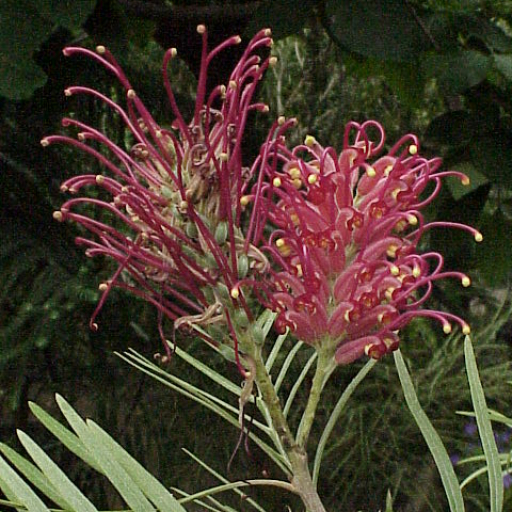
Known as the Red Silky Oak or Banks' Grevillea, this striking Australian native is a showstopper in any subtropical landscape. Named after the famed botanist Sir Joseph Banks, it is beloved for its "toothbrush" shaped flowers that look like explosions of crimson silk. Whether grown as a bushy shrub or a slender tree, it serves as a vibrant, year-round beacon for honey-eating birds and buzzing pollinators.
🔍 How to Identify
- 🌺 The Flowers: Large, dense clusters (racemes) of curved, wiry flowers that typically bloom in bright red, though a creamy-white variety also exists.
- 🌿 The Foliage: Deeply lobed, fern-like leaves that are dark green on top with a shimmering, silvery-grey underside covered in fine hairs.
- 🪵 Growth Habit: Usually seen as an upright, multi-stemmed shrub reaching 2–7 meters, though it can occasionally take the form of a small, slender tree.
- 🌰 Seed Pods: Distinctive leathery, hairy pods that turn dark brown and split open when ripe to release two flat, winged seeds.
🏡 In Your Garden
- ☀️ Sun & Drainage: This plant is a sun-worshipper and requires a bright spot to bloom well. It is highly sensitive to "wet feet," so ensure your soil is gritty and well-draining to prevent root rot.
- 🧪 Nutrient Sensitivity: Like many members of the Proteaceae family, it has specialized "proteoid" roots. Never use standard fertilizers; high phosphorus levels can actually be fatal to the plant. Use a specific "Native" or low-phosphorus blend instead.
- ✂️ Pruning Habits: To prevent it from becoming "leggy" or sparse at the bottom, give it a light prune after its main flowering flush. This encourages a denser, bushier shape that provides better cover for nesting birds.
⚠️ Safety & Toxicity
- 🚫 Status: Potential skin irritant and mildly toxic if ingested.
- 🧴 Details: The foliage and flowers contain resorcinols, which can cause contact dermatitis (a red, itchy rash) in sensitive individuals, similar to the reaction caused by poison ivy. It is best to wear gloves when pruning. Keep pets and children away from the foliage to avoid skin irritation or stomach upset if chewed.
✨ Fun Fact
The Grevillea banksii was one of the very first Australian plants collected by European scientists. It was gathered in 1770 at Botany Bay by Joseph Banks and Daniel Solander during Captain James Cook's historic first voyage on the HMS Endeavour.

Detailed Care Instructions
| Humidity | Normal |
| Lighting | Full Sun |
| Difficulty | Medium |
| Hibernation | Cold Period |
| Hardiness Zones | 9 - 11 |
To grow Grevillea Banksii plant, you can follow these tips:
- Climate and soil: Grevillea Banksii prefers warm and temperate climates. It thrives in well-draining soil with a pH level between 6 and 7.
- Planting: Choose a suitable location with access to full sun. Dig a hole slightly larger than the plant's root ball. Place the plant in the hole, making sure it is planted at the same depth as it was in the nursery pot. Backfill with soil and gently firm it around the plant.
- Watering: Initially, water the plant deeply and regularly to establish root growth. Once established, Grevillea Banksii is drought-tolerant and requires less frequent watering. However, during dry periods, provide additional water to keep the soil moist.
- Mulching and weeding: Apply a layer of mulch around the base of the plant to conserve moisture, suppress weeds, and improve soil health. Regularly remove any weeds that may compete with the plant for nutrients and water.
- Pruning: Prune Grevillea Banksii after flowering to encourage bushier growth and maintain a compact shape. Remove dead or damaged branches, and cut back any excessive growth to maintain the desired size and shape.
- Fertilization: Grevillea Banksii is generally not heavy feeders. However, you can apply a slow-release native plant fertilizer in spring to promote healthy growth.
- Pests and diseases: Grevillea Banksii is relatively disease and pest resistant. However, keep an eye out for common pests like aphids or spider mites. Treat any infestation promptly with appropriate organic or chemical pesticides.
- Propagation: Grevillea Banksii can be propagated through seeds or cuttings. Seeds can be sown in a well-draining mix and kept in a warm, bright location until they germinate. Cuttings should be taken from semi-hardwood stems, treated with a rooting hormone, and placed in a well-draining propagation mix.
By following these guidelines, you can successfully grow Grevillea Banksii and enjoy its beautiful flowers and foliage.

Place in a bright room that is sun drenched almost all day. Or directly in a south-facing window.

Grevillea Banksii plant requires regular watering to thrive. It requires a consistent supply of moisture so that the soil does not dry out completely. When watering the plant, it is important to direct the water towards the base of the plant instead of splashing it onto the leaves, as this can lead to fungal diseases. It is best to water the plant deeply once a week, particularly during the dry season. However, during periods of heavy rain or high humidity, it may not be necessary to water the plant as often. It is important to check the soil moisture level regularly by inserting a finger into the soil to ensure that the soil is moist but not waterlogged. Additionally, it is important to ensure that the plant is planted in well-draining soil to avoid waterlogging and root rot.
To fertilize this plant, use a slow-release fertilizer specifically formulated for native plants. Be mindful not to over-fertilize, as this can harm the plant. Apply the fertilizer following the instructions on the packaging, and water the plant well after fertilizing. During the active growing season, you can fertilize the plant once every six months. If the plant is grown in a pot, reduce the amount of fertilizer applied.
The ideal soil for the Grevillea Banksii plant should be well-draining, light, and sandy or loamy. It should also have a slightly acidic to neutral pH (around 5.5-7.0). Adding organic matter such as compost or aged manure can improve soil structure and fertility. Avoid using heavy, clayey soil or soil that retains too much moisture, as this can cause root rot and other problems. It is also important to ensure good drainage to prevent waterlogging. Additionally, Grevillea Banksii plants prefer a sunny location and may require occasional pruning to maintain their shape.
Propagating this plant can be successfully achieved through various methods such as taking cuttings or sowing seeds. One way to propagate Grevillea Banksii is by taking semi-hardwood cuttings in spring or summer. This involves taking 10-15cm long stem cuttings that have slightly hardened off but are not fully mature. These cuttings should be selected from healthy parent plants and should ideally have at least one node or leaf attachment. The lower leaves should be removed, and the cutting should be dipped into a rooting hormone before being placed in a well-draining potting mix and kept in a sheltered area with high humidity and indirect light. After 4-6 weeks, roots should have formed, and the plant can be transplanted into its permanent location.
Another way to propagate this plant is by sowing seeds in autumn or early spring. The seeds should be collected from mature plants, and after soaking in water for a few hours, they can be sown in a well-draining potting mix and covered lightly with soil. The seedlings should be kept in a sheltered area with indirect light and kept moist but not waterlogged. After 6-8 weeks, the seedlings should have grown to a suitable size for transplanting into their permanent location.
It's worth noting that Grevillea Banksii is a native Australian plant, and propagating from existing plants or seeds from reputable sources will help to protect this species and avoid introducing potential diseases or pests.








