Plant Overview
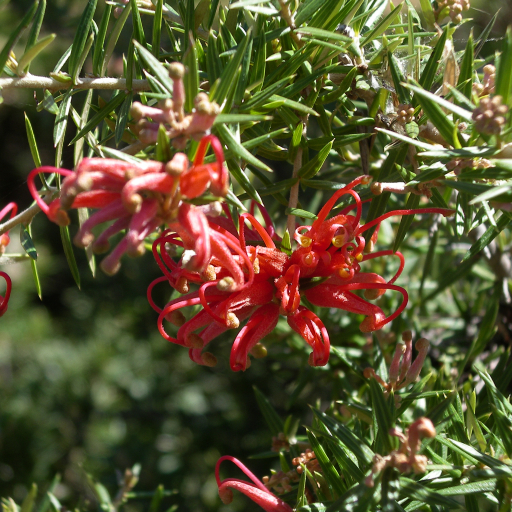
Known as the "Juniper-leaf Grevillea" or the "Prickly Spider Flower," this Australian native is a tough-as-nails shrub that brings an architectural edge to any landscape. It earned its name because its foliage looks remarkably like a Juniper bush, but the surprise comes in spring when it erupts with clusters of exotic, alien-looking "spider" flowers. In its homeland, it’s a favorite haunt for honeyeaters and colorful parrots.
🔍 How to Identify
- 🌿 The Foliage: The leaves are short, stiff, and needle-like, ending in a sharp point. They are arranged densely along the stems, giving the plant a prickly, "don't touch me" texture.
- 🕷️ The Bloom: The flowers lack traditional petals; instead, they consist of curved tubes with long, prominent "styles" that flick out like colorful spider legs. They range from vivid red and orange to soft yellow.
- 📏 Growth Habit: Depending on the variety, it can be a prostrate groundcover that hugs the earth or an upright, bushy shrub reaching up to 10 feet tall.
🏡 In Your Garden
- 🐦 The Bird Magnet: If you want a garden full of life, this is your plant. The nectar-rich flowers are specifically designed to be pollinated by birds with long beaks, turning your yard into a bustling sanctuary.
- 🧱 Natural Security: Because of its prickly nature, the upright varieties make excellent "living fences." They are perfect for planting under windows or along boundaries to deter unwanted foot traffic or roaming pets.
- 🧪 Special Diet: Like most members of the Protea family, this plant is "phosphorus-sensitive." It has evolved to thrive in poor soils, so using standard fertilizers can actually harm it—always look for a "native-safe" low-phosphorus blend.
⚠️ Safety & Toxicity
- 🧤 Skin Sensitivity: While not considered "deadly toxic," many people experience contact dermatitis (itchy skin or a rash) after handling Grevillea. Always wear gloves when pruning.
- 🐾 Pet Safety: It is generally considered non-toxic to cats and dogs if nibbled, but the sharp leaves are a natural deterrent—most pets will give this prickly bush a wide berth.
✨ Fun Fact
The genus Grevillea was named in honor of Charles Francis Greville, an 18th-century British antiquarian and botanist who was also one of the founders of the Royal Horticultural Society!

Detailed Care Instructions
To grow a Grevillea Juniperina plant, also known as Juniper Grevillea, follow these steps:
- Choose a suitable location: Grevillea Juniperina prefers a sunny spot with well-draining soil. Ensure that it receives at least six hours of direct sunlight each day.
- Soil preparation: Prepare the soil by loosening it and adding organic matter like compost or aged manure. This will improve drainage and enrich the soil with nutrients.
- Planting: Dig a hole slightly larger than the root ball of the plant. Place the plant in the hole, ensuring that the top of the root ball is level with the ground. Backfill the hole with soil, gently firming it around the plant.
- Watering: Water the newly planted Grevillea Juniperina deeply immediately after planting to settle the soil around the roots. Afterward, water regularly but avoid overwatering. The plant prefers a slightly dry environment, so allow the top few inches of soil to dry out between waterings.
- Mulching: Apply a layer of organic mulch around the base of the plant to conserve moisture, suppress weed growth, and regulate soil temperature.
- Pruning: Grevillea Juniperina generally requires minimal pruning. However, you can lightly prune after flowering to maintain a compact shape or remove damaged or dead branches.
- Fertilization: Apply a slow-release, low-phosphorus fertilizer in early spring to promote healthy growth. Follow the manufacturer's instructions for dosage and application.
- Protection from frost: Grevillea Juniperina is generally hardy, but young or newly planted specimens may be susceptible to frost damage. Protect the plant by covering it with a horticultural fleece or using a plant cover during cold weather.
- Pests and diseases: Grevillea Juniperina is relatively pest and disease-resistant. However, it may occasionally attract aphids or caterpillars. Monitor your plant regularly and take appropriate action if needed, such as using organic insecticidal soap or picking off pests by hand.
- Maintenance: Regularly monitor the health and growth of your Grevillea Juniperina plant. Remove any dead or yellowing leaves or flowers to maintain the plant's vigor and overall appearance.
By following these steps, you can successfully grow a Grevillea Juniperina plant in your garden or landscape. Remember to provide the necessary care, including proper watering, pruning, and protection from extreme weather conditions.

Place in a bright room that is sun drenched almost all day. Or directly in a south-facing window.

When watering this particular plant, it is important to consider its natural habitat and watering needs. Grevillea Juniperina typically grows in dry, rocky soils with low moisture levels. As such, it is best to water sparingly, but deeply.
When checking for watering requirements, feel the soil around the roots of the plant. If it feels dry to the touch, it is time to water. However, be careful not to overwater, as this can lead to root rot and other issues.
The best approach to watering is to use a slow-release method. For example, use a drip irrigation system that delivers a slow, steady stream of water directly to the roots of the plant. This will allow the water to penetrate deep into the soil, encouraging strong root growth.
Another option is to water by hand, using a watering can or hose with a low pressure setting. Apply water to the base of the plant, rather than the leaves or flowers, which can lead to diseases. Aim for a deep watering, allowing the water to soak into the soil.
It is also important to avoid watering in the heat of the day, as this can cause water to evaporate quickly, and can stress the plant. Instead, water in the early morning or late afternoon when the temperatures are cooler.
Overall, the key to watering Grevillea Juniperina is to strike a balance between providing enough moisture for the plant to thrive, while avoiding overwatering and creating wet conditions that can lead to disease.
For optimal growth and blooming, fertilize your Grevillea Juniperina plant in the spring and fall, using a slow-release, low-phosphorus fertilizer. Be sure to follow the instructions on the fertilizer package carefully. Avoid fertilizing during the hot summer months, as this can burn the plant's roots. Instead, water deeply and frequently during this time to keep the soil moist. Regular pruning can also help promote healthy growth and flowering.
The soil to use with this plant should be well-draining and slightly acidic, with a pH level between 5.5 and 6.5. It should be a sandy loam soil that is rich in organic matter, such as compost or aged manure. This plant also prefers to grow in soil that is relatively low in nutrients and not too fertile. Additionally, the soil should be kept moist but not waterlogged and should never be allowed to dry out completely.
To propagate this plant, you will need to take semi-hardwood cuttings from a healthy parent plant. Choose a branch that is about 10-20cm long and has no flowers or buds. Use a sharp, sterilized knife to make a clean cut just below a node. Remove all the leaves from the bottom half of the cutting, leaving only a few leaves at the top.
Next, dip the cutting in rooting hormone powder and shake off any excess. Place the cutting in a pot filled with well-draining soil mix, and water thoroughly.
Cover the pot with a plastic bag or a clear plastic container to create a mini greenhouse. Place the pot in a warm, bright location out of direct sunlight. Mist the cutting daily to keep humidity levels high.
After about 4-6 weeks, roots should have formed, and new growth should be visible. At this point, remove the plastic cover and move the plant to a brighter spot. Gradually acclimate the plant to direct sunlight.
Once the cutting has developed a more substantial root system, it can be transplanted into a larger pot or into the ground. Just be sure to keep the soil moist and avoid overwatering.








