Plant Overview
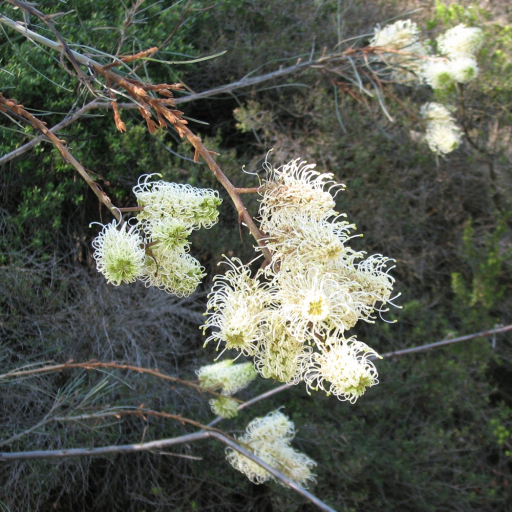
Known affectionately (and perhaps a bit notoriously) as the Old Socks Grevillea or the White Plume Grevillea, this Australian native is a true showstopper for those who love high-contrast gardens. Native to the sandy plains of Western Australia, it is famous for its dramatic, arching flower spikes that rise well above its foliage like ghostly feathers. While it looks like something out of a dream, its nickname comes from its peculiar, pungent scent that is most powerful after the sun goes down.
🔍 How to Identify
- ☁️ The "Plumes": It produces long, leafless flower stalks that can reach up to 2 meters high, topped with dense, creamy-white cylindrical flower heads.
- 🌿 Silvery Foliage: The leaves are deeply divided, almost fern-like, with a distinct grey-green or silvery hue and a slightly "toothy" texture.
- 👃 The Scent Test: If you aren't sure of the ID, wait until dusk. The flowers emit a strong, musky odor that many compare to dirty laundry or old socks.
🏡 In Your Garden
- ☀️ Sun & Space: This is not a plant for a cramped corner; it is a fast-growing, large shrub that demands full sun and plenty of room to spread its "wings."
- 🏜️ Drainage is Key: Coming from the sandy scrublands, it has a sensitive root system that will rot quickly in heavy clay. It requires exceptionally well-draining soil and is highly drought-tolerant once established.
- ✂️ Pruning Strategy: Because it can become "leggy" or sparse at the base, regular pruning after the flowering season is finished will help maintain a bushy, attractive shape.
⚠️ Safety & Toxicity
- 👐 Skin Irritation: Like many Grevilleas, this species contains resorcinols, which can cause contact dermatitis (a red, itchy rash) in sensitive individuals. It is often called the "Grevillea itch."
- 🐾 Pet Safety: While not considered highly toxic if nibbled, the stiff, scratchy foliage and potential for stomach upset mean it's best kept away from curious pets.
- 🧤 Handy Tip: Always wear gloves when pruning or handling the foliage to avoid skin reactions.
✨ Fun Fact
The "Old Socks" smell isn't just a quirk—it’s an evolutionary strategy! While many flowers smell sweet to attract bees and birds, Grevillea leucopteris uses its musky scent to attract nocturnal pollinators like moths and beetles that are specifically drawn to those heavier, fermented aromas.

Detailed Care Instructions
| Humidity | Normal |
| Lighting | Full Sun |
| Difficulty | Medium |
| Temperature | 20°C - 22°C |
To grow Grevillea leucopteris, follow these steps:
- Choose a suitable location: Grevillea leucopteris thrives in full sun to partial shade. Select a well-draining spot in your garden with enough space for the plant to grow.
- Prepare the soil: Grevillea leucopteris prefers slightly acidic to neutral soil, so make sure your soil is well-draining and enriched with organic matter. If your soil is heavy clay, consider adding perlite or coarse sand to improve drainage.
- Planting: Dig a hole that is slightly larger than the plant's root ball. Place the plant in the hole, making sure the top of the root ball is level with the surrounding soil. Backfill the hole with a mixture of soil and organic matter, gently firming it around the roots.
- Watering: Water the plant thoroughly after planting to help settle the soil around the roots. Afterward, provide regular watering, particularly during the establishment period. Once established, Grevillea leucopteris is drought tolerant but will benefit from occasional watering during prolonged dry spells.
- Mulching: Apply a layer of organic mulch around the base of the plant to retain moisture, suppress weeds, and regulate soil temperature.
- Pruning: Prune Grevillea leucopteris after flowering to maintain its shape and promote bushier growth. Remove any dead or damaged branches and trim back overgrown areas.
- Fertilization: Grevillea leucopteris generally doesn't require frequent fertilization. However, you can apply a slow-release, low-phosphorus native plant fertilizer in early spring to provide a nutrient boost.
- Pests and diseases: Grevillea leucopteris is generally resistant to most pests and diseases. However, be mindful of aphids, spider mites, and caterpillars. Regularly inspect the plant for any signs of infestation and take appropriate measures if necessary.
- Propagation: Grevillea leucopteris can be propagated from seeds or cuttings. Collect mature seeds from the plant and sow them in well-draining potting mix. For cuttings, take semi-hardwood cuttings in early spring and plant them in a well-draining propagating mix. Keep the cuttings in a warm, bright area until they establish roots.
By following these steps, you can successfully grow and care for Grevillea leucopteris, a beautiful and hardy plant.

Place in a bright room that is sun drenched almost all day. Or directly in a south-facing window.

When it comes to watering the Grevillea Leucopteris plant, it is important to consider its specific watering needs for optimal growth and health. Here are some guidelines to follow:
1. Watering Frequency: The Grevillea Leucopteris plant should be watered consistently but less frequently. Wait for the top inch or two of the soil to dry out before watering again. Overwatering can lead to root rot, while underwatering can stress the plant.
2. Soil Drainage: Ensure that the soil used for planting this plant is well-draining. This helps prevent waterlogging, which can also contribute to root rot. If the soil holds moisture for extended periods, consider improving its drainage by adding perlite, sand, or organic matter.
3. Watering Technique: When watering, aim for a thorough soaking. Apply water at the base of the plant rather than overhead to avoid wetting the foliage excessively. This helps minimize the risk of fungal diseases and ensures that the water reaches the roots effectively.
4. Seasonal Adjustments: During the warmer months or when the Grevillea Leucopteris plant is actively growing, it may require more frequent watering. However, reduce the frequency during colder periods or when growth slows down in winter.
5. Moisture Monitoring: Regularly check the moisture level of the soil by gently sticking your finger into the top inch or using a moisture meter. Adjust the watering frequency accordingly, ensuring that the soil stays slightly moist but not saturated.
6. Rainwater Utilization: If possible, collect rainwater and use it to water the Grevillea Leucopteris plant. Rainwater is generally preferred as it is free from added chemicals like chlorine, which can be present in tap water.
Remember, the above guidelines are general recommendations, and specific watering requirements may vary depending on factors such as climate, pot size, and sunlight exposure. It is always beneficial to observe your plant closely and adjust your watering routine accordingly to cater to its individual needs.
To effectively fertilize the Grevillea Leucopteris plant, follow these instructions:
- Choose a balanced fertilizer: Select a slow-release, balanced fertilizer specifically formulated for native or Australian plants. Look for a product with a ratio such as 10-10-10 or similar.
- Timing: Apply fertilizer during the active growing season, which is typically in spring or early summer. Avoid fertilizing during the plant's dormancy period in winter.
- Preparation: Before fertilizing, ensure that the soil is moist but not waterlogged. If the soil is dry, water the plant a day or two before applying fertilizer.
- Application method: Scatter the fertilizer lightly around the base of the plant, keeping it away from the stem or trunk. Avoid excessive application that can lead to fertilizer burn, and follow the manufacturer's instructions regarding the specific amount to use.
- Watering after application: After applying the fertilizer, water the plant thoroughly. This allows the nutrients to penetrate the soil and reach the plant's roots.
- Frequency: For young Grevillea Leucopteris plants, fertilize every four to six weeks during the active growth season. As the plant matures, you can decrease the frequency to two to three times per year, following the same schedule.
- Mulching: Apply a layer of organic mulch, such as bark chips or compost, around the base of the plant. Mulching helps retain soil moisture and provides additional nutrients as it decomposes.
- Monitoring: Keep an eye on the plant for signs of over-fertilization, such as burnt leaf tips or yellowing leaves. If these symptoms occur, flush the soil with water to dilute the excess nutrients and adjust the next fertilizer application accordingly.
Remember, each Grevillea Leucopteris plant may have specific needs, so always consult local gardening resources or a professional for more personalized advice.
Grevillea leucopteris is a plant species that requires certain soil conditions to thrive. The ideal soil for this plant is well-draining, moderately fertile, and slightly acidic to neutral in pH. It should be a mix of organic matter, such as compost or leaf mold, and inorganic matter like sand or perlite to ensure good drainage. The soil should not be overly sandy or heavy with clay, as it may lead to poor drainage or waterlogged roots.
The plant has a shallow root system, so the soil should be loose and friable to allow the roots to spread and access water and nutrients easily. Adding some coarse materials like perlite or pumice can help improve the soil structure and drainage.
Being a native to specific regions, Grevillea leucopteris requires soil that is low in phosphorus. Therefore, it is best to avoid high-phosphorus fertilizers or amended soils, as excessive phosphorus can hinder the plant's growth and overall health.
Additionally, regular monitoring of the moisture levels in the soil is crucial. Overwatering can lead to root rot, so it's important to let the soil dry slightly between waterings.
Overall, providing a well-draining, slightly acidic to neutral soil mix with good levels of organic matter is crucial for the successful growth of Grevillea leucopteris.
To propagate the Grevillea Leucopteris plant, follow these steps:
- Select a healthy and mature Grevillea Leucopteris plant with strong stems and vibrant foliage to obtain cuttings from.
- Choose a branch that is around 6-8 inches long and has several leaf nodes (the points where leaves emerge from the stem).
- Use a clean, sharp pair of pruning shears or a knife to make a clean cut just below a leaf node at a 45-degree angle. This angled cut provides a larger surface area for root development.
- Remove any lower leaves or side shoots from the cutting, leaving only a few leaves at the top intact, as they will help in photosynthesis during the rooting process.
- If desired, you can dip the cut end of the stem into a rooting hormone powder or gel to encourage faster root development. This step is optional but can improve success rates.
- Prepare a well-draining propagation medium, such as a mix of equal parts perlite and peat moss or a specialized seed-starting mix.
- Moisten the propagation medium with water until it is evenly damp but not waterlogged.
- Create a hole in the propagation medium using a pencil or your finger, deep enough to accommodate the lower portion of the cutting.
- Insert the cutting into the hole, making sure at least one or two leaf nodes are submerged into the propagation medium.
- Gently firm the medium around the cutting to ensure good contact and stability.
- Place the propagation container or tray in a warm and bright location, preferably with indirect sunlight. Providing bottom heat with a heat mat can also encourage faster root growth.
- Mist the cutting and propagation medium regularly to maintain humidity, but avoid waterlogging the medium.
- Keep a close eye on the cutting for the next few weeks, ensuring that it does not dry out. While some leaf loss is expected during the rooting process, it should generally remain turgid and healthy.
- After approximately 6-8 weeks, gently tug on the cutting to check for root development. If resistance is felt, roots have formed, and the cutting has successfully propagated.
- Transplant the rooted cutting into an appropriate potting mix or directly into the garden, taking care not to damage the delicate roots.
By following these steps, you can successfully propagate the Grevillea Leucopteris plant and expand your collection or share this beautiful plant with others.








