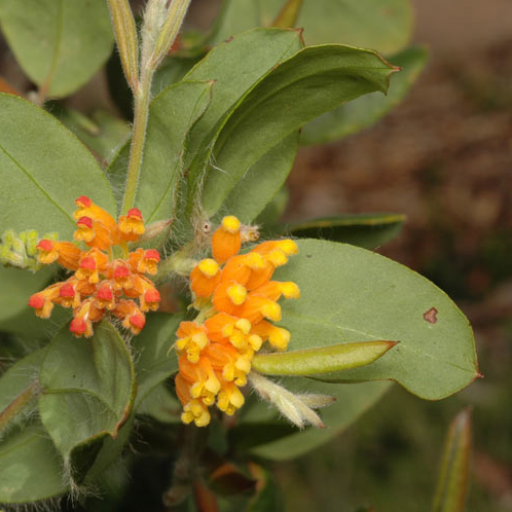
Plant Overview
Known as the Pimelea Grevillea, this Australian native is a master of texture and a hidden gem of the Darling Scarp. Often overlooked in favor of its showier "spider flower" cousins, it brings a sophisticated, soft-focus aesthetic to native gardens with its velvety foliage and sunshine-yellow clusters. It is a hardy survivor that tells a story of adaptation to the rugged, rocky landscapes of Western Australia.
🔍 How to Identify
- 🌿 Fuzzy Foliage: The leaves are narrow, oval, and covered in fine, silky hairs, giving the plant a distinct silvery-green or "dusty" appearance that is soft to the touch.
- ☀️ Golden Tassels: Small, tubular yellow flowers (occasionally tinged with orange) gather in tight, pendulous clusters at the tips of the branches, looking like miniature pom-poms.
- 📏 Stately Form: It grows as an upright, slender shrub, typically reaching between 1 and 2.5 meters in height, providing excellent vertical structure without becoming overly bushy.
🏡 In Your Garden
- 🏜️ Drainage is Key: Originating from rocky slopes and gravelly loams, this plant will not tolerate "wet feet." It thrives in sandy or well-aerated soils where water moves quickly away from the roots.
- 🦅 Bird Magnet: While it might look delicate to us, honeyeaters and other nectar-feeding birds find its yellow blooms irresistible. It is an essential choice for those looking to support local biodiversity.
- 🧪 Phosphorus Warning: Like most members of the Proteaceae family, it has specialized "proteoid" roots designed to scavenge nutrients in poor soil. Never use standard fertilizers; only use those specifically labeled "Low Phosphorus" or "Native" to avoid poisoning the plant.
⚠️ Safety & Toxicity
- 🧤 Skin Sensitivity: Many Grevilleas contain a compound called grevilleol. Contact with the foliage or flowers can cause "Grevillea dermatitis," resulting in a red, itchy, or blistering rash on sensitive skin. Always wear gloves when pruning.
- 🐾 Pet Safety: While not generally considered a high-risk toxic plant for ingestion, the prickly nature of the shrub and its chemical compounds can cause mild stomach upset if chewed by curious cats or dogs.
✨ Fun Fact
The species name pimeleoides literally translates to "resembling Pimelea." It was named this because its flower clusters look strikingly similar to the unrelated "Rice Flower" (Pimelea), a classic example of how different plants can evolve similar looks to attract the same pollinators!

Detailed Care Instructions








