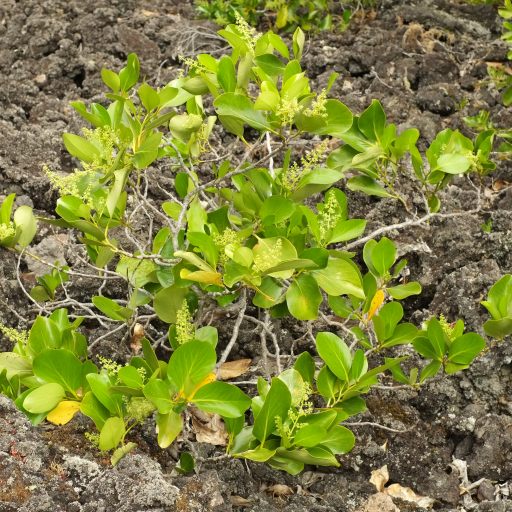
Plant Overview
Known as "Akapuka" or the "Shining Broadleaf," this New Zealand native is the epitome of lush, architectural greenery. Often seen perching high in the branches of forest giants in the wild, it has transitioned into a coastal garden favorite for its "lit-from-within" glow and tropical vibe. Its resilient nature makes it a structural staple for those looking to add a touch of the South Pacific to their landscape.
🔍 How to Identify
- 🌿 Glossy Foliage: The leaves are large, thick, and incredibly shiny (lucida translates to "shining"), acting like natural mirrors for the sun.
- 🍃 Asymmetrical Base: A unique botanical signature is the leaf base; one side of the leaf blade is always significantly longer than the other where it meets the stem.
- 🍇 Hidden Fruits: While the green-yellow flowers are tiny and easily missed, they eventually produce dark purple-black berries that are a favorite for visiting birds.
🏡 In Your Garden
- 🌬️ Coastal Champion: Because its leaves are so thick and leathery, it can withstand salt spray and harsh winds better than most broadleaf plants, making it ideal for seaside properties.
- 🧱 Living Privacy: While it starts with a modest growth rate, its dense habit and broad leaves make it a top-tier choice for a "green wall" or a low-maintenance privacy screen.
- 💧 Drainage is Key: In the wild, this plant often grows as an epiphyte (on other trees). Because of this "aerial" heritage, it absolutely hates "wet feet" and requires very well-drained soil to thrive.
⚠️ Safety & Toxicity
- ✅ Low Risk: Griselinia lucida is generally considered non-toxic to humans and is not known for causing severe reactions.
- 🐾 Pet Safety: It is not listed as a high-danger plant for cats or dogs, though the consumption of any fibrous plant material can cause mild stomach upset in curious pets.
- 🧤 Sap Sensitivity: While the sap is not caustic, individuals with very sensitive skin should wear gloves when pruning to avoid any potential mild irritation from the plant's juices.
✨ Fun Fact
In its natural New Zealand rainforest habitat, the Puka often starts its life as a "hitchhiker." It begins growing in the mossy forks of tall trees, eventually sending long, grooved aerial roots down to the forest floor to establish itself—a botanical journey from the sky down to the earth!

Detailed Care Instructions
To grow Griselinia Lucida plants, follow these steps:
- Choose the right location: Griselinia Lucida plants prefer moist, well-drained soil in a partially shaded spot. Select a location where the plant will receive filtered sunlight or partial shade throughout the day.
- Prepare the soil: Ensure the soil is well-drained and has good moisture retention. Amend the soil with organic matter, such as compost, to improve its fertility and drainage.
- Planting: Dig a hole slightly larger than the root ball of the plant. Place the plant in the hole, ensuring the top of the root ball is level with the soil surface. Backfill the hole with soil and gently firm it around the plant.
- Watering: Water the plant thoroughly after planting and maintain regular watering until the plant establishes. Griselinia Lucida plants prefer moderately moist soil, so water them when the top inch of soil feels dry.
- Mulching: Apply a layer of organic mulch, such as wood chips or straw, around the base of the plant. Mulching helps conserve moisture, regulate soil temperature, and suppress weed growth.
- Pruning: Prune the plants regularly to maintain their desired shape and size. Griselinia Lucida plants respond well to pruning and can be shaped into hedges or topiaries.
- Fertilizing: Apply a balanced slow-release fertilizer in spring to provide essential nutrients to the plant. Follow the package instructions for the recommended application rates.
- Pests and diseases: Monitor the plants for common pests, such as aphids or scale insects, and promptly address any infestations. Ensure good air circulation around the plants to prevent fungal diseases.
- Winter protection: While Griselinia Lucida plants are generally hardy, they may need protection in colder regions. Consider covering them with frost blankets or burlap during extreme cold snaps.
- Maintenance: Regularly inspect the plants for any signs of stress, damage, or disease. Address any issues promptly to ensure the health and vitality of the plants.
By following these steps, you can successfully grow Griselinia Lucida plants and enjoy their attractive foliage and evergreen presence in your landscape.

Place in a window with dappled sun or a spot in the middle of a room. Or directly in a window facing west or east.

To water this plant, ensure that the soil is moist but not waterlogged. Check the moisture level by sticking your finger about an inch into the soil, and water if the soil feels dry to the touch. Avoid letting the soil completely dry out between watering, as this can harm the plant. Water slowly and thoroughly, allowing the water to penetrate deep into the soil. You can water the plant from the top or bottom, but make sure any excess water drains away to prevent root rot. In hot or dry weather, you may need to water more frequently.
To fertilize this plant, use a balanced, slow-release fertilizer that is specially formulated for evergreens. Apply the fertilizer in the spring, just as new growth begins to emerge. Follow the instructions on the fertilizer package carefully, as over-fertilizing can burn the plant's roots and cause damage. Make sure to water the plant deeply after fertilizing to help the nutrients penetrate the soil. Avoid fertilizing in the fall or winter, as the plant will not be actively growing and may not be able to absorb the nutrients.
When growing Griselinia Lucida, it is recommended to use a well-draining, loamy soil with a pH level between 6.0 to 7.5. The soil should be fertile and rich in organic matter, with a good balance of nutrients. This plant prefers a moisture-retentive soil, but it is important not to overwater and allow the soil to become waterlogged. Additionally, it is important to ensure that the soil is not too compacted, as this can inhibit root growth. It is recommended to incorporate a slow-release fertilizer into the soil prior to planting, and to continue fertilizing regularly throughout the growing season. Overall, it is important to choose a soil that can provide the necessary nutrients and drainage for Griselinia Lucida to thrive.
To propagate this plant, take cuttings from the stem in the summer or early fall. Choose a healthy stem that is around 6 inches long and has no visible damage. Cut off the stem at an angle, just below the leaf node. Remove the lower leaves from the stem, leaving only a few at the top. Dip the stem into rooting hormone powder. Place the stem into a pot filled with damp soil and cover the pot with a clear plastic bag. Keep the soil moist and the cutting in indirect light until roots appear, which usually takes a few weeks. After roots have grown, the plant can be moved to a bigger pot or planted in the ground.








