Plant Overview
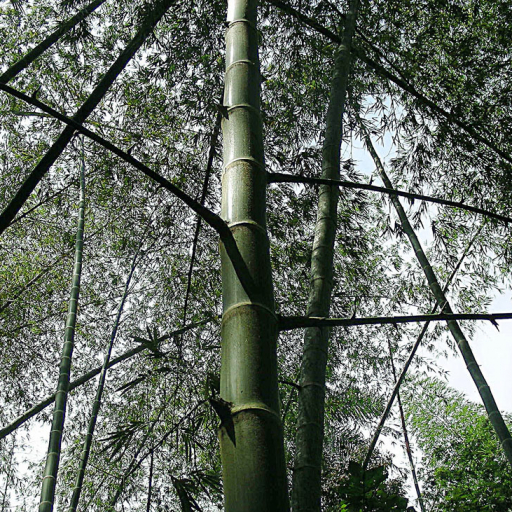
Known as the "Vegetable Steel" of the Americas, Guadua angustifolia is the undisputed giant of New World bamboos. Reaching towering heights with incredible speed, this bamboo has been the backbone of Andean architecture for centuries, earning a reputation as one of the strongest structural plants on Earth. It is a symbol of resilience, capable of swaying in heavy winds without snapping.
🔍 How to Identify
- 🎋 Massive Culms: The canes are thick-walled, straight, and deep forest green, often reaching diameters of up to 8 inches.
- ⚪ White Nodal Bands: A key identifying feature is the distinct white, felt-like band that appears both above and below each node (joint) as the plant matures.
- ⚔️ Thorny Branches: Unlike many ornamental bamboos, Guadua develops specialized, arched branches equipped with small thorns, especially on the lower parts of the culm.
🏡 In Your Garden
- 🏗️ Spatial Requirements: This is not a plant for a small suburban yard. Because of its massive scale and height (up to 100 feet), it requires significant acreage and is best used for privacy screens on large estates or for sustainable timber production.
- 💧 Thirst for Humidity: While it is surprisingly hardy, Guadua thrives best in tropical or subtropical conditions with high humidity and well-draining, nutrient-rich soil. It is a "clumping" bamboo, meaning it stays in one spot rather than "running" uncontrollably, but the clump itself becomes enormous over time.
⚠️ Safety & Toxicity
- 🟢 Status: Non-toxic to humans and pets.
- 🌵 Physical Hazards: While it isn't poisonous, the plant protects itself with sharp thorns on its lower branches. Additionally, the culm sheaths (the protective "skin" on new shoots) are covered in tiny, irritating hairs that can cause skin itchiness if handled without gloves.
✨ Fun Fact
- Guadua is so structurally sound that it was used to build a massive, 2,000-square-meter pavilion for the World Expo in Germany. It has a higher strength-to-weight ratio than mild steel and can withstand earthquakes better than many concrete structures!

Detailed Care Instructions
To grow Guadua Angustifolia, follow these steps:
- Obtain Guadua Angustifolia seeds or small plantlets from a reputable nursery or supplier. Ensure they are of good quality.
- Choose a suitable planting location with well-draining soil, partial shade, and protection from strong winds. Guadua Angustifolia thrives in tropical or subtropical climates.
- Prepare the soil by removing any weeds or debris. Loosen the soil to promote root penetration.
- Create planting holes that are at least twice the size of the root ball or seed. Space the holes about 10-15 feet apart, as Guadua Angustifolia can grow into large clumps.
- Place the seed or seedling into the hole, making sure it is planted at the same depth as it was in the container. Backfill the hole with soil, gently firming it around the plant.
- Water the plant thoroughly after planting and ensure it is consistently watered throughout its growth. Guadua Angustifolia requires a sufficient amount of water but should not be waterlogged.
- Mulch around the plant to retain moisture and suppress weeds. Use organic materials like wood chips or straw.
- Prune any damaged or dead stems and leaves to promote healthy growth. Guadua Angustifolia can grow up to 100 feet or more, so regular pruning is essential to control the size and shape.
- Provide support for the plant as it grows taller. Bamboo canes or stakes can be used to prevent bending or toppling of the stems in strong winds.
- Fertilize the plant with a balanced, slow-release fertilizer during the growing season. Follow the manufacturer's instructions for the application rate.
- Monitor the plant for any pests or diseases. Common pests include bamboo mites and borers. Treat infestations immediately using appropriate insecticides or organic pest control methods.
- Allow the plant to mature fully before harvesting any bamboo for construction or other purposes. This usually takes around 3-5 years, depending on growing conditions.
With proper care and maintenance, your Guadua Angustifolia plant will grow into a beautiful and sustainable bamboo species.

To water this plant, it is important to avoid over-watering and ensure proper drainage. The soil should be moist but not waterlogged, and it is best to water deeply and infrequently rather than frequent shallow waterings. It is recommended to water early in the morning or late in the evening to avoid excess evaporation during the heat of the day. Additionally, watering the plant at its base rather than the leaves can help prevent fungal diseases.
- Choose a balanced fertilizer with equal parts nitrogen, phosphorus, and potassium.
- Apply the fertilizer at a rate of 1 pound per 100 square feet of soil.
- Scatter the fertilizer over the soil around the base of the plant.
- Water the plant thoroughly after fertilizing to help the nutrients reach the roots.
- Apply fertilizer once every three months during the growing season.
- Do not over-fertilize, as this can lead to excessive growth and weaken the plant.
For growing the plant commonly referred to as Guadua Angustifolia, it is important to choose a suitable soil that will provide the necessary nutrients and drainage for the plant to thrive. The ideal soil type for this plant is a well-draining soil with a sandy or loamy texture. The pH level should be slightly acidic, in the range of 5.5 to 6.5. The soil should also have good fertility, with sufficient levels of nitrogen, phosphorus, and potassium. Additionally, it is important to ensure good aeration and drainage to prevent waterlogging and root rot. The soil can be enriched by adding organic matter such as compost or manure. It is important to note that the specific requirements of the soil may vary depending on factors such as climate, location, and other environmental factors.
Here's how to propagate a certain species of bamboo plant:
- Start by collecting mature bamboo culms that have multiple nodes and growth buds. Cut the culms at an angle, leaving about 2-3 nodes per culm.
- Once you have collected the culms, remove the leaves and branches to expose the nodes. This is where the new shoots will grow.
- To stimulate growth, you can soak the culms in water for a few days before planting. This will increase the moisture content and activate the growth hormones in the culm.
- Choose a well-draining soil with good fertility. Dig a hole deep enough to accommodate the culm with one node below the soil surface. Fill the hole with soil and water it thoroughly.
- Place the culm in the hole and firm the soil around it to ensure there are no air pockets. Water it again and cover the base with mulch to retain moisture.
- Repeat this process for each culm and space them about 5-6 feet apart. The culms will sprout new shoots in about a month.
- Water the new shoots regularly and fertilize them every 2-3 months to ensure healthy growth. After a few years, the bamboo will form a dense clump that can be harvested for commercial use or ornamental purposes.








