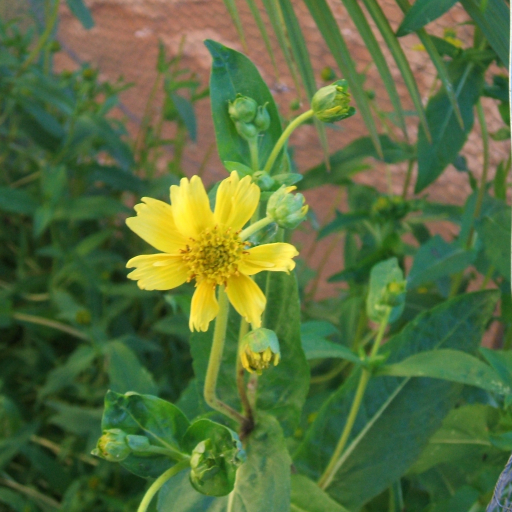
Plant Overview
Known famously as "Niger Seed" or "Ramtil," Guizotia abyssinica is a golden treasure hailing from the Ethiopian highlands. While many recognize it as the tiny, oil-rich black seeds found in premium bird feeders, in the garden, it transforms into a stunning, sunflower-like display. This resilient annual is prized not only for its cheerful yellow blooms but also for its historical importance as a major oilseed crop in Africa and India.
🔍 How to Identify
- 🌻 Sunny Blooms: The plant produces bright yellow, daisy-like flower heads approximately 2–3 cm in diameter, often appearing in clusters at the tips of branches.
- 🍃 Lance-Like Leaves: It features long, slender, lance-shaped leaves that grow in opposite pairs. The leaf margins are usually finely toothed or serrated.
- 📏 Tall Stature: A vigorous grower, it typically reaches heights of 3 to 6 feet. The stems are sturdy, branched, and often covered in fine, soft hairs.
🏡 In Your Garden
- 🌤️ Drought Warrior: This plant is incredibly hardy and thrives in full sun. Because of its deep root system, it can handle dry spells better than many other garden annuals once it is established.
- 🌱 Soil Improver: Gardeners often use it as a "green manure" or cover crop. It grows quickly and helps suppress weeds while adding organic matter back into the soil when it is tilled under.
- 🐝 Pollinator Magnet: The nectar-rich yellow flowers are a favorite for honeybees and butterflies, making it a fantastic addition to a biodiversity-focused garden.
⚠️ Safety & Toxicity
- ✅ Generally Safe: Guizotia abyssinica is considered non-toxic to humans, dogs, cats, and livestock.
- 🌾 Invasive Potential: Because it produces a massive amount of seed, it can become "weedy" if left to self-sow unchecked. To prevent it from taking over your garden beds, deadhead the flowers before the seeds fully mature and drop.
✨ Fun Fact
Most Niger seeds sold for bird feeders in the United States are heat-sterilized at 250°F before they are imported. This "toasting" process prevents the seeds from germinating, ensuring that the plant doesn't become an invasive species when birds accidentally drop seeds under the feeder!

Detailed Care Instructions
To grow Guizotia abyssinica, also known as Niger or Ramtil, follow these steps:
- Soil requirements: Niger plants prefer well-draining, loamy soil. Ensure the soil is rich in organic matter and has a pH level between 5.5 and 8.
- Seed selection: Acquire good quality Niger seeds. You can find them at a local nursery or purchase them online.
- Planting time: Niger is typically grown during the cool season. The optimal time for planting is usually early spring (March-April) or fall (August-September), depending on your climate.
- Seed preparation: Soak the Niger seeds overnight in warm water to ensure better germination rates.
- Planting: Select a sunny spot in your garden with at least 6-8 hours of direct sunlight. Sow the soaked seeds directly into the prepared soil, about 1/4 inch deep. Space the seeds approximately 6-7 inches apart.
- Watering: Keep the soil moderately moist but not waterlogged. Niger plants are drought-tolerant, but regular watering will promote healthy growth.
- Thinning: Once the plants establish and grow a few inches tall, thin them out to maintain a spacing of 9-12 inches between each plant. This will allow them to grow and branch out properly.
- Fertilization: Niger plants generally do not require much fertilization. However, you can use a balanced organic fertilizer during the growing season to promote healthier foliage and better flower production.
- Pest control: Monitor the plants regularly for any signs of pests such as aphids or caterpillars. Use organic pest control methods or insecticidal soap if necessary.
- Harvesting: Niger plants usually take around 80-95 days to reach maturity. The flowers will turn from yellow to black as they mature. Once the flowers dry and the seed heads turn brown, the seeds are ready for harvest. Cut the seed heads carefully and remove the seeds by rubbing them between your hands. Store the seeds in a cool, dry place for future use.
Remember to follow any regional gardening guidelines and adjust the planting and harvesting times accordingly.

Place in a bright room that is sun drenched almost all day. Or directly in a south-facing window.

To water this plant, ensure that the soil remains moist but not waterlogged. Water the plant deeply but infrequently, allowing the water to penetrate deeply into the soil. Check the soil daily to determine if it is in need of watering. If the soil feels dry to the touch, it should be watered immediately. When watering, avoid getting water on the foliage of the plant as this can promote disease. Use room temperature water to avoid shocking the root system, and water in the morning or evening when the sun is not at its strongest to prevent the water from evaporating quickly.
To fertilize this plant, make sure to use a balanced fertilizer with equal parts nitrogen, phosphorus, and potassium. Apply the fertilizer during the plant's active growing season every two to three weeks. Be sure to follow the fertilizer's instructions for dosage and dilution. Additionally, regularly water the plant to ensure the fertilizer is properly absorbed into the soil.
Guizotia Abyssinica prefers a well-draining soil that is rich in organic matter. The ideal soil pH level for this plant is slightly acidic to neutral, ranging from 6.0 to 7.5. Clay soils should be avoided, as they tend to hold too much water. A sandy loam soil is a good option, as it provides sufficient drainage while retaining some moisture. Additionally, Guizotia Abyssinica thrives in soils that are nutrient-rich, so a general-purpose fertilizer can be added to the soil prior to planting. It is important to avoid using heavy chemical fertilizers, as they can damage the delicate root system of this plant. Instead, a slow-release organic fertilizer is recommended. Finally, regular watering is necessary to ensure that the plant has sufficient moisture to thrive.
Guizotia Abyssinica is a plant that can be propagated through seeds. To propagate, the seeds must be collected from the plant after it has flowered and the seeds have matured. The seeds should be cleaned and dried, and can then be planted in soil or seed trays. The soil should be moist and well-draining. The seeds should be covered with a thin layer of soil and kept in a warm and sunny location. It may take several weeks for the seeds to sprout. Once the seedlings have developed several true leaves, they can be transplanted into larger containers or directly into the ground outside. Care should be taken to protect the plants from frost and extreme temperatures during the early stages of growth. Regular watering and fertilization will promote healthy growth and development.








