Plant Overview
Imagine a plant so large you could use its leaves as a natural umbrella during a summer rainstorm. Known famously as the "Chilean Giant Rhubarb," Gunnera tinctoria is a prehistoric-looking marvel hailing from the damp slopes of the Andes. While it looks like a vegetable patch resident on steroids, it isn’t actually related to true rhubarb—it is an ancient architectural giant that turns any garden into a scene from Jurassic Park.
🔍 How to Identify
- 🍃 Colossal Leaves: The leaves are the showstoppers, growing up to two meters across. They are kidney-shaped, deeply lobed, and have a distinctive rough, sandpaper-like texture on the surface.
- 🌵 Prickly Stems: The thick, fleshy stalks (petioles) are reddish-brown and covered in small, sharp, leathery spines that can be quite abrasive to the touch.
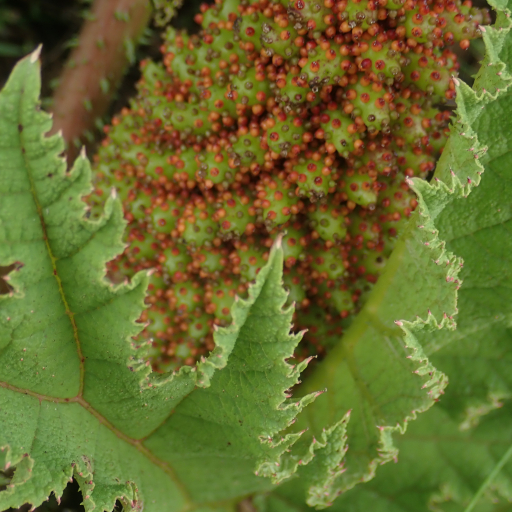
- 🍦 Alien Inflorescence: In early summer, the plant produces huge, cone-shaped flower spikes that look like giant reddish-green corn cobs emerging from the base of the plant.
🏡 In Your Garden
- 💧 The Bog King: This plant is a "hydrophile," meaning it loves water. It is most at home on the banks of a pond or in a marshy "bog garden" where its roots can stay permanently moist.
- 📏 Space Requirements: Never underestimate its footprint. A single crown can easily spread 3 to 4 meters wide. It also needs winter protection; in colder climates, it is common practice to cut the leaves and fold them over the crown like a natural blanket to protect it from frost.
- 🚫 Invasive Warning: Because it produces millions of seeds, it has become an invasive species in regions like Ireland, New Zealand, and parts of the UK. If you live in these areas, consider the sterile hybrid Gunnera x manicata instead.
⚠️ Safety & Toxicity
- ⚔️ Physical Hazard: The "teeth" or prickles on the stems and leaf undersides are sharp enough to scratch skin. Always wear heavy-duty gardening gloves when handling or pruning.
- 🚫 Not for Pies: Despite the nickname, do not eat this plant. It contains high concentrations of oxalic acid which can cause stomach distress and kidney irritation if consumed.
- 🐾 Pet Safety: While not strictly "poisonous" in the traditional sense, the prickly texture usually keeps curious dogs and cats away, though the sap may cause mild skin irritation for some animals.
✨ Fun Fact
The species name tinctoria comes from the Latin word for "dyeing." In its native Chile, the tannins extracted from the massive roots were historically used to dye leather and fabric a deep, rich black.

Detailed Care Instructions
| Humidity | Normal |
| Lighting | Part Sun |
| Difficulty | Medium |
| Hibernation | Cold Period |
| Temperature | 18°C - 28°C |
| Hardiness Zones | 9 - 11 |
To grow Gunnera Tinctoria, also known as Giant Rhubarb, follow these steps:
- Climate: Ensure that you live in a suitable climate for this plant. Gunnera Tinctoria prefers cool, moist environments and is frost-tender. It thrives in USDA Hardiness Zones 7-10.
- Location: Choose a location in your garden that receives partial shade to protect the plant from strong sun, especially in hot climates. Ideally, the location should be near a water source as this plant requires ample moisture.
- Soil: Gunnera Tinctoria prefers rich, organic soil that retains moisture, such as a loam or clay-based soil. Ensure good drainage to prevent waterlogged conditions which can rot the plant. You can improve soil conditions by adding compost or well-rotted manure.
- Planting: Plant Gunnera Tinctoria in spring after the last frost date. Dig a hole that is slightly larger than the root ball and place the plant in the hole. Gently fill the hole with soil and firm it around the roots. Ensure that the crown of the plant is level with the surrounding soil.
- Watering: Keep the soil consistently moist throughout the growing season. Water deeply to saturate the soil, and provide supplemental watering during dry periods. Avoid overwatering, as it can lead to root rot.
- Mulching: Apply a layer of mulch around the plant to help retain moisture and suppress weeds. This can be done with shredded leaves, bark chips, or straw.
- Fertilizer: Gunnera Tinctoria appreciates regular feeding. Use a balanced, slow-release organic fertilizer in early spring, and then again mid-summer. Follow the instructions on the fertilizer package for proper application rates.
- Pruning: Remove any dead or damaged leaves as needed throughout the growing season. In late fall, after foliage dies back, you can prune the plant back to ground level to encourage healthy growth in the spring.
- Winter protection: If you live in an area with freezing winter temperatures, protect the crown of the plant by covering it with a thick layer of straw or mulch. This will insulate it from the cold and help prevent winter damage.
By following these steps, you should be able to successfully grow Gunnera Tinctoria in your garden and enjoy its impressive foliage.

Place in a window with dappled sun or a spot in the middle of a room. Or directly in a window facing west or east.

One can water this plant by ensuring that the soil it is planted in stays consistently moist. It is important not to let the soil dry out completely, as this can harm the plant. Frequent watering may be necessary during hotter and drier months. It is also important to make sure that the plant's drainage is adequate, as water-logged soil can also cause issues for the plant. When watering, aim to water around the base of the plant instead of directly onto the leaves or stem.
To fertilize the Gunnera Tinctoria plant, apply a balanced slow-release fertilizer to the soil around the base of the plant using a rate recommended by the manufacturer. This should be done in the early spring just as the plant begins to emerge from its winter dormancy. Make sure to water the plant thoroughly after applying the fertilizer to help it absorb the nutrients. Repeat the applications every 4-6 weeks during the growing season until the end of summer. Avoid fertilizing the plant during the fall and winter months when it is dormant.
For Gunnera Tinctoria, it is best to use a moist, rich soil that is high in organic matter. The ideal pH level for the soil should be slightly acidic to neutral, ideally around 6.0 to 7.0. This plant prefers a soil that is consistently moist, but not waterlogged, so a well-draining soil is important. Mulching around the base of the plant with organic matter can help to keep the soil moist and also add nutrients to the soil. It is important to keep the soil around the plant free of weeds and debris as this can compete with the plant for nutrients and water. Additionally, fertilizers can be applied during the growing season to provide additional nutrients to the plant.
To propagate this plant, one must harvest and sow its mature seeds in a suitable growing medium, which should be kept consistently moist. The seeds should be lightly covered with the growing medium and kept in a warm, humid location with indirect sunlight. Once the seedlings have emerged, they should be provided with regular watering and fertilization to encourage healthy growth. Alternatively, sections of the plant's large, fleshy rhizomes can be divided and replanted to propagate new plants. This should be done during the plant's dormancy period, and the sections should be planted in rich, moist soil in a location with partial shade. Regular watering and fertilization will also be necessary to support new growth.
Common pests of the chilean rhubarb include Scale insect, snails. Make a habit of checking your chilean rhubarb frequently for pests so that any infestations can be caught and managed early.








