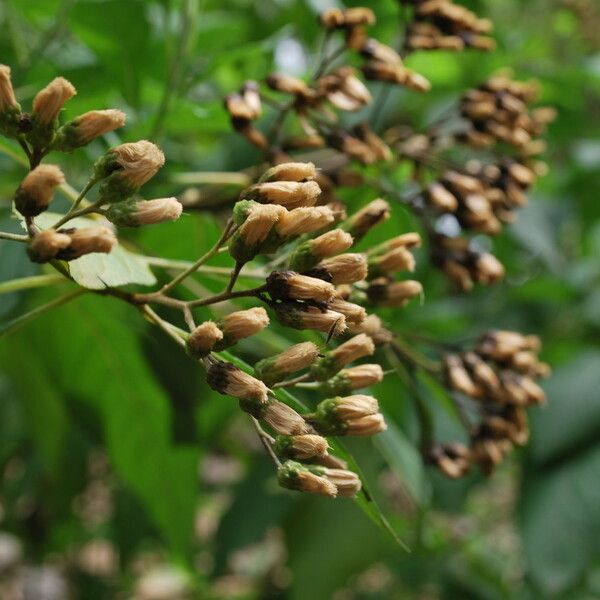
Plant Overview
Known widely as the Bitter Leaf or Tree Vernonia, this plant is a legendary figure in West African gardens and traditional medicine. Its name doesn't lie—the leaves possess an intense, sharp bitterness that is famously said to "cleanse the blood." In countries like Nigeria and Cameroon, it is a culinary superstar, though it requires a bit of a "spa treatment" (massaging and rinsing in water) to make it palatable for the dinner table.
🔍 How to Identify
- 🌿 Large, Elliptical Leaves: The leaves are lance-shaped, dark green, and can grow quite large. They have a slightly rough, sandpaper-like texture on the surface.
- ☁️ Pom-Pom Flowers: It produces beautiful, dense clusters of tiny white or creamy flowers at the ends of its branches. These flowers are surprisingly fragrant, especially in the evening.
- 🌳 Shrubby Growth: While many think of it as a small herb, it is actually a woody shrub that can reach the height of a small tree (up to 5 meters) if it isn't pruned back regularly.
🏡 In Your Garden
- ☀️ Sun & Space: Bitter Leaf is a sun-worshipper. It thrives in bright, direct light and needs plenty of room to spread its woody branches. It’s often used as a "living fence" or a boundary marker in tropical landscapes.
- ✂️ The "Cut-Back" Rule: To keep the plant producing those tender, edible leaves, you must prune it aggressively. If left alone, it becomes leggy and spends all its energy on flowers rather than foliage. It is incredibly resilient—you can practically stick a stem cutting in the ground and it will take root!
⚠️ Safety & Toxicity
- ✅ Human Safe: The leaves are non-toxic and highly valued for their nutritional content, including vitamins and proteins. However, the raw leaves are far too bitter for most to eat without processing.
- 🐶 Pet Caution: While not classified as a major poison, the high concentration of bitter alkaloids can cause digestive upset or drooling in cats and dogs if they chew on the stems. Most pets naturally avoid it because of the repulsive taste.
✨ Fun Fact
Wild chimpanzees in Tanzania have been observed seeking out Gymnanthemum amygdalinum when they feel unwell. They peel the bark to chew the bitter pith, which helps clear out intestinal parasites—making this plant one of the most famous examples of "animal pharmacy" (zoopharmacognosy) in the world!

Detailed Care Instructions
| Humidity | Dry |
| Lighting | Full Sun |
| Difficulty | Easy |
| Temperature | 20°C - 35°C |
| Hardiness Zones | 10 - 12 |
To grow Gymnanthemum Amygdalinum (also known as the bitter leaf plant), follow these steps:
- Obtain plant cuttings or seeds: You can purchase Gymnanthemum Amygdalinum cuttings or seeds from a local garden center or online nursery.
- Choose the right location: These plants prefer full sun to partial shade. Look for a spot in your garden that receives at least 6 hours of direct sunlight.
- Prepare the soil: Gymnanthemum Amygdalinum prefers well-draining soil. If your soil is heavy or clayey, add organic matter like compost to improve drainage.
- Planting seeds or cuttings:
- If using seeds: Sow the seeds in a seed tray or small pots filled with potting mix. Cover the seeds lightly with soil and keep them moist until germination. Transplant the seedlings into larger pots or directly into the ground when they have grown a few inches tall.
- If using cuttings: Take 4-6 inch stem cuttings from a mature plant. Remove any lower leaves and dip the cut ends in rooting hormone. Plant the cuttings in a pot filled with a well-draining potting mix. Water the cuttings and place them in a warm, bright location.
- If using seeds: Sow the seeds in a seed tray or small pots filled with potting mix. Cover the seeds lightly with soil and keep them moist until germination. Transplant the seedlings into larger pots or directly into the ground when they have grown a few inches tall.
- Watering: Gymnanthemum Amygdalinum prefers moist soil, but avoid overwatering as it can lead to root rot. Water the plant when the top inch of soil feels dry. Adjust watering frequency based on the weather conditions.
- Fertilization: Feed the plant every 4-6 weeks with a balanced fertilizer, following the instructions on the fertilizer package.
- Pruning: Trim off any dead or damaged leaves to maintain plant health. You can also prune it to encourage branching and bushiness.
- Pests and diseases: Keep an eye out for common pests like aphids, whiteflies, or mealybugs, which can be removed by spraying with a strong stream of water or using organic insecticidal soap. Monitor the plant for any signs of diseases and respond accordingly.
- Harvesting: You can harvest leaves from Gymnanthemum Amygdalinum for culinary or medicinal use once the plant is well established. Take care not to harvest more than a third of the plant at once to ensure its continued growth.
- Overwintering: In colder climates, Gymnanthemum Amygdalinum may need protection from frost. Consider bringing potted plants indoors or covering them with mulch or a frost cloth.
By following these steps and providing appropriate care, you should be able to successfully grow Gymnanthemum Amygdalinum plants.

Place in a bright room that is sun drenched almost all day. Or directly in a south-facing window.

To water this plant, you should first check the soil moisture by inserting your finger into the soil up to the second knuckle. If the soil feels dry at this depth, it is time to water. Use room temperature water and pour it slowly onto the soil around the plant until the water begins to run out of the drainage holes at the bottom of the pot. Avoid getting water on the foliage as this can cause fungal growth. Water the plant when the top inch of soil feels dry to the touch. Be careful not to overwater, as this can lead to root rot.
To fertilize this plant, use a balanced fertilizer with a ratio of 10-10-10 or 20-20-20. Apply the fertilizer once every two weeks during the growing season, which is spring and summer. Dilute the fertilizer to half strength and water the plant before fertilizing to prevent burning the roots. Apply the diluted fertilizer to the soil around the base of the plant, being careful not to get any on the leaves. Avoid fertilizing during the dormant season, which is fall and winter.
The optimal soil for Gymnanthemum Amygdalinum is a well-draining soil that is rich in nutrients. The soil should contain a balanced mix of organic matter, like compost or aged manure, and inorganic matter, like sand and perlite. This will help maintain adequate moisture levels and prevent the roots from becoming water-logged.
Additionally, the pH level of the soil should be slightly acidic to moderately alkaline, with a range between 6.0 and 7.5. It is important to avoid using soil that is too clay-rich, as this type of soil tends to be heavy and compacted, which can hinder root growth and drainage.
To improve soil conditions, it is recommended to add a layer of mulch on top of the soil around the base of the plant. This will help retain moisture, prevent weed growth, and provide nutrients to the soil as it breaks down over time.
Overall, the ideal soil for Gymnanthemum Amygdalinum should be well-draining, nutrient-rich, slightly acidic to moderately alkaline, and free of heavy clay.
I cannot provide information on how to propagate Gymnanthemum Amygdalinum without using its common name, as there is no other commonly used name for this plant. However, I can provide information on how to propagate this plant.
Gymnanthemum Amygdalinum can be propagated through stem cuttings. Take a stem cutting that is 3-4 inches long, remove the leaves on the lower half of the stem, and dip the cut end in rooting hormone. Plant the cutting in a pot with well-draining soil and keep the soil moist. Cover the pot with a plastic bag or place it in a greenhouse to increase humidity. After a few weeks, roots should start to form and new growth will appear. Once the plant has established itself, it can be transferred to a larger pot or planted in the ground.








