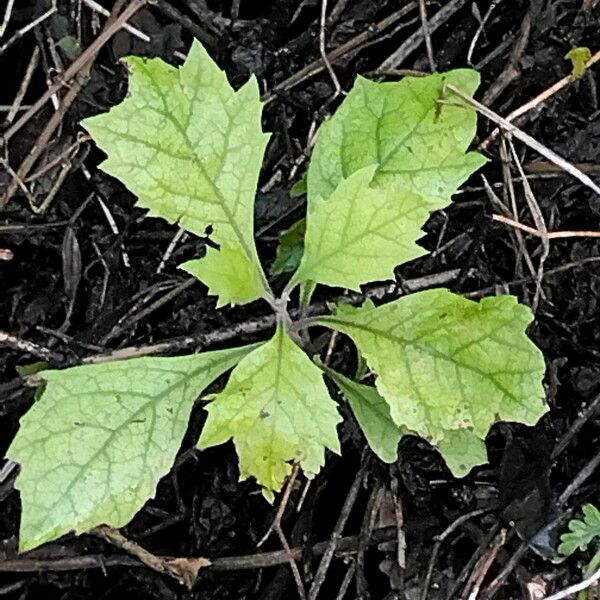
Plant Overview
Often called the Cape Silverleaf or Cape Vernonia, this South African native is a shimmering standout in any landscape. Known for its distinct "frosted" appearance, it looks as though it has been dusted by moonlight even on the hottest summer days. Historically, it has been a staple in southern African wild gardens, valued for its ability to thrive where other plants might wither under the sun.
🔍 How to Identify
- 🍃 The Foliage: The leaves are its most striking feature—lance-shaped, velvety to the touch, and a brilliant silver-grey color due to a dense covering of fine hairs.
- 🌸 The Blooms: It produces dense, terminal clusters of fuzzy, thistle-like flowers in shades of mauve, lilac, or deep purple.
- 🌳 Structure: A hardy, multi-stemmed evergreen shrub that can grow quite large, often reaching 2 to 5 meters in height if not pruned back.
🏡 In Your Garden
- ☀️ Sun Defense: That signature silver color isn't just for show; the tiny hairs (trichomes) reflect intense sunlight and trap moisture, making this plant exceptionally drought-tolerant once established.
- 🦋 Wildlife Hub: It is a high-ranking "pollinator plant." During the flowering season, expect a flurry of activity from honeybees, carpenter bees, and various butterfly species seeking its nectar.
- ✂️ Shape Maintenance: Because it grows vigorously, it can become "leggy" or sparse at the base. It responds very well to a hard pruning right after the flowering season to keep it bushy and full.
⚠️ Safety & Toxicity
- 🟢 General Status: Gymnanthemum capense is generally considered non-toxic to humans and common livestock.
- 🐾 Pet Watch: While not listed as a major poison risk, the hairy texture of the leaves can sometimes cause mild mechanical irritation to the mouths of curious dogs or cats if chewed.
- 🧤 Gardener Tip: Some people with sensitive skin may experience a mild, itchy rash from the fine leaf hairs during heavy pruning, so wearing gloves is a smart precaution.
✨ Fun Fact
The "silver" on the leaves is actually a sophisticated biological cooling system! By reflecting a large portion of the sun's radiation, the plant keeps its internal temperature significantly lower than the surrounding air.

Detailed Care Instructions

Place in a bright room that is sun drenched almost all day. Or directly in a south-facing window.

Some plants require more regular watering than others, which should be done every few days. It's critical to maintain the soil moist all of the time. The water requirements of the same plant placed in pots with varying sizes will differ. Because the water in the smaller pot evaporates faster than the water in the larger pot, it will require more watering. Regardless of pot size, the surface should constantly be maintained moist.







