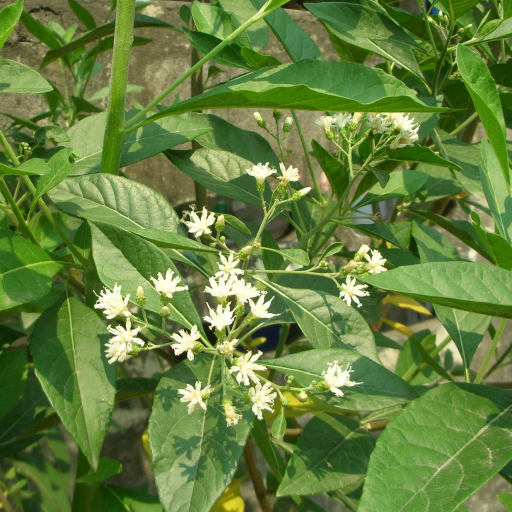
Plant Overview
Known by many as the "Chinese Vernonia" or "Bitter Leaf," Gymnanthemum extensum is a striking woody shrub that carries a legacy of traditional healing across Southeast Asia. Often found in sun-drenched gardens or woodland edges, it is prized for its architectural foliage and its potent, medicinal bitterness. While it might look like a standard garden green, its roots in herbalism and its resilient nature make it a plant of deep cultural and practical significance.
🔍 How to Identify
- 🍃 The Foliage: It features large, broad, elliptical leaves that can grow quite long. The leaf margins (edges) are often slightly serrated, and the surface has a distinct, prominent veining pattern.
- 🌸 The Blooms: During the flowering season, it produces dense, branching clusters of small, fuzzy, white or pale lavender flower heads that resemble tiny thistles.
- 🌳 Growth Habit: This is a vigorous, upright shrub. Its name extensum refers to its tendency to "extend" or spread out, easily reaching heights of 2 to 4 meters if not pruned.
🏡 In Your Garden
- ☀️ Light & Space: This plant is a sun-lover but appreciates some dappled afternoon shade in scorching climates. Give it plenty of room to stretch; it can quickly dominate a small corner if it isn't given boundaries.
- 🌱 Soil & Resilience: It is incredibly hardy and can tolerate various soil types, but it thrives best in rich, well-draining earth. Because it has a deep root system, it is relatively drought-tolerant once established, making it a "low-fuss" addition to a tropical-style garden.
- ✂️ Pruning Nuance: To keep the plant bushy and prevent it from becoming "leggy," regular pruning is essential. Cutting it back encourages the growth of fresh, tender leaves, which are the most sought-after part of the plant for traditional uses.
⚠️ Safety & Toxicity
- 🍵 Edibility Context: While the leaves are used in traditional teas and soups (especially in Southeast Asian folk medicine), they are incredibly bitter. They contain potent alkaloids and should only be consumed in moderation.
- 🐾 Pets & Kids: It is generally considered non-toxic in small quantities, but the intense bitterness usually acts as a natural deterrent. However, excessive ingestion may cause digestive upset in small pets due to the concentrated plant compounds.
✨ Fun Fact
Despite its incredibly bitter taste—which most herbivores avoid—the flowers are a "sugar rush" for pollinators! It is a high-value nectar source, often swarming with butterflies and honeybees during the peak of its bloom.

Detailed Care Instructions
Here are some steps to help you grow Gymnanthemum Extensum plant:
- Choose a suitable pot: Select a pot with good drainage holes as this plant prefers well-draining soil. Ensure that the pot is wide and deep enough to accommodate the plant's root system.
- Soil: Use a well-draining potting mix that is rich in organic matter. You can also mix in some perlite or sand to improve the drainage even further.
- Watering: Water the plant thoroughly and let the excess water drain out. Gymnanthemum Extensum prefers regular watering but ensure that you do not overwater. Allow the top inch of soil to dry out before watering again.
- Light: Provide bright, indirect sunlight to the plant. Gymnanthemum Extensum prefers partial shade, so place it near a window where it can receive filtered sunlight.
- Temperature and humidity: Gymnanthemum Extensum thrives in warm temperatures between 65°F to 80°F (18°C to 27°C). It also prefers moderate humidity levels, so misting the leaves occasionally can be beneficial.
- Fertilizer: During the growing season (spring and summer), feed the plant with a balanced liquid fertilizer about once every month. Follow the manufacturer's instructions for the appropriate dosage.
- Pruning: Trim any dead, damaged, or overgrown parts of the plant to maintain its shape and improve its overall health. Prune the plant in spring before new growth starts.
- Propagation: Gymnanthemum Extensum can be propagated through stem cuttings. Take a stem cutting with a few leaves, remove the bottom leaves, and place it in a well-draining potting mix. Keep the soil moist and provide indirect light. Roots should develop in a few weeks.
Remember to monitor your plant closely for any signs of pests or diseases and take appropriate measures if necessary. With proper care and attention, your Gymnanthemum Extensum plant should grow and thrive.
To water this plant, it is recommended to keep the soil evenly moist but not waterlogged. This can be achieved by watering deeply once a week, or more frequently in hot or dry conditions. Before watering, check the soil moisture level by inserting a finger about an inch into the soil to see if it feels dry. Watering should be done at the base of the plant, avoiding the foliage to prevent the growth of fungal diseases. It is also important to avoid getting water on the leaves as this can cause sunburn or scorching. If the plant is in a container, make sure there are drainage holes to prevent water from sitting in the container and drowning the roots.
To fertilize this plant, use a balanced fertilizer that contains equal parts nitrogen, phosphorus, and potassium. During the growing season, which generally lasts from spring through summer, apply the fertilizer every two weeks. During the dormant season, fertilize the plant once every month. Dilute the fertilizer solution with water according to manufacturer's instructions, and apply it to the soil around the plant's root zone. Be sure not to get any fertilizer on the plant's leaves or stems, as this can cause damage.
The Gymnanthemum Extensum plant prefers well-draining soil that is rich in organic matter. It should have a pH range of 5.5 to 6.5. The soil should be moist but not waterlogged, and it should allow for good air circulation around the roots. A combination of peat moss, perlite, and loam soil is ideal for creating the proper soil mix. The plant also benefits from regular fertilization, especially during the growing season, with a balanced liquid fertilizer. It is important to avoid over-fertilization, as this can lead to root damage and other issues. Overall, the Gymnanthemum Extensum plant requires soil that provides good drainage, moisture retention, and nutrition, in order to thrive.
To propagate this plant, you will need to take a stem cutting from a mature and healthy plant. Choose a stem that is about 4-6 inches long and has several leaves attached to it.
Using a sharp and sterilized pair of scissors or pruners, cut the stem just below a node or where a leaf is attached. Remove the leaves from the bottom half of the stem and make a clean cut at the bottom of the stem.
Prepare a pot with well-draining soil and make a hole in the center using a stick or your finger. Dip the bottom of the stem cutting in a rooting hormone powder and gently insert it into the hole, making sure that the bottom of the stem is in contact with the soil.
Water the soil well and cover the pot with a clear plastic bag to create a humid environment for the cutting. Keep the pot in indirect sunlight and maintain moisture levels by watering as needed.
After a few weeks, check for roots by gently tugging on the stem. If you feel resistance, then roots have formed, and you can remove the plastic bag and care for the new plant as you would for a mature plant.








