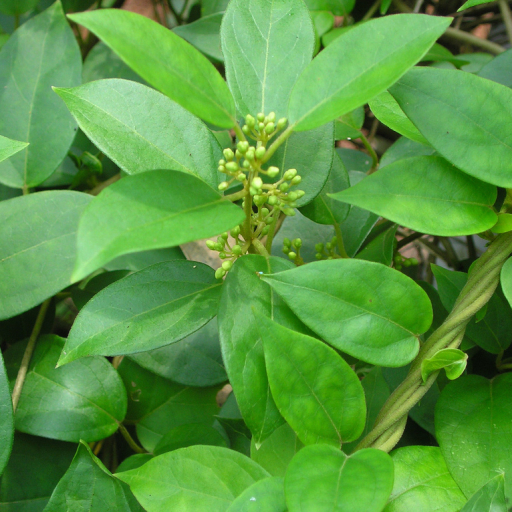
Plant Overview
Known in India as "Gurmar," which literally translates to "Sugar Destroyer," Gymnema sylvestre is a woody climbing shrub that has been a staple of Ayurvedic medicine for over two millennia. This tropical vine is famous for its bizarre ability to temporarily "turn off" your sweet tooth by blocking sugar receptors on the tongue. In the wild, it winds its way up trees in the monsoon forests, creating a lush, green canopy of medicinal foliage.
🔍 How to Identify
- 🍃 The Leaves: Elliptic or ovate in shape, the leaves grow opposite each other along the stem. They often have a soft, velvety texture due to fine hairs on the underside.
- 🌿 The Vine: As a perennial woody climber, it develops long, twining stems that seek out support. If left without a trellis, it will sprawl across the ground in a dense mat.
- 🌼 The Flowers: Look for tiny, bell-shaped blossoms that are pale yellow or greenish. They grow in small clusters (umbels) and are quite subtle compared to the vibrant foliage.
🏡 In Your Garden
- 🪜 Support is Key: Because of its climbing nature, this plant thrives when given a sturdy trellis or fence to scale. Without vertical support, the plant can become messy and prone to fungal issues due to poor airflow.
- 🌡️ Tropical Needs: This is a warmth-loving species. It struggles significantly when temperatures drop below 50°F (10°C). If you live in a cooler climate, it is best grown in a large pot that can be moved indoors during the winter.
- 💧 Moisture Balance: While it enjoys high humidity and regular watering, it is sensitive to "wet feet." Use a loamy, well-draining potting mix to prevent root rot, especially during its dormant winter phase.
⚠️ Safety & Toxicity
- ✅ Status: Non-toxic to touch; generally considered safe for handling.
- 👅 Taste Alteration: While not "poisonous," if a child or pet chews on the leaves, they will lose the ability to taste sweetness for about 30 to 90 minutes. This can be a confusing or distressing sensation.
- 🩸 Medical Caution: Ingesting large amounts can lower blood sugar levels. While beneficial for some, it can be dangerous for those already on diabetes medication or for pets with underlying health issues.
✨ Fun Fact
If you chew a Gymnema leaf and then try to eat a spoonful of sugar, the sugar will feel like gritty, tasteless sand in your mouth! This is because the gymnemic acids in the plant perfectly fit into your "sweet" taste receptors, physically blocking sugar molecules from activating them.

Detailed Care Instructions
To grow a Gymnema Sylvestre plant, follow these steps:
- Obtain seeds or seedlings: Gymnema Sylvestre can be grown from either seeds or seedlings. You can find them at local nurseries, online seed stores, or specialized herb suppliers.
- Choose a suitable location: Gymnema Sylvestre thrives in subtropical and tropical climates. It requires a warm climate with temperatures between 20-30°C (68-86°F). Find a sunny spot in your garden that receives at least six hours of sunlight daily.
- Prepare the soil: Gymnema Sylvestre prefers well-draining soil. If your garden soil is heavy clay, mix it with organic compost or sand to enhance drainage. The pH level should be slightly acidic to neutral, around 6.0-7.5.
- Sow the seeds or plant the seedlings: If you're using seeds, sow them directly into the prepared soil. If using seedlings, dig a hole slightly larger than the root ball, place the seedling in the hole, and gently cover the roots with soil. Space the plants around 1 meter (3 feet) apart to allow for proper growth.
- Watering: Gymnema Sylvestre needs regular watering to establish its roots. Water the plant thoroughly after planting and maintain moist soil during the growing season. However, avoid over-watering, as excessive moisture can lead to root rot.
- Fertilization: Apply a balanced organic fertilizer or compost during the spring and summer months, following the package instructions. This will provide essential nutrients to support healthy growth.
- Pruning: Prune the plant regularly to encourage branching and maintain a bushy shape. This will also help increase yield and prevent the plant from becoming too leggy.
- Pests and diseases: Gymnema Sylvestre is generally pest and disease resistant. However, keep an eye out for common garden pests like aphids, mealybugs, and spider mites. Treat any infestations promptly with organic insecticides or by using insecticidal soap.
- Harvesting: The leaves of Gymnema Sylvestre are the most valuable part of the plant. Wait until the plant is mature, usually after at least one year of growth, before harvesting. You can pluck individual leaves or prune the entire plant. Dry the leaves in a shaded, well-ventilated area and store them in an airtight container for future use.
By following these steps, you should be able to successfully grow your own Gymnema Sylvestre plant and enjoy its numerous health benefits.

Place in a bright room that is sun drenched almost all day. Or directly in a south-facing window.

Gymnema Sylvestre is a plant that requires moderate watering. It is recommended to water the plant when the soil is dry to the touch. Over-watering can lead to root rot and other diseases, so it is important not to overdo it. The amount of water required by the plant also depends on the location and environment. In general, the soil should be kept moist but not waterlogged.
A good way to determine when the plant needs watering is to check the soil moisture level. This can be done by inserting a finger into the soil, or by using a moisture meter. If the soil feels dry to the touch, it's time to water the plant. It's also important to ensure that the pot or container that the plant is in has proper drainage. This will prevent water from building up in the bottom of the pot and causing issues for the plant.
When watering, it's best to use room temperature water. Cold water can shock the plant, while hot water can damage the roots. It's also ideal to use filtered water, as the plant is sensitive to fluoride and other chemicals found in tap water.
Overall, it's important to monitor the plant's water needs and adjust accordingly. With proper care and attention, Gymnema Sylvestre can thrive and provide many health benefits.
To fertilize This plant, mix a balanced, slow-release fertilizer with water and apply it to the soil once every three months during the growing season. Avoid over-fertilizing, as this can damage the plant. Water the plant immediately after fertilization.
Gymnema Sylvestre is a plant that requires well-drained soil that has a slightly acidic to neutral pH level. The ideal soil for this plant should be loamy, rich in organic matter, and shouldn't hold too much moisture. The plant prefers soil that is not too heavy or dense but loose and friable. A mixture of garden soil, peat moss, and perlite works well as a growing medium for Gymnema Sylvestre. The soil should be free from any contaminants, chemicals, or pollutants that can harm the plant. Adequate nutrition is vital for the growth of the plant, so it is recommended to add organic fertilizers like compost or aged manure to the soil before planting. The plant thrives in warm and humid conditions, and proper watering is important to maintain the moisture level of the soil. Over-watering should be avoided, as it can lead to waterlogging and root rot. A well-draining soil will help prevent excess water retention and promote healthy growth of Gymnema Sylvestre plant.
To propagate this plant, you will first need to take a stem cutting from a mature plant. The cutting should be taken in the spring or early summer, and should be around 4-6 inches long with a few sets of leaves.
Once you have your cutting, remove the lower leaves and dip the cut end in rooting hormone. Insert the cutting into a pot filled with moist potting soil, making sure to keep the soil around the cutting moist but not waterlogged.
Place the pot in a warm, bright spot but out of direct sunlight. In around 2-3 weeks, you should start to see new growth emerging from the cutting, indicating that it has rooted successfully.
Once the new plant has established itself in the pot, you can transplant it outdoors or into a larger pot. Make sure to keep it watered and fertilized regularly to encourage healthy growth.








