Plant Overview
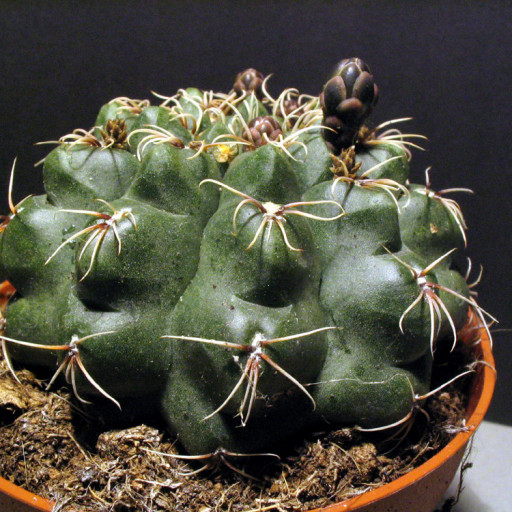
Often called the Dwarf Chin Cactus, this Argentine native is a favorite for windowsill gardeners because it produces some of the most vibrant flowers in the cactus world. Unlike many cacti that take years to bloom, this little gem is a generous performer, often showing off its deep crimson petals even when it is still quite young. Its compact size makes it a perfect "starter cactus" for those with limited space.
🔍 How to Identify
- 🌵 Body Shape: A solitary, flattened-spherical stem that stays small, usually reaching only 3 to 5 inches in diameter with a dark, bluish-green skin.
- 📉 The "Chins": It features deep ribs divided into rounded tubercles that look like little protruding chins sitting just below the spine clusters (areoles).
- 🌸 Floral Display: Large, funnel-shaped flowers sprout from the crown. While most are a stunning ruby-red, you may occasionally find varieties in shades of pink or purple.
- 🕷️ Spider-like Spines: It has small, curved, grayish-brown spines that tend to hug the body of the cactus rather than sticking straight out, giving it a slightly "neat" appearance.
🏡 In Your Garden
- ☀️ Sunlight Nuance: While it loves bright light, the Dwarf Chin can turn a deep purplish-bronze color if it gets intense direct afternoon sun. This "stress tan" isn't necessarily bad, but it’s a sign the plant is working hard to protect itself from sunburn.
- 💧 Mineral Diet: This species is sensitive to "wet feet." It thrives best in a gritty, porous potting mix (think more pumice and sand, less peat). Using a terra cotta pot helps wick away excess moisture that could lead to root rot.
- ❄️ The Winter Nap: To ensure a spectacular flower show in the spring, this cactus requires a cool, completely dry winter dormancy. If kept too warm and watered during winter, it may refuse to bloom the following year.
⚠️ Safety & Toxicity
- 🛡️ Safe for Pets: Gymnocalycium baldianum is considered non-toxic to cats, dogs, and horses.
- 🌵 Prickly Defense: Although it is non-toxic, the spines can still cause mechanical injury or skin irritation. Place it on a high shelf away from curious toddlers or pets who might be tempted to investigate the colorful flowers.
✨ Fun Fact
In its native habitat in the Catamarca Province of Argentina, these cacti grow at altitudes of up to 6,000 feet! Because they are high-altitude plants, they are much more tolerant of chilly nights than many other desert-dwelling succulents.

Detailed Care Instructions
| Lighting | Full Sun |
| Hardiness Zones | Min 8B |
To grow a Gymnocalycium Baldianum plant, follow these steps:
- Choose a suitable pot: Gymnocalycium Baldianum plants prefer well-draining pots. Use a pot with drainage holes to prevent waterlogging.
- Soil: Select a cactus or succulent soil mix or create your own by mixing potting soil with perlite or sand to improve drainage.
- Planting: Gently remove the plant from its nursery pot and place it in the new pot. Ensure that the plant is positioned at the same depth as it was in the previous pot.
- Watering: Water the plant thoroughly but allow the soil to dry out between watering sessions. Gymnocalycium Baldianum plants are drought-tolerant, so it's crucial not to overwater them.
- Sunlight: Place the plant in a location that receives bright, indirect sunlight. Gymnocalycium Baldianum plants thrive in bright light but can get sunburned if exposed to direct sunlight for extended periods.
- Temperatures: Gymnocalycium Baldianum plants prefer temperatures between 70-90°F (21-32°C) during the growing season. Protect them from frost and extreme temperature fluctuations.
- Fertilizing: During the growing season (spring and summer), fertilize the plant once a month with a balanced, water-soluble fertilizer. Follow the dosage instructions on the fertilizer package.
- Repotting: Gymnocalycium Baldianum plants generally require repotting every 2-3 years. When the plant outgrows its pot or the soil becomes compacted, transplant it into a slightly larger pot, using fresh soil mix.
- Pest control: Watch out for common indoor pests like mealybugs or spider mites. If you notice any signs of infestation, treat the plant with insecticidal soap or an appropriate pesticide.
- Propagation: Gymnocalycium Baldianum plants can be propagated through offsets or by seed. To propagate through offsets, gently separate the offsets from the mother plant and plant them in a separate pot, allowing them to root before treating them as individual plants.
By following these guidelines, you can successfully grow a Gymnocalycium Baldianum plant and enjoy its beautiful blossoms.

Place in a window with dappled sun or a spot in the middle of a room. Or directly in a window facing west or east.

To water this plant, wait until the soil has completely dried out before watering again. Ensure that the water is only poured onto the soil and not the body of the plant. Use a watering can with a nozzle to control the flow of water. Avoid over-watering as this can lead to root rot and other diseases.
To fertilize the plant, use a balanced fertilizer with equal parts nitrogen, phosphorus, and potassium. Apply the fertilizer during the active growing season, which is typically from spring to fall. Mix the fertilizer with water according to the instructions on the packaging and apply it to the soil around the plant. Avoid getting fertilizer on the leaves or stem of the plant, as this can cause burning. Water the plant thoroughly after fertilizing. Repeat this process every two to four weeks, depending on the specific fertilizer you are using and the needs of your plant. Be sure to stop fertilizing in the winter when the plant is dormant.
For Gymnocalycium Baldianum plant, it is recommended to use a well-draining soil mix that is permeable to water but also retains some moisture. The soil mix should have a balanced pH range of 6.0 to 7.5. A mixture of peat moss, perlite, and coarse sand or pumice is suitable for planting this species. It is important to avoid using heavy, clay-based soils, as they tend to retain too much moisture and can lead to root rot. Additionally, adding some crushed limestone or dolomite to the soil mix can help to increase the pH level and promote healthy plant growth. Overall, the soil mix for this plant should provide optimal drainage, air circulation, and nutrient availability.
To propagate this plant, you can cut the top portion of the stem using a sterilized blade. Leave the cutting to dry for a day or two, then plant it in a well-draining potting mix. Keep the soil moist but not waterlogged and place the pot in a bright, indirect light. Avoid placing it in direct sunlight as this could scorch the cutting. With proper care, the cutting will eventually develop roots and new growth.
Common pests of the spider-cactus include Mealybugs, spider mites, thrips. Make a habit of checking your spider-cactus frequently for pests so that any infestations can be caught and managed early.








