Plant Overview
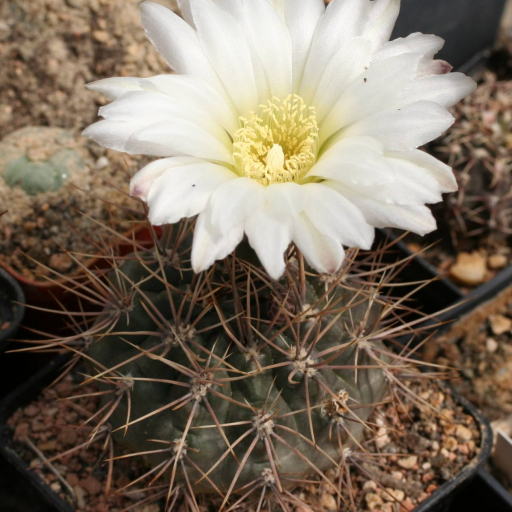
Known affectionately as the "Black Chin Cactus" or "Chubby Cactus," Gymnocalycium gibbosum is a rugged beauty originating from the windswept landscapes of Argentina. It is famous for being one of the southernmost growing cacti in the world, thriving in harsh conditions where most succulents would shiver. Its name comes from the Greek gymnos (naked) and kalyx (bud), referring to its distinctive, scale-less flower buds.
🔍 How to Identify
- 🌵 The "Chins": It features deep, vertical ribs broken into prominent, rounded bumps or "tubercles" that look like little chins tucked beneath each spine cluster.
- ⚔️ Spiny Armor: The spines are typically dark brown or black when young, fading to a weathered grey with age, arranged in a stiff starburst pattern against its dark green or bluish-grey skin.
- 🌸 Naked Buds: Look for large, satiny flowers in shades of ivory, creamy white, or soft pink that emerge from smooth, scale-free buds at the very crown of the plant.
🏡 In Your Garden
- ❄️ The Cold Warrior: Unlike many of its desert cousins, this cactus is surprisingly frost-tolerant. It appreciates a cool, dry winter rest period, which actually helps trigger its spectacular spring and summer blooms.
- 🚰 Root Health: It possesses a strong, deep root system that is highly sensitive to "wet feet." Using a very gritty, porous mineral soil mix is essential to prevent rot, as this plant prefers to dry out completely between drinks.
⚠️ Safety & Toxicity
- 🛡️ Non-Toxic: This species is not considered poisonous to humans, cats, or dogs. It is a safe choice for a household with curious pets in terms of chemical toxicity.
- 🧤 Physical Hazard: While not toxic, its spines are rigid and sharp. Always use thick gardening gloves or a folded newspaper "sling" when repotting to avoid painful punctures or skin irritation.
✨ Fun Fact
This hardy species is a true explorer; it is one of the few cacti found naturally occurring as far south as the Patagonian plains, surviving sub-zero temperatures and fierce winds that would be fatal to most other tropical succulents!

Detailed Care Instructions
Growing a Gymnocalycium gibbosum, a type of cactus, can be a rewarding experience as it's relatively low-maintenance. Here's a step-by-step guide to help you cultivate this interesting plant:
1. Choosing the Right Pot and Soil:
- Pot: Select a pot with good drainage holes. Cacti do not like sitting in water, so proper drainage is crucial.
- Soil: Use a well-draining cactus or succulent mix. You can enhance drainage by adding perlite or pumice to standard potting soil.
2. Planting:
- Planting from Seeds:
- Sow seeds in a shallow tray filled with cactus soil mix.
- Lightly cover the seeds with a thin layer of sand.
- Keep the soil slightly moist and place the tray in a warm, bright spot but out of direct sunlight.
- Once seedlings are large enough to handle, transplant them into individual pots.
- Sow seeds in a shallow tray filled with cactus soil mix.
- Planting from Offsets:
- Carefully remove offsets from the mother plant.
- Let the offsets dry for a few days to form a callus over the cut surface.
- Plant the offsets in cactus soil mix and water sparingly until they establish roots.
3. Watering:
- Carefully remove offsets from the mother plant.
- Spring and Summer: Water thoroughly when the soil is completely dry. Typically, this means watering every 2-3 weeks.
- Fall and Winter: Reduce watering significantly, allowing the soil to dry out for longer periods.
4. Light:
- Provide bright, indirect light. A south-facing window is ideal.
- Avoid direct midday sun, which can scorch the plant.
5. Temperature:
- Gymnocalycium gibbosum prefers warm temperatures during the growing season (spring and summer) but can tolerate cooler temperatures in the winter, down to around 40°F (5°C).
6. Fertilizing:
- Feed with a balanced, diluted cactus fertilizer during the growing season (about once a month).
- Do not fertilize during the winter dormancy.
7. Repotting:
- Repot every 2-3 years in the spring to refresh the soil and check the root system.
- Choose a pot that is slightly larger than the current one.
8. Pests and Problems:
- Pests: Watch for common pests like spider mites, mealybugs, and scale insects.
- Problems: Overwatering can lead to root rot. Ensure good drainage and let the soil dry out between waterings.
9. Encouraging Flowering:
- Proper care and seasonal changes in watering and light will encourage Gymnocalycium gibbosum to produce its attractive flowers.
Summary:
- Pot with good drainage, well-draining soil
- Proper planting techniques
- Water when soil is dry, reduce in winter
- Bright, indirect light
- Warm temperatures, cooler in winter
- Monthly feeding in growing season
- Repot every 2-3 years
- Monitor and treat for pests
Following these guidelines will help you grow a healthy and attractive Gymnocalycium gibbosum cactus. Happy gardening!
Watering Gymnocalycium gibbosum requires careful attention as it is a type of cactus, which means it is adapted to arid conditions and can be sensitive to overwatering. Here are detailed guidelines to help you water this plant properly:
- Seasonal Watering:
- Active Growth Period (Spring and Summer): During the active growing months, you should water the plant more frequently. Allow the top inch of the soil to dry out completely between waterings.
- Dormant Period (Fall and Winter): During the cooler months, reduce watering substantially. Water just enough to prevent the plant from shriveling up. This may mean watering only once every few weeks or even less often.
- Active Growth Period (Spring and Summer): During the active growing months, you should water the plant more frequently. Allow the top inch of the soil to dry out completely between waterings.
- Watering Technique:
- Soak and Dry Method: Water the plant thoroughly until water drains out of the bottom of the pot. Make sure to empty the saucer under the pot to prevent water from sitting at the bottom, which can cause root rot.
- Avoid Overhead Watering: Watering the plant at its base reduces the risk of fungal infections on the stems and can help keep the plant healthy.
- Soak and Dry Method: Water the plant thoroughly until water drains out of the bottom of the pot. Make sure to empty the saucer under the pot to prevent water from sitting at the bottom, which can cause root rot.
- Soil and Pot Requirements:
- Use a well-draining cactus or succulent mix to ensure good drainage.
- Ensure that the pot has drainage holes to allow excess water to escape.
- Use a well-draining cactus or succulent mix to ensure good drainage.
- Environmental Considerations:
- Humidity: This plant prefers a dry environment. High humidity levels can promote fungal diseases.
- Temperature: Avoid watering if the temperature is too low, especially in winter, as cold, wet soil can harm the roots.
- Humidity: This plant prefers a dry environment. High humidity levels can promote fungal diseases.
- Signs to Watch:
- Under-Watering: The plant may start to shrivel or look deflated. Increase the frequency of watering slightly if you notice these signs.
- Over-Watering: Look for yellowing, softness, or black spots on the stem. If these symptoms occur, reduce watering immediately, and ensure the soil is allowed to dry out completely.
By adhering to these guidelines, you can maintain the health of your Gymnocalycium gibbosum and encourage thriving growth.
- Under-Watering: The plant may start to shrivel or look deflated. Increase the frequency of watering slightly if you notice these signs.
To fertilize your Gymnocalycium gibbosum, follow these guidelines:
- Frequency: Fertilize during the growing season, typically from early spring to late summer. Avoid fertilizing during the dormant period in fall and winter.
- Type of Fertilizer: Use a balanced, water-soluble cactus fertilizer. A formulation like 10-10-10 (Nitrogen-Phosphorus-Potassium) or a similar balance that is specifically designed for cacti and succulents is ideal.
- Dilution: Dilute the fertilizer to half or even one-quarter of the recommended strength on the package. Cacti do not need as much fertilizer as other plants; too much can harm them.
- Application: Apply the diluted fertilizer solution once a month during the growing season. Make sure the soil is moist before applying the fertilizer to avoid root burn. Water your plant thoroughly before fertilizing.
- Method: Use a watering can to evenly distribute the fertilizer solution around the base of the plant, making sure to soak the soil but avoid direct contact with the plant itself to prevent potential burn or damage.
- Observation: Keep an eye on your plant for any signs of over-fertilization, such as yellowing or mushy stems. If you notice these signs, flush the soil with clean water to remove excess fertilizer and reduce the frequency of future applications.
By following these instructions, you can help ensure that your Gymnocalycium gibbosum receives the proper nutrition it needs to thrive without being over-fertilized.
Gymnocalycium gibbosum thrives best in a well-draining soil mix, which is crucial for preventing root rot and ensuring healthy growth. Here are some detailed guidelines for creating an optimal soil mix for this particular plant:
- Cactus/Succulent Potting Mix: Start with a commercial cactus or succulent potting mix. These mixes are formulated to provide excellent drainage and the right balance of nutrients for cacti.
- Inorganic Additives: Enhance the drainage by adding inorganic components such as:
- Pumice: Improves aeration and drainage.
- Perlite: Lightens the soil mix and enhances drainage.
- Coarse Sand: Helps in maintaining a gritty texture, which aids in water movement through the soil.
A good rule of thumb is to mix these inorganic additives with the potting mix in a ratio of 1:1.
- Pumice: Improves aeration and drainage.
- Organic Matter: While cacti need excellent drainage, they still benefit from some organic matter for nutrient provision.
- Composted Pine Bark: Adds some organic content, helps with slight moisture retention but still ensures good drainage.
- Coconut Coir (optional): Can be used sparingly to retain minimal moisture without making the soil heavy or waterlogged.
- Composted Pine Bark: Adds some organic content, helps with slight moisture retention but still ensures good drainage.
- pH Level: Aim for a slightly acidic to neutral pH level, around 6.0 to 7.0. This can be achieved through the mix mentioned above without additional pH adjustments in most cases.
- Pot Selection: Use a pot with drainage holes to prevent water from sitting at the bottom, which can lead to root rot.
Example of a DIY Soil Mix:
- 1 part commercial cactus/succulent potting mix
- 1 part pumice or perlite
- 1 part coarse sand or fine gravel
- Optional: small amount of composted pine bark or coconut coir for light organic content
By ensuring that the soil mix is well-draining, airy, and slightly acidic to neutral in pH, you'll create an ideal environment for Gymnocalycium gibbosum to thrive. Make sure to also provide appropriate watering, allowing the soil to dry out thoroughly between waterings.
Propagating Gymnocalycium gibbosum can be accomplished through seeds or offsets. Here are detailed steps for both methods:
Propagation through Seeds:
- Seed Collection:
- Collect seeds from mature fruit. Allow the fruit to dry, then gently break it open and extract the seeds.
- Clean the seeds thoroughly to remove any pulp.
- Collect seeds from mature fruit. Allow the fruit to dry, then gently break it open and extract the seeds.
- Sowing the Seeds:
- Use a well-draining cactus soil mix or a blend of 50% regular potting soil and 50% sand/perlite.
- Fill a shallow tray or pots with the soil mix and lightly moisten it.
- Sprinkle the seeds evenly on the surface of the soil. Do not bury them; seeds should just be pressed slightly into the surface.
- Use a well-draining cactus soil mix or a blend of 50% regular potting soil and 50% sand/perlite.
- Germination:
- Cover the container with clear plastic or a glass lid to create a humid environment. Ensure there are small ventilation holes to prevent mold growth.
- Place the container in a warm location with indirect sunlight. Ideal temperatures are between 70-80°F (21-27°C).
- Keep the soil consistently moist by misting it regularly. Do not allow it to dry out completely.
- Seeds usually germinate within a few weeks to a couple of months, depending on conditions.
- Cover the container with clear plastic or a glass lid to create a humid environment. Ensure there are small ventilation holes to prevent mold growth.
- Post-Germination Care:
- Once seedlings appear, gradually expose them to more light by removing the cover for increasingly longer periods each day.
- Avoid direct sunlight initially as it can scorch young plants.
- When seedlings are large enough to handle, transplant them into individual pots using a similar well-draining soil mix.
Propagation through Offsets:
- Once seedlings appear, gradually expose them to more light by removing the cover for increasingly longer periods each day.
- Identifying Offsets:
- Look for small offshoots or pups growing from the base of the parent plant. These offsets are clones and are ideal for propagation.
- Look for small offshoots or pups growing from the base of the parent plant. These offsets are clones and are ideal for propagation.
- Removing the Offsets:
- Carefully remove the parent plant from its pot to inspect for offsets.
- Gently separate the offsets from the parent plant using a sterilized knife if they don't detach easily by hand.
- Allow the offsets to dry and callous over for a few days to a week in a shady, dry location. This helps to prevent rot when they are planted.
- Carefully remove the parent plant from its pot to inspect for offsets.
- Planting the Offsets:
- Once calloused, plant the offsets in small pots filled with a well-draining cactus soil mix.
- Water the offsets sparingly at first, as they do not yet have an established root system. Allow the soil to dry out completely between waterings.
- Once calloused, plant the offsets in small pots filled with a well-draining cactus soil mix.
- Caring for the New Plants:
- Place the pots in a location with bright, indirect sunlight. Avoid direct sunlight until the offsets have established a strong root system.
- Gradually increase watering frequency as the offsets begin to grow roots and become established, but always ensure the soil dries out between waterings to prevent root rot.
With these methods, you can successfully propagate Gymnocalycium gibbosum and expand your collection of these fascinating cacti.
- Place the pots in a location with bright, indirect sunlight. Avoid direct sunlight until the offsets have established a strong root system.








