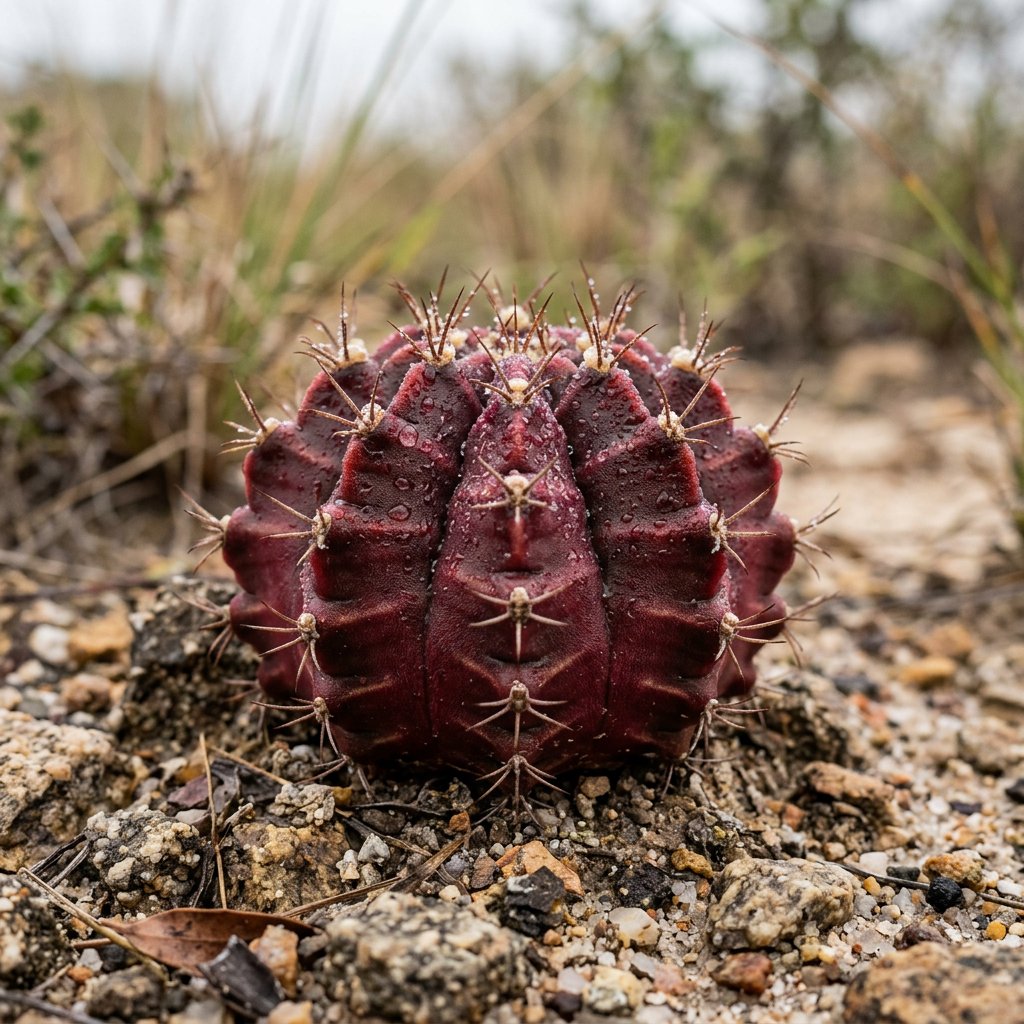
Plant Overview
Commonly known as the Moon Cactus or Ruby Ball, this South American native is a staple of windowsills worldwide. While the wild species is a subtle olive green, the neon-colored varieties we love are actually two different plants fused together in a botanical "Franken-cactus." Because the colorful top lacks chlorophyll to feed itself, it lives as a vibrant passenger on a hardier green host.
🔍 How to Identify
- 🌵 The "Chin" Ribs: The body features sharp, horizontal ridges or "chins" beneath the spine clusters, giving it a distinct, geometric, and textured appearance.
- 🎨 Neon Scion: In cultivated varieties, the top ball (the scion) lacks chlorophyll and glows in unnatural shades of hot pink, neon orange, bright yellow, or deep ruby red.
- 🌸 Satin Flowers: It produces surprisingly large, funnel-shaped flowers in shades of pink or white that sprout from the top, often looking far too big for the tiny cactus body.
🏡 In Your Garden
- 🤝 The Grafting Bond: Since the colorful top cannot photosynthesize, it relies entirely on the green base (usually a Hylocereus cactus) for survival. If the green base dies, the colorful top will unfortunately perish shortly after.
- ☀️ Light Nuance: While most cacti crave direct sun, the Moon Cactus prefers bright, indirect light. Intense, direct afternoon sun can actually bleach the vibrant colors or cause "sunburn" scars on the delicate skin.
- 🪴 Short Lifecycle: It is important to know that these "grafted" pairs have a shorter lifespan than other cacti—usually 3 to 5 years—as the two different species eventually grow at different rates and pull apart.
⚠️ Safety & Toxicity
- 🐾 Pet Friendly: The Gymnocalycium mihanovichii is considered non-toxic to cats, dogs, and horses, making it a safe choice for pet-filled homes.
- 🌵 Physical Hazard: While not chemically toxic, the spines are sharp and can cause mechanical injury. Keep it on higher shelves away from curious toddlers or wagging tails.
✨ Fun Fact
The first bright red "Ruby Ball" was a mutant seedling discovered in a Japanese nursery in 1941. Because it lacked chlorophyll, it would have died instantly, but a clever gardener grafted it onto a green cactus, saving the mutation and starting a global indoor gardening craze!

Detailed Care Instructions
| Color | Red, Orange, Or Yellow |
| Soil Ph | Acidic To Neutral |
| Humidity | Dry |
| Lighting | Full Sun |
| Toxicity | Non-Toxic |
| Soil Type | Rich, Fast-Draining Cactus Mix |
| Bloom Time | Year-Round |
| Difficulty | Easy |
| Plant Type | Houseplant, Perennial |
| Mature Size | Varies, Depends On Rootstock |
| Native Area | South America |
| Temperature | 5°C - 30°C |
| Sun Exposure | High Light |
| Hardiness Zones | 11 And 12 |
To grow Gymnocalycium Mihanovichii (commonly referred to as Moon cactus or chin cactus), follow these steps:
- Select an appropriate pot: Choose a small pot with drainage holes to ensure excess water can drain out.
- Soil mixture: Prepare a well-draining soil mixture. A combination of cactus soil or regular potting mix blended with perlite or coarse sand will work well.
- Planting: Fill the pot with the soil mixture and create a small hole in the center. Place the cactus in the hole, ensuring the roots are covered and the plant is stable.
- Light requirements: Place the cactus in a bright location with indirect sunlight. Gymnocalycium Mihanovichii requires sufficient light to thrive but should be protected from direct sunlight, as it can scorch the plant.
- Temperature: This cactus prefers temperatures between 60-75°F (15-24°C). Avoid exposing it to extreme temperatures and drafts.
- Watering: Allow the soil to dry out completely before watering. Overwatering can lead to root rot and damage the plant. Water deeply but infrequently, ensuring excess water drains out of the pot.
- Fertilization: Feed the cactus every 2-4 weeks during the growing season (spring and summer) with a diluted cactus fertilizer. Follow the instructions on the fertilizer packaging for accurate application.
- Transplanting: Gymnocalycium Mihanovichii may outgrow its pot after a couple of years. If this happens, transplant it into a slightly larger pot with fresh soil mixture.
- Propagation: To propagate, carefully remove offsets (baby cacti) that grow from the base of the plant. Allow the offset to dry for a few days and then plant it in a small pot with cactus soil. Water sparingly until roots develop.
- Pests and diseases: Monitor the cactus for signs of pests like mealybugs or scale insects. If detected, treat them with an appropriate insecticide. Be cautious not to overwater, as this can lead to root rot.
Remember to handle Gymnocalycium Mihanovichii with care, as it lacks spines and can be easily damaged. With the right care, patience, and proper growing conditions, your Moon cactus should thrive and grow beautifully.

Place in a bright room that is sun drenched almost all day. Or directly in a south-facing window.

Gymnocalycium Mihanovichii is a small cactus plant that requires special care when it comes to watering. When watering this plant, it is important to do so sparingly, as excessive watering can cause the roots to rot and ultimately kill the plant.
To water Gymnocalycium Mihanovichii, it is best to wait until the soil is completely dry before watering. This can typically be achieved by sticking a finger into the soil and feeling for moisture.
Once the soil is dry, slowly pour water onto the soil, being careful not to wet the leaves or stem of the plant. Allow the water to fully soak into the soil before removing any excess water from the drainage tray.
It is important to note that Gymnocalycium Mihanovichii requires less water during the winter months when it is in a state of dormancy. During this time, it may only require watering every few weeks.
Overall, watering Gymnocalycium Mihanovichii requires patience and careful attention to the plant's needs. By following these tips, you can help ensure that your cactus stays healthy and thriving for years to come.
- Choose a well-draining soil mixture that is specifically formulated for cactus and succulent plants.
- Transplant the plant into a larger pot with fresh soil every 2-3 years.
- During the growing season (spring and summer), fertilize the plant once a month with a balanced liquid fertilizer diluted to half strength.
- Water the plant thoroughly before applying fertilizer to avoid damaging the roots.
- During the dormant season (fall and winter), reduce watering and stop fertilizing altogether.
- Monitor the plant for any signs of fertilizer burn, such as yellowing or wilting leaves, and adjust the dosage or frequency of fertilization accordingly.
Gymnocalycium Mihanovichii plants do well in well-draining soil with a slightly acidic pH. A mixture of cactus potting mix and perlite or sand is recommended to provide good drainage and prevent waterlogged soil. This type of soil will also help mimic the plant's natural habitat and promote healthy growth. It is important to avoid using regular potting soil or soil that retains too much moisture, as this can lead to root rot and other issues.
To propagate this plant, you will need to carefully cut a healthy stem segment from the mother plant with a sharp, sterilized knife. Allow the cut stem to callus over for a few days before placing it on top of soil and lightly pressing it down until it is secure. Keep the cutting in a warm, bright location and mist it lightly with water once a week until roots begin to appear. Once the cutting has established roots, it can be planted in its own pot and cared for like a mature plant.
Common pests of the moon cactus include Mealybugs, spider mites, thrips. Make a habit of checking your moon cactus frequently for pests so that any infestations can be caught and managed early.








