Plant Overview
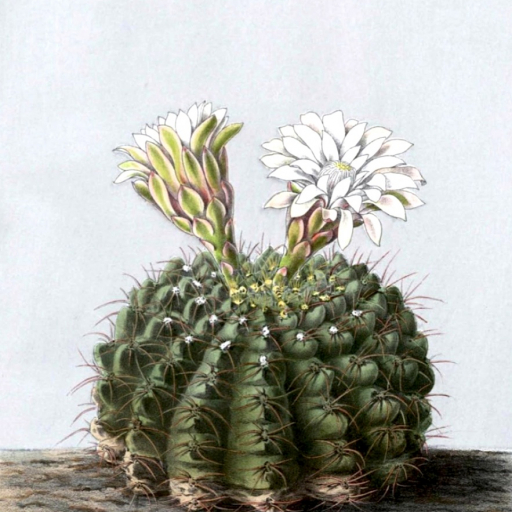
Known fondly as the Rose Plaid Cactus, this Argentine native is a favorite among succulent collectors for its unique "stonelike" appearance. Unlike many towering cacti, Gymnocalycium quehlianum stays low to the ground, growing in a flattened, disk-like shape that helps it hide among pebbles in the wild. Its geometric patterns and subtle color shifts make it look more like a piece of living granite than a desert plant.
🔍 How to Identify
- 🌵 The Body: It features a globose-depressed (flat-topped) shape, usually grayish-green but often blushing deep bronze or reddish-brown when exposed to bright sunlight.
- 📐 The "Chins": The ribs are divided into rounded bumps or tubercles. Below each group of spines, there is a prominent protrusion that looks like a tiny chin, a signature trait of the Gymnocalycium genus.
- 🕷️ The Spines: It carries 5 to 7 short, brownish-yellow spines per cluster that are typically recurved and pressed flat against the plant’s body, resembling tiny spiders.
- 🌸 The Bloom: In late spring, it produces surprisingly large, funnel-shaped flowers. They are typically white or pale ivory with a distinct, vibrant reddish-pink throat.
🏡 In Your Garden
- ☀️ Light & Color: This cactus is a master of disguise. While it thrives in bright light, it will change its skin tone to a darker "tan" to protect itself from UV rays. If you prefer a deep green look, keep it in bright, filtered light rather than direct midday sun.
- 💧 Drainage is Vital: Because it has a somewhat thickened taproot, it is highly sensitive to standing water. It prefers a very "gritty" soil mix with plenty of pumice or perlite to ensure the roots can breathe and dry out quickly after a drink.
- 😴 Winter Rest: To encourage those beautiful white flowers, this plant needs a cool, completely dry "hibernation" period during the winter months.
⚠️ Safety & Toxicity
- 🛡️ Status: Generally considered non-toxic to humans, cats, and dogs.
- 🌵 Physical Caution: While its spines are relatively short and "pressed" against the body, they are still sharp. Handle with gloves or use a folded piece of newspaper to move the plant to avoid irritating the skin.
✨ Fun Fact
The name Gymnocalycium comes from the Greek words for "naked" and "bud." This refers to the fact that, unlike many other cacti, the flower buds have no hair or spines on them—only smooth, overlapping scales!

Detailed Care Instructions
To grow Gymnocalycium Quehlianum successfully, follow these steps:
- Obtain a Gymnocalycium Quehlianum plant: Locate a reputable nursery or specialized cactus and succulent supplier to purchase a healthy Gymnocalycium Quehlianum plant. Consider buying a young plant as it will adapt better to new environments.
- Choose the right pot and soil: Select a pot with drainage holes to prevent soil waterlogging. Use a well-draining cactus or succulent potting mix, or mix regular potting soil with perlite or coarse sand to enhance drainage.
- Planting: Place the plant gently in the pot, ensuring the roots are spread out and well-covered with soil. Make sure not to bury the plant too deeply, leaving a small space below the stem to avoid rotting.
- Provide adequate sunlight: Gymnocalycium Quehlianum plants require plenty of bright, indirect sunlight. Ideally, place them near a south-facing window or provide them with 4-6 hours of sunlight daily. Avoid exposing them to intense, direct sunlight, especially during hotter hours of the day.
- Watering: Water the plant thoroughly, but allow the soil to dry out almost completely between waterings. Overwatering can lead to root rot. It is better to underwater than overwater this type of cactus. During winter months, reduce watering frequency to prevent cold damage.
- Temperature and humidity: Gymnocalycium Quehlianum plants prefer temperatures between 65-85°F (18-29°C) during the growing season. They can tolerate temperatures down to 50°F (10°C), but prolonged exposure to cooler temperatures should be avoided. Maintain average indoor humidity levels, as excessive humidity can cause diseases or rot.
- Fertilization: Apply a balanced, diluted cactus fertilizer during the growing season (spring and summer). Follow the instructions on the fertilizer packaging and avoid fertilizing during winter when the plant is dormant.
- Pruning and repotting: Trim any dead or damaged parts of the plant using sterilized pruning shears. Repot the Gymnocalycium Quehlianum every 2-3 years in a slightly larger pot to accommodate its growth. Be cautious during repotting to avoid damaging the roots.
- Pest control: Inspect the plant regularly for pests such as mealybugs or spider mites. If you notice any infestation, treat it using appropriate insecticides or natural remedies like neem oil.
- Dormancy period: In winter, Gymnocalycium Quehlianum enters a dormancy period. During this time, reduce watering and cease fertilization. Provide slightly cooler temperatures (around 50-60°F or 10-15°C) to allow the plant to rest.
By providing proper care and attention, your Gymnocalycium Quehlianum plant should thrive and grow.
The best way to water this plant is to wait until the soil is dry before watering. When watering, use room temperature water to avoid shocking the plant's roots. Be sure to water thoroughly, making sure the water reaches the plant's roots. It is important not to let the plant sit in water, as this can lead to root rot. Allow excess water to drain from the pot and discard it. It is better to water less frequently but thoroughly, rather than watering a little bit every day. Providing adequate drainage is also important to protect the plant's roots from getting too wet.
To fertilize this plant, gently remove any debris or dead plant material from the base of the plant. Dilute a balanced houseplant fertilizer in water according to the package instructions. Water the plant thoroughly with the fertilizer solution, being careful not to overwater or allow water to pool around the base of the plant. Repeat this process every 2-4 weeks during the growing season (spring and summer) and reduce fertilization frequency during the dormant period (fall and winter).
The Gymnocalycium Quehlianum plant prefers a well-drained soil mix that is porous and not too heavy. A soil mix that contains a high level of organic matter such as peat moss, perlite or coarse sand will help to ensure that the soil is well-aerated and provides good drainage. The soil should be slightly acidic with a pH range between 6.0-7.5. The plant requires a nutrient-rich soil that is high in minerals such as potassium and phosphorus, so adding a slow-release fertilizer to the soil mix can help to promote healthy growth. It is also important that the soil is not too wet or too dry, as this can cause the plant to become stressed and may lead to rotting of its roots.
One way to propagate this plant is through seed. To do this, the fruit should be allowed to fully ripen on the plant and then harvested. The seeds should be removed from the fruit and cleaned, then planted in a well-draining soil mixture. They should be kept in a warm, bright location and watered sparingly until they sprout.
Another way to propagate this plant is through offsets or pups. These are small plants that form around the base of the parent plant. They can be carefully removed from the parent plant with a sharp, sterile knife or scissors and planted in their own container with well-draining soil. The new plant should be kept in a warm, bright location with minimal watering until it establishes new roots.
A third way to propagate this plant is through stem cuttings. To do this, a portion of the stem should be cut off just below a node and allowed to dry for a few days. This cutting can then be planted in a well-draining soil mixture and kept in a warm, bright location with minimal watering until it develops new roots.








