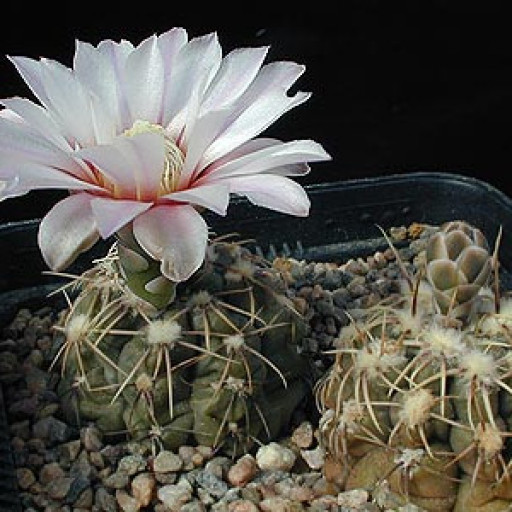
Plant Overview
Often called "Chin Cacti" due to the unique bumps beneath their spines, Gymnocalycium is a favorite for windowsill gardeners and succulent enthusiasts. These South American gems are celebrated for their stunning, silky flowers that appear even on very young specimens, often blooming in shades of pearly white, soft pink, or vibrant red. Unlike many harsh desert cacti, they offer a diverse range of body colors—from deep purples and greys to soft forest greens—making them the "jewels" of any indoor collection.
🔍 How to Identify
- 🌵 The "Chin": Look for the distinctive chin-like protrusion or fleshy bump located directly below each areole (the spot where spines grow), which gives the genus its common name.
- 🌸 Naked Buds: The name Gymnocalycium literally means "naked calyx," referring to the flower buds which are smooth and completely lack the hair, wool, or bristles found on most other cacti.
- 🎨 Body Shape: Most species are solitary, globular spheres that may flatten out into a disc-like shape as they age, featuring prominent ribs that allow the plant to expand during rain and contract during droughts.
🏡 In Your Garden
- ⛅ Light Nuance: Unlike many desert-dwelling cacti, many species in this genus actually prefer "bright-indirect" light or dappled shade. Exposure to harsh, direct afternoon sun can cause the skin to scorch or turn a stressed reddish-brown.
- 🪴 The Winter Secret: These plants thrive on a "tough love" approach during the cold months. Keeping the soil completely dry and the temperature cool (but above freezing) during winter is the essential trigger for their spectacular spring flower display.
⚠️ Safety & Toxicity
- 🐾 Pet Friendly: Good news for animal lovers—most Gymnocalycium species are considered non-toxic to cats, dogs, and horses.
- 🩹 Physical Hazard: While not chemically poisonous, their spines can be quite sharp or hooked. Always use tongs or thick gloves when repotting to avoid skin irritation or puncture wounds, and keep them out of reach of curious toddlers.
✨ Fun Fact
The famous "Moon Cactus"—those bright neon red, yellow, or orange tops often sold in garden centers—is actually a mutant Gymnocalycium mihanovichii. Because these mutants lack chlorophyll, they cannot survive on their own and must be "grafted" onto a green rootstock cactus to provide them with nutrients!

Detailed Care Instructions
To grow a Gymnocalycium plant, you can follow these steps:
- Choose a suitable pot: Select a pot with drainage holes to allow excess water to escape. Ensure the pot is at least 2 inches wider and deeper than the plant's root system.
- Soil mix: Use well-draining cactus or succulent soil mix. You can also create your own mix by combining regular potting soil with sand or perlite for better drainage.
- Planting: Carefully remove the Gymnocalycium plant from its nursery pot, being cautious not to damage the roots. Place the plant in the new pot, ensuring the roots are spread out. Backfill the pot with soil until the plant is securely held upright.
- Light requirements: Gymnocalycium plants prefer bright, indirect sunlight. Place them near a window where they can receive several hours of partial sunlight each day. Avoid direct sunlight, especially during the hottest parts of the day.
- Watering: Water the plant thoroughly, allowing the soil to dry out slightly between waterings. Gymnocalycium plants are drought-tolerant, so be careful not to overwater. Test the soil moisture by sticking your finger into the soil up to the first knuckle – if it feels dry, it's time to water.
- Temperature and humidity: Gymnocalycium plants thrive in temperatures between 70°F and 80°F (21°C to 27°C). They can tolerate slightly cooler temperatures, but avoid placing them in areas with drafts or extreme temperature fluctuations. They prefer low humidity environments.
- Fertilizing: Feed the plant with a balanced cactus or succulent fertilizer once a month during the growing season (spring and summer). Follow the instructions on the fertilizer package for the correct dosage.
- Propagation: Gymnocalycium plants can be propagated by seeds or offsets (pups). Seeds can be sown in well-draining soil and kept warm and moist until germination. Pups can be carefully separated from the mother plant once they are several inches tall.
- Maintenance: Remove any dead or decaying parts of the plant to promote healthy growth. Watch out for pests like mealybugs or scale insects and treat them as soon as you notice signs of infestation.
Remember, Gymnocalycium plants are slow-growing, so be patient with their growth process. With proper care and attention, your plant should thrive and grow into a beautiful specimen.

Place in a bright room that is sun drenched almost all day. Or directly in a south-facing window.

- First, assess the soil moisture level by inserting your finger about an inch deep into the soil. If it feels moist, wait a few more days before watering.
- When it's time to water, use room temperature water and pour it gently around the soil, avoiding getting water on the leaves or stem.
- Allow the soil to drain completely to prevent root rot.
- During the growing season (usually spring and summer), water more frequently but still make sure the soil is dry before watering again.
- In the winter months, water less frequently as the plant enters a dormant period.
- Monitor the plant closely and adjust watering frequency as needed to maintain proper soil moisture levels.
For best results, fertilize this plant during the active growing season, which is typically from spring to early fall. Use a balanced fertilizer with equal parts nitrogen, potassium, and phosphorus, and apply it at half strength every two weeks. Water the plant thoroughly before fertilizing to prevent root burn. During the dormant season, avoid fertilizing and reduce watering to allow the plant to rest.
The best soil for the Gymnocalycium plant is well-draining soil that is slightly acidic. It should contain a mixture of sand, perlite, and peat moss to provide optimal drainage while also retaining some moisture. A small amount of fertilizer can be added to the soil mix during planting to provide nutrients for the plant. It is important to avoid using heavy, clay-rich soils as they can hold too much moisture and lead to root rot. Additionally, the soil should be allowed to dry out between waterings to prevent overwatering and other issues that can harm the plant.
Gymnocalycium is a genus of cactus plants that can be propagated through various methods. Propagation can be achieved by using offsets, stem cuttings, seeds, and grafting.
Offshoots: Offshoots are small plantlets that grow from the base of the mother plant. These can be removed and potted separately once they have developed their own root system. Offshoots can be propagated at any time during the active growth season.
Stem cuttings: Stem cuttings can be taken during the active growing season. Using a sharp and sterilized knife, carefully cut a stem at least 3 inches long. Allow the cutting to dry for a few days before placing it in a well-draining potting soil mix. Keep the soil moist and in a warm area until new growth appears.
Seeds: Gymnocalycium can be propagated from seeds. Sow seeds in a well-draining soil mix and keep the soil moist. Cover the pot with plastic to increase humidity until germination takes place. Once seedlings have established a few set of true leaves, they can be transplanted into individual pots.
Grafting: Grafting is often used to propagate Gymnocalycium plants that are difficult to grow from cuttings or seeds. The process involves taking a cutting from two different plants and joining them together. Typically, a rooted plant is used as the “rootstock” and a desirable plant is grafted onto it. For Gymnocalycium, grafting is typically done in the spring or summer.
Common pests of the chin cactusses include Mealybugs, spider mites, thrips. Make a habit of checking your chin cactusses frequently for pests so that any infestations can be caught and managed early.







