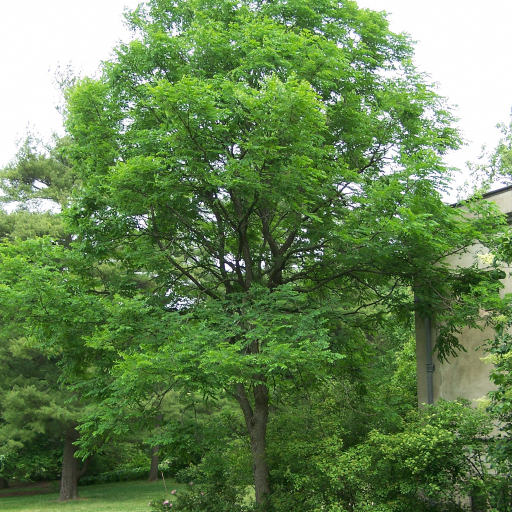
Plant Overview
Commonly known as the Kentucky Coffee Tree, this North American native is a true "living fossil" from the prehistoric era. Its name, Gymnocladus, translates to "naked branch," referring to the tree's habit of staying leafless for up to nine months of the year, appearing as a stark, skeletal silhouette against the winter sky. Early settlers once used its roasted seeds as a coffee substitute, though they quickly learned that raw seeds are a dangerous gamble.
🔍 How to Identify
- 🍃 Giant Foliage: It boasts the largest leaves of any tree in North America—bipinnately compound leaves that can reach up to 3 feet long, giving the tree a lush, tropical appearance in mid-summer.
- 🪵 Curled Bark: The bark is distinctively rough and scaly, with firm, narrow ridges that look like they are slightly peeling or curling away from the trunk.
- 🍫 Leathery Pods: On female trees, look for thick, reddish-brown seed pods that resemble oversized pea pods. They contain hard, dark seeds encased in a sticky, sweet-smelling pulp.
🏡 In Your Garden
- 🏗️ Urban Warrior: This tree is incredibly tough. It is highly resistant to pests, diseases, and urban pollution, making it an excellent choice for large landscapes or city streets where other trees might struggle.
- ⏳ Patience is Key: It is a slow-to-moderate grower and is famously "the last to leaf out and the first to drop." Don't panic if your tree looks like a dead stick well into late May—it’s just taking its time to wake up!
- 🍂 Mess Management: If you prefer a clean lawn, look for "male" cultivars (like 'Espresso') that do not produce the heavy, messy seed pods which can persist on the ground through winter.
⚠️ Safety & Toxicity
- 🚫 Toxic Status: All parts of the tree, especially the raw seeds and leaves, are toxic.
- 🐕 Details: They contain the alkaloid cytisine, which can cause severe vomiting, diarrhea, and muscle spasms. It is particularly dangerous for curious pets, livestock, and children who might find the large seed pods enticing. Never attempt to roast the "coffee" seeds yourself without expert guidance, as under-roasting fails to neutralize the toxins.
✨ Fun Fact
The Kentucky Coffee Tree is considered an "evolutionary anachronism." Scientists believe its large, hard-shelled pods were meant to be eaten and dispersed by extinct Ice Age giants, like the Giant Ground Sloth or the Mastodon. Without these mega-beasts to help it move, the tree now relies mostly on water or humans to spread its seeds!

Detailed Care Instructions
To grow a Gymnocladus dioica plant, also known as the Kentucky coffee tree, you can follow these steps:
- Obtain seeds: Look for a reputable nursery or garden center that sells Gymnocladus dioica seeds. You can also harvest seeds from existing trees if accessible.
- Stratify the seeds: Gymnocladus dioica seeds require stratification, which is a process of simulating winter conditions. Place the seeds in a damp paper towel or in a container with moist soil and store them in the refrigerator for 60-90 days.
- Prepare the soil: Gymnocladus dioica prefers well-draining soil with a pH between 6.0 and 7.5. Amend the soil with compost before planting to improve nutrient content and drainage.
- Plant the seeds: After stratification, sow the seeds in individual pots or directly in the ground. Plant the seeds about 1 to 2 inches deep. If using pots, make sure they have drainage holes.
- Provide adequate sunlight: Gymnocladus dioica thrives in full sun to partial shade. Choose a location that receives at least 6 hours of direct sunlight each day.
- Water appropriately: Keep the soil evenly moist but not waterlogged. Avoid letting the soil dry out completely between waterings. Young trees generally require more water than established ones.
- Mulch the planting area: Apply a layer of organic mulch around the base of the tree to conserve moisture, suppress weeds, and regulate soil temperature.
- Prune as necessary: Gymnocladus dioica has a striking, irregular growth habit. Prune dead or damaged branches only, as major pruning can negatively affect the tree's natural form.
- Monitor for pests and diseases: Occasionally, Gymnocladus dioica can be affected by pests such as leafminers, scales, or borers. Regularly inspect the foliage for any signs of pest infestation or disease, and take appropriate measures if necessary.
- Be patient: Gymnocladus dioica is a slow-growing tree, and it may take several years to reach maturity. Provide consistent care, including regular watering and fertilization, to ensure optimal growth.
Remember to check with local gardening resources or experts for specific care instructions and considerations based on your region's climate and conditions.

Place in a bright room that is sun drenched almost all day. Or directly in a south-facing window.

Gymnocladus Dioica is a deciduous tree that can grow up to 30 meters in height. It requires regular watering, particularly during the early stages of growth. When watering, it is important to ensure that the soil is uniformly moist and not waterlogged.
To achieve this, one should water the plant deeply and thoroughly, allowing the water to soak into the soil to a depth of at least 6 inches. The frequency of watering will depend on the climate and the condition of the soil. Generally, the plant should be watered once or twice a week during the growing season, and less frequently during the dormant winter months.
It is important to note that over-watering can be detrimental to Gymnocladus Dioica. Water-logged soil can lead to root rot, which can ultimately kill the plant. Therefore, it is important to allow the soil to dry out slightly between watering.
In addition to watering, it is recommended to mulch around the base of the plant to help retain moisture and regulate soil temperature. This can also reduce the need for frequent watering.
To fertilize this plant, use a balanced fertilizer with equal amounts of nitrogen, phosphorus, and potassium. Apply the fertilizer in the spring just before new growth appears. Follow the recommended dosage on the fertilizer package and spread it evenly around the base of the plant. Water thoroughly after fertilizing to help the nutrients reach the roots. Avoid fertilizing during the fall and winter months, as the plant is dormant and does not require additional nutrients.
The Gymnocladus Dioica plant grows best in a well-drained, nutrient-rich soil with a pH range of 6.0 to 7.0. The ideal soil type is a loamy composition, which consists of a mixture of sand, silt, and clay. The plant prefers a slightly acidic to neutral soil, so it is essential to monitor the pH level.
To improve soil structure and fertility, organic matter such as compost, well-rotted manure, or peat moss can be added. This will also help with moisture retention, which is crucial for the plant's growth.
It is essential to avoid heavy clay soil, which can lead to drainage issues and waterlogging, and reduce the plant's growth. Conversely, sandy soil does not retain enough moisture, leading to the plant's dehydration and poor growth.
Overall, the key to growing a healthy Gymnocladus Dioica plant is to ensure that the soil is well-drained, nutrient-rich, and retains enough moisture.
To propagate this plant, first gather mature seeds from the tree during autumn. Immerse the seeds in lukewarm water for 24 hours to soften the hard seed coat. Scarify the seeds by scratching or nicking the seed coat with a file or sandpaper. Soak the seeds in water again for another 24 hours.
Fill a seedling tray with a well-draining soil mix. Bury the seeds in the soil, ensuring that they are covered with 1/4 inch of soil. Water the soil gently to keep it moist but not too wet.
Place the seedling tray in a warm, bright area away from direct sunlight. Cover the tray with a plastic bag to maintain humidity. The seeds should germinate in two to three weeks.
Once the seedlings have two sets of leaves, transplant them into individual pots with well-draining soil. Continue to water the seedlings regularly and fertilize them with a balanced liquid fertilizer.
After the last frost has passed, transplant the seedlings into a sunny spot with well-draining soil. Ensure that each plant is at least 8 feet away from other trees and buildings, as this plant can grow up to 75 feet tall.
Common pests of the kentucky coffee-tree include Spider mites, aphids, thrips. Make a habit of checking your kentucky coffee-tree frequently for pests so that any infestations can be caught and managed early.








