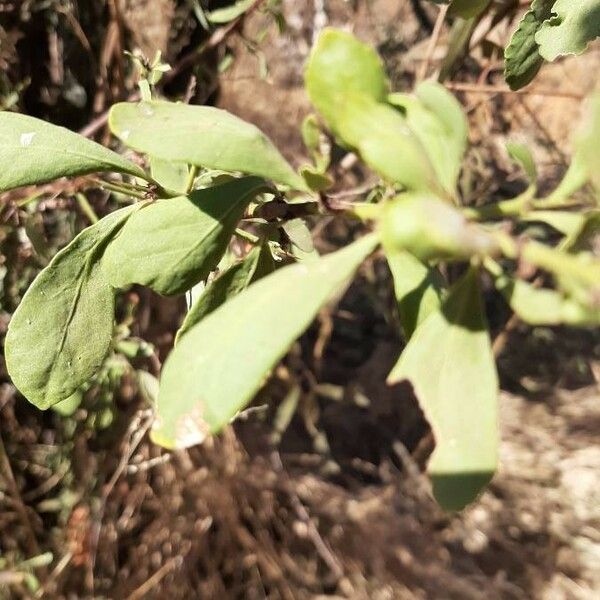
Plant Overview
Often called the Red Spike-thorn or the Confetti Tree, this resilient evergreen is a tough-as-nails wanderer of the dry African savannas and Mediterranean rocky hills. It is beloved by gardeners for its "snowy" appearance when in full bloom and its ability to thrive in harsh, arid conditions where other plants might wilt. In many cultures, it is viewed as a symbol of protection, both for its physical thorns and its long history in traditional medicine.
🔍 How to Identify
- 🌵 The Thorns: Long, straight, reddish-brown spines that emerge from the leaf axils. These are formidable and act as the plant's primary defense mechanism.
- 🍃 The Foliage: Leathery, paddle-shaped leaves with a distinct pale, bluish-green (glaucous) tint. The edges are often finely serrated, though they can appear smooth from a distance.
- 🌸 The Flowers: Massive, dense clusters of tiny, creamy-white flowers. When the tree is in full bloom, the foliage is often completely hidden by a sea of white.
🏡 In Your Garden
- 🧱 A Living Fence: Because of its dense growth habit and sharp thorns, it is one of the world's best "security plants." It creates a virtually impenetrable hedge for privacy and protection.
- 🏜️ Drought Specialist: It thrives in poor, rocky, or sandy soils. It has a deep root system that prefers to stay dry, so it is important to avoid overwatering or planting it in "heavy" clay that holds moisture.
- 🦋 Wildlife Sanctuary: It is a high-value plant for biodiversity. The sweet-scented flowers attract bees and butterflies, while the thorny interior provides a safe, predator-free nesting site for small birds.
⚠️ Safety & Toxicity
- 🛡️ Physical Hazard: The plant is not known to be chemically toxic to humans or pets, but the thorns are a significant physical risk. They can cause deep puncture wounds if handled without heavy-duty gloves.
- 🐾 Pet Placement: Avoid planting this near high-traffic "run zones" for dogs. While the plant isn't poisonous if nibbled, the spines can cause eye or paw injuries to curious pets.
✨ Fun Fact
🎉 It earned the nickname "Confetti Tree" because of its unique flowering habit; when a breeze passes through the tree at the end of the blooming season, thousands of tiny white petals rain down, covering the ground in what looks like a celebratory dusting of confetti.

Detailed Care Instructions
To grow Gymnosporia Senegalensis, you can follow these steps:
- Choose the right location: Gymnosporia Senegalensis grows well in full sun to partial shade. Make sure the location you choose receives at least 6 hours of direct sunlight per day.
- Prepare the soil: Gymnosporia Senegalensis prefers well-draining soil. Amend the soil with organic matter, such as compost, to improve its fertility and drainage.
- Propagation: Gymnosporia Senegalensis can be grown from seeds or cuttings. If using seeds, soak them in warm water for 24 hours before planting to improve germination. Sow the seeds directly in the prepared soil or in seed trays filled with a well-draining potting mix. If using cuttings, take 6-8 inch long stem cuttings from a healthy plant, remove the lower leaves, and plant them in well-draining soil or potting mix.
- Watering: Water the plant regularly to keep the soil moist but not waterlogged. Avoid overwatering, as it can lead to root rot. Once the plant is established, it can tolerate some drought.
- Pruning: Gymnosporia Senegalensis can tolerate pruning and shaping. Regular pruning helps to maintain its shape and encourage bushier growth. Prune the plant in early spring before new growth starts.
- Fertilizing: Apply a balanced fertilizer, such as a slow-release granular fertilizer, in spring and early summer to promote healthy growth. Follow the instructions on the fertilizer packaging for application rates.
- Pest and disease control: Gymnosporia Senegalensis is generally resistant to pests and diseases, but it may occasionally encounter issues with aphids or whiteflies. Monitor the plant regularly and treat any infestations promptly with organic or chemical insecticides if necessary.
- Mulching: Apply a layer of organic mulch around the base of the plant to conserve moisture, suppress weeds, and improve soil fertility. Avoid mulching directly against the stem to prevent rot.
- Winter care: Gymnosporia Senegalensis is a hardy plant that can withstand mild frosts, but it may require protection in colder climates. If you live in an area with harsh winters, consider covering the plant with a frost cloth or moving it to a sheltered location.
By following these guidelines, you should be able to successfully grow Gymnosporia Senegalensis. Remember to adjust the care requirements based on your specific climate and growing conditions.

Place in a bright room that is sun drenched almost all day. Or directly in a south-facing window.

To water this plant, you will want to use a watering can or hose with a gentle stream of water. It is important not to overwater this plant, as it prefers well-draining soil. Before watering, check the soil moisture by gently inserting a finger into the soil up to the first knuckle. If the soil feels dry, you can water the plant, making sure to moisten the soil to a depth of at least two inches. Be sure to avoid getting the leaves wet, as this can lead to fungal growth and other issues. Water this plant regularly, but allow the soil to dry out slightly between waterings to avoid root rot.
To fertilize this plant, mix a slow-release granular fertilizer into the topsoil surrounding the roots at the start of the growing season. Use a balanced, all-purpose fertilizer with equal amounts of nitrogen, phosphorus, and potassium. Apply it according to the instructions on the packaging, generally about 1-2 tablespoons per square foot. Water the plant thoroughly after fertilizing to allow the nutrients to penetrate the soil. Avoid over-fertilizing, as this can lead to poor plant growth and root damage.
The Gymnosporia Senegalensis plant prefers a well-draining soil with a pH range between 6.1 to 7.8. It thrives in sandy soils that are nutrient-rich and have good drainage. The plant is known to grow in a range of soil textures from loamy to sandy. The soil should be kept moist but not waterlogged as overwatering can lead to rotting of the roots. The plant can tolerate slightly acidic or slightly alkaline soil conditions, but it is essential to maintain adequate soil pH for optimal growth. Organic matter can be added to the soil to improve its nutrient content. Soil amendments like compost, manure, and perlite can also aid in drainage and retention of moisture in the soil.
Gymnosporia Senegalensis is a plant species that can be propagated by several methods. One method involves using cuttings taken from mature, healthy plants.
To propagate Gymnosporia Senegalensis, start by selecting a branch from the parent plant that is healthy and disease-free. Cut a 6 to 8-inch stem from the branch using a sharp, clean pair of pruning shears. Remove any leaves from the bottom third of the stem.
Dip the cut end of the stem into rooting hormone powder, which helps the stem develop roots. Plant the stem into a pot filled with a well-draining soil mixture. Water the soil thoroughly and cover the pot with a clear plastic bag to maintain humidity.
Place the pot in a location that receives bright, indirect light. Check the soil moisture regularly and water the plant when the top inch of soil feels dry. After about 4 to 6 weeks, the stem should develop roots. Remove the plastic bag and continue to care for the plant as it grows.
Another method to propagate Gymnosporia Senegalensis is through seed germination. Collect fresh, ripe seeds from the parent plant. Soak the seeds in water for 24 hours before sowing them in a well-draining soil mixture. Keep the soil consistently moist and in a warm location. The seeds should germinate within 2 to 3 weeks.








