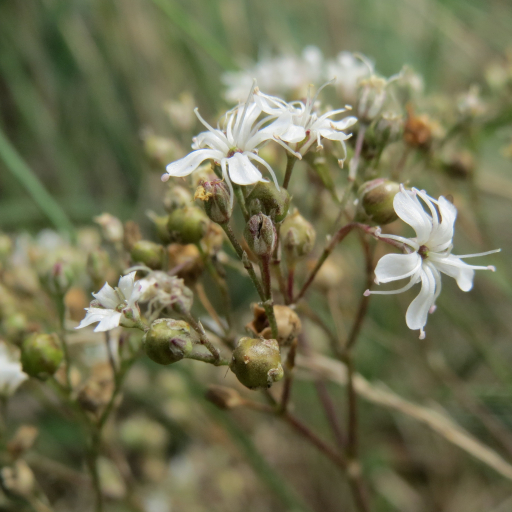
Plant Overview
Known as the sturdier, wilder cousin of the common florist’s Baby’s Breath, Gypsophila fastigiata brings a misty, ethereal cloud of white to sandy landscapes. Often called the Fastigiate Baby’s Breath, it hails from the pine forests and rocky barrens of Eastern and Central Europe. Its name hints at its upright, pillar-like growth habit, making it a favorite for those who want that "cloud-like" look without the plant flopping over in the wind.
🔍 How to Identify
- 📏 The Silhouette: Unlike its sprawling relatives, this species grows in tight, upright tufts or "fastigiate" columns, usually reaching between 10 to 20 inches in height.
- 🌸 The Blooms: Tiny, five-petaled flowers range from snow-white to a delicate pale pink. They appear in dense, flat-topped clusters that make the plant look like it’s caught in a permanent dusting of frost.
- 🌿 The Foliage: The leaves are narrow, needle-like, and often have a subtle grey-green or bluish tint, which helps the plant reflect intense sunlight.
🏡 In Your Garden
- 🏖️ The Lime Lover: The name Gypsophila literally translates to "lime-loving." This plant thrives in alkaline, sandy, or rocky soils where other flowers might wither. It is the perfect candidate for a rock garden or a xeriscape.
- ☀️ Sun & Stability: It is a sun-worshiper that requires a bright spot to maintain its compact shape. Because it develops a very deep, sturdy taproot to find water, it is exceptionally drought-tolerant but extremely difficult to transplant once it has settled in.
- ✂️ Post-Bloom Care: To keep it looking tidy, many gardeners shear the plant back slightly after the first flush of flowers. This encourages a second, smaller bloom and prevents the center of the tuft from becoming "woody" or hollow.
⚠️ Safety & Toxicity
- 🐾 Mildly Toxic: Like most members of the Gypsophila genus, this plant contains saponins. While not typically life-threatening, it can cause digestive upset, drooling, or vomiting in cats and dogs if ingested.
- 🤲 Skin Irritant: The sap or the dried stems can cause "contact dermatitis" (an itchy red rash) for some people. If you have sensitive skin, it is best to wear gloves when pruning or incorporating it into floral arrangements.
✨ Fun Fact
The presence of Gypsophila fastigiata is actually used by geologists as a biological map! Because it is so specialized to lime-rich environments, its appearance in the wild often indicates the presence of gypsum or calcium deposits hidden deep beneath the soil.

Detailed Care Instructions

Place in a window with dappled sun or a spot in the middle of a room. Or directly in a window facing west or east.

Some plants require more regular watering than others, which should be done every few days. It's critical to maintain the soil moist all of the time. The water requirements of the same plant placed in pots with varying sizes will differ. Because the water in the smaller pot evaporates faster than the water in the larger pot, it will require more watering. Regardless of pot size, the surface should constantly be maintained moist.








