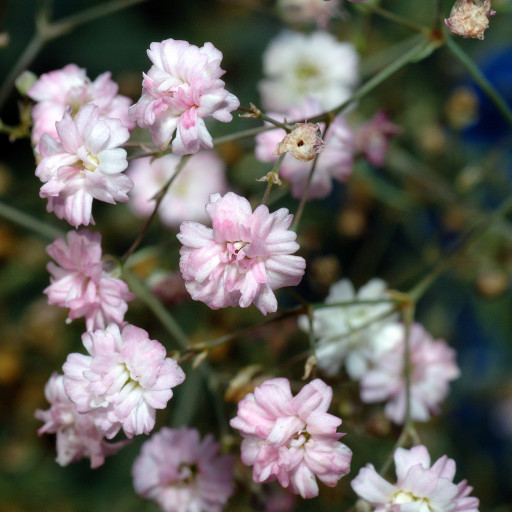
Plant Overview
Known globally as "Baby's Breath," Gypsophila is the unsung hero of the floral world. While most famous for its supporting role in romantic wedding bouquets, this "gypsum-loving" plant is a hardy survivor that creates a misty, dreamlike atmosphere in any garden. Originating from Eurasia, it has become a timeless symbol of everlasting love and purity, adored for its ability to turn a garden border into a soft, floral cloud.
🔍 How to Identify
- 🌸 Bloom Structure: Tiny, delicate flowers (usually white or pale pink) grow in massive, branched clusters. Each individual bloom is small, but together they create a "mist" effect.
- 🌿 Foliage: The leaves are narrow, lance-shaped, and usually a soft grey-green color, often appearing sparse so the flowers can take center stage.
- 🏗️ Growth Habit: It typically forms a mounded, airy shape. Some species stay low as groundcovers, while others grow into upright, wiry bushes that resemble floral tumbleweeds.
🏡 In Your Garden
- 💎 The Name Secret: The name comes from the Greek words gypsos (gypsum) and philos (loving). This plant craves alkaline soil rich in calcium. If your soil is too acidic, it will struggle to thrive.
- 🚫 Taproot Troubles: Baby’s Breath develops a deep, fleshy taproot to find moisture. Because of this, it hates being transplanted. Once you've tucked it into a sunny spot, it’s best to leave it there for life.
- ☀️ Sun & Drainage: It is a sun-worshipper that requires excellent drainage. In heavy clay or soggy winter soil, the roots will rot quickly. It’s a perfect candidate for rock gardens or raised beds.
⚠️ Safety & Toxicity
- 🐾 Mildly Toxic: While it looks innocent, it contains saponins that are mildly toxic to cats and dogs. Ingestion can lead to an upset stomach, vomiting, or diarrhea.
- 🧤 Skin & Breath: For some gardeners and florists, the dried sap can cause minor skin irritation or "hay fever" symptoms if the dust from the dried flowers is inhaled.
✨ Fun Fact
In some parts of the world, Baby's Breath is so successful at spreading its seeds that it is actually considered a "tumbleweed." When the plant dies back in the fall, the brittle stems break off at the base and roll across the landscape, scattering thousands of seeds as they go!

Detailed Care Instructions
Freshly picked baby's breath will last up to eight to 10 days in a vase with fresh water.
Does baby's breath blooms have a smell?
There is a slight smell to baby's breath flowers which some people find not very appealing. Their blooms are not sweet-smelling, that's for sure.
Is baby's breath an annual or perennial flowering plant?
With over 100 species, baby's breath offers both annuals and perennials. The perennial plants come up every year, and the flowers come in pink and white colors. Annuals may potentially self-seed themselves and return the following year.
| Color | White, Pink |
| Soil Ph | Alkaline, With A Ph Between 7 And 7.5 |
| Lighting | Full Sun |
| Soil Type | Well-Drained |
| Bloom Time | Summer |
| Plant Type | Annual, Perennial |
| Mature Size | 4 Feet |
| Native Area | Eastern Europe And Turkey |
| Sun Exposure | Full Sun |
| Hardiness Zones | 4 To 9 |
To grow Gypsophila plant, also known as Baby's Breath, you can follow these steps:
- Choose a location: Gypsophila thrives in full sun, so select a spot in your garden that receives at least 6 hours of direct sunlight daily.
- Prepare the soil: Gypsophila prefers well-draining soil with a pH level between 6.0 and 7.5. Amend the soil with organic matter like compost to improve drainage and nutrient content.
- Sow seeds: Gypsophila can be grown from seeds. Sow the seeds directly into the prepared soil after the last frost date, or you can start seeds indoors 6-8 weeks before the last frost and later transplant them outdoors.
- Watering: Keep the soil consistently moist, but not waterlogged. Baby's Breath plants do not like to sit in wet soil, so water sparingly but regularly. Aim for about 1 inch of water per week, either through rainfall or supplemental irrigation.
- Mulch: Applying a layer of mulch around the plants can help retain moisture, suppress weed growth, and regulate soil temperature.
- Fertilize: Gypsophila is not a heavy feeder, but you can use a balanced water-soluble fertilizer every 4-6 weeks during the growing season to promote healthy growth. Follow the instructions on the fertilizer packaging for the correct dosage and application method.
- Pruning: Regularly deadhead the spent flowers to encourage continuous blooming. Additionally, after the first flush of flowers, you can trim back the plants to promote bushier growth and prevent them from becoming leggy.
- Protecting from pests: Monitor the plants for common pests like aphids or whiteflies and take appropriate measures like using insecticidal soap or neem oil spray.
- Division: After a few years, Gypsophila plants may become overcrowded. To rejuvenate them, you can dig up the clumps in early spring or fall, divide them into smaller sections, and replant them.
By following these steps and providing proper care, you should be able to grow healthy Gypsophila plants.

Place in a window with dappled sun or a spot in the middle of a room. Or directly in a window facing west or east.

Gypsophila is a type of flowering plant that requires adequate watering to thrive. When watering Gypsophila, it is important to ensure that the soil around the roots is moist but not waterlogged. One way to achieve this is to water deeply and infrequently, allowing the soil to dry out slightly before watering again. It is also important to avoid getting water on the leaves, as this can lead to fungal growth or damage. Water should be applied directly to the soil around the base of the plant using a watering can or hose with a low-flow setting. In periods of drought or hot weather, it may be necessary to water more frequently to prevent the plant from drying out. However, overwatering should be avoided, as this can lead to root rot or other issues. Regularly monitoring the soil moisture level and adjusting watering frequency as needed can help ensure the health and vitality of your Gypsophila plant.
To fertilize this particular plant, you should use a balanced fertilizer with a ratio of 10-10-10 in the early spring while it is still dormant. Afterwards, use a high-phosphorus fertilizer once the plant starts blooming to encourage more blooms. Apply the fertilizer according to the package instructions and water thoroughly afterwards. Avoid fertilizing during hot and dry conditions or when the plant is stressed. Fertilize every 4-6 weeks during the growing season.
For the plant commonly known as Gypsophila, a well-draining soil mixture with a pH of 6.0 to 8.0 is preferred. A soil mixture that is high in organic matter, such as compost or peat moss, is also beneficial. Avoid soils that are heavy and clay-like, as these may impede drainage and lead to water-logging. Additionally, it is important to ensure that the soil mixture is not overly fertile and does not contain too much nitrogen, as this may lead to excessive foliage growth at the expense of flower development. The soil should be kept consistently moist, but not waterlogged, and it is recommended to add a layer of mulch to help retain moisture and discourage weed growth.
To propagate this plant, the first step is to choose healthy parent plants and ensure they are disease-free. Take cuttings from the parent plant that are around 5-10 cm long, making sure to cut just below a node. Remove any leaves from the lower half of the cutting.
Dip the cut end in a rooting hormone and plant it into a pot with well-draining soil. Water thoroughly and cover the pot with a clear plastic bag to create a humid environment. Place the pot in a bright but indirect light location.
Check the cutting regularly to make sure the soil stays moist and mist the plant if necessary. After a few weeks, new growth should appear indicating that roots have formed. Once new shoots are visible, gradually remove the plastic cover and gradually expose the plant to more light.
After a few more weeks, the plant should be well established and ready to be transplanted into a larger pot or into the garden.







