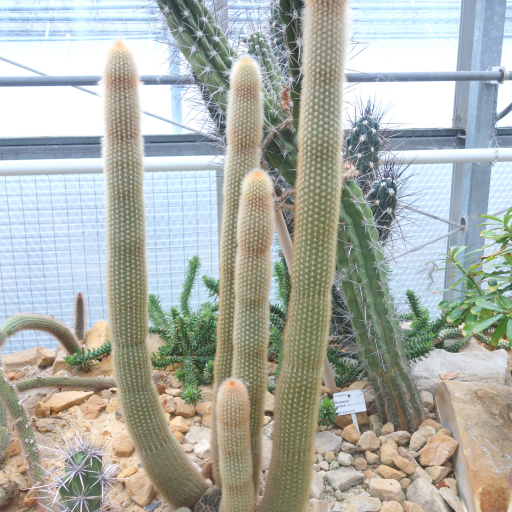
Plant Overview
The Haageocereus pseudomelanostele, often admired as the "Golden Column," is a stunning desert dweller native to the arid coastal regions of Peru. It is famous for its dense, shimmering coat of spines that catch the light, making it appear as though it is glowing from within. Whether standing tall in a rock garden or chilling in a terra cotta pot, this cactus brings a piece of the dramatic Andean landscape into your home.
🔍 How to Identify
- 🌵 The Stem: A columnar cactus that starts upright and often clumps at the base as it matures, reaching several feet in height over many years.
- ✨ The Spines: The plant is heavily armored with dense, needle-like spines. These are usually a brilliant golden-yellow or tawny brown, almost completely obscuring the green flesh underneath.
- 🌸 The Flowers: It produces funnel-shaped, nocturnal flowers that are typically greenish-white or pale pink, designed to be pollinated by bats and moths in the wild.
🏡 In Your Garden
- ☀️ Sun Worshiper: Because it originates from the sun-drenched hills of Peru, this cactus craves intense light. If grown indoors, a south-facing window is a must to prevent it from stretching (etiolation) and losing its golden luster.
- 💧 The "Mist" Factor: Unlike many desert cacti, this species comes from the "Lomas" ecosystem where fog is common. While it hates soggy roots, it appreciates a well-ventilated area and can handle slightly more humidity than its North American cousins.
- 🪨 Drainage is Key: It possesses a relatively shallow root system. Use a very gritty, mineral-heavy soil mix to ensure water passes through quickly, preventing the dreaded "base rot."
⚠️ Safety & Toxicity
- 🌵 Status: Physical Hazard.
- 🚫 Details: While the plant is not considered chemically toxic or poisonous to humans or pets, its spines are extremely sharp and numerous. They can easily puncture skin or paws, so it should be kept out of reach of curious toddlers and playful cats.
✨ Fun Fact
In its native Peru, these cacti often survive in areas where it almost never rains. They have evolved to "drink the air," using their dense network of spines to trap moisture from the heavy coastal fogs (known locally as garúa) and funneling the water down to their roots.

Detailed Care Instructions

Place in a bright room that is sun drenched almost all day. Or directly in a south-facing window.

When the top few inches of soil dry out, water your plants. If the top few inches of soil are still moist, do not water your plant. Wait a few days, then poke your finger into the soil to see if anything has changed. Overwatering poses a disease risk, such as the development of fungal diseases in the roots. These plants have adaptations in there leaves that allow them to survive in low water supply.
Without the need of fertilizer, these plants can thrive and bloom. If a plant requires fertilization, it will display indicators of nutrient insufficiency, such as yellowing leaves. It is safe to apply slightly diluted fertilizers in these circumstances. Over fertilizing, on the other hand, should be avoided because excess nutrients might cause plant mortality. Slow-release fertilizers are therefore advised for these plants.
You may use Cactus Fertilizer for your Haageocereus Pseudomelanostele
Common pests of the haageocereus pseudomelanostele include Scale insect, mealybugs, spider mites. Make a habit of checking your haageocereus pseudomelanostele frequently for pests so that any infestations can be caught and managed early.








