Plant Overview
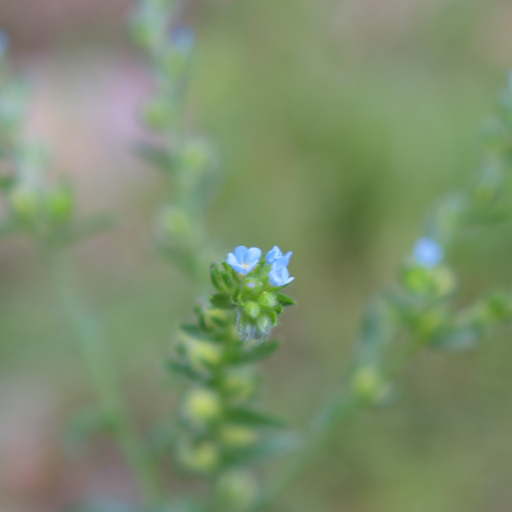
Known as the Manyflowered Stickseed, this western North American native is a master of the "hitchhiking" strategy. While its delicate blue blossoms might make you mistake it for a common Forget-me-not, its seeds tell a much stickier story. It is a tall, elegant biennial or perennial that brings the charm of mountain meadows right into the landscape.
🔍 How to Identify
- 🌸 Sky-Blue Blossoms: Tiny, five-petaled flowers that range from pale blue to almost white, often featuring a small yellow or white "eye" at the center.
- 🌿 Hairy Foliage: The stems and lance-shaped leaves are covered in fine, stiff hairs, giving the plant a slightly rough, grayish-green texture.
- 📌 Prickly Nutlets: The most distinct feature is the fruit; small seeds covered in tiny, hooked prickles (glochids) that act like natural Velcro.
🏡 In Your Garden
- ⛰️ Mountain Vibes: This plant thrives in moist, open areas and is particularly well-suited for "wild" gardens or native wildflower beds that mimic high-elevation slopes.
- 🌱 Taproot Sensitivity: Like many members of its family, it develops a deep taproot. This makes it very drought-tolerant once established, but it hates being moved—always plant it in its "forever home."
- 🐝 Pollinator Magnet: Its abundance of small flowers provides an excellent nectar source for native bees and small butterflies during the mid-summer months.
⚠️ Safety & Toxicity
- 🐕 Physical Nuisance: While the plant is not known to be chemically toxic, the barbed seeds can be a major headache for pet owners. They easily tangle into long fur and can cause skin irritation or discomfort for dogs and cats.
- 🧤 Skin Protection: The stiff hairs on the stems can be mildly abrasive to sensitive skin; wearing gloves while pruning or clearing old stalks is recommended.
✨ Fun Fact
The Manyflowered Stickseed’s "sticky" reputation is a brilliant evolutionary trick called epizoochory. By hooking its seeds into the fur of passing deer or the socks of hikers, the plant can transport its offspring miles away from the parent plant!

Detailed Care Instructions
To grow Hackelia Floribunda, also known as Columbia Stickseed or Applegate's Stickseed, you can follow the steps below:
- Location: Choose a suitable location for the plant. Hackelia Floribunda prefers full sun to partial shade. Ensure the area has well-draining soil with a pH level between 6.0 and 7.5.
- Soil preparation: Prepare the soil by removing any weeds or grass and loosening it with a garden fork or tiller. Mix in organic matter like compost or well-rotted manure to improve the soil's fertility and drainage.
- Planting: Hackelia Floribunda seeds can be directly sown in the garden in spring after the last frost or in fall. Alternatively, you can start the seeds indoors 6-8 weeks before the last frost and transplant them outside once the danger of frost has passed. Plant the seeds at a depth of about ¼ inch and space them around 12-18 inches apart.
- Watering: Water the newly planted seeds lightly but regularly to keep the soil consistently moist but never soggy. Once the plants establish and start growing, reduce the frequency of watering. Stick to a watering schedule that allows the soil to dry out slightly between each watering.
- Maintenance: Hackelia Floribunda is a relatively low-maintenance plant. Remove any weeds that compete with the plant and provide a layer of organic mulch around the base to help retain moisture and suppress weed growth. Ensure the plants receive enough light for optimal growth.
- Pruning: You can prune the plants in early spring to remove any dead or damaged growth. This will help promote new growth and maintain a tidy appearance.
- Fertilization: In general, Hackelia Floribunda does not require heavy fertilization. However, you can apply a balanced slow-release fertilizer in early spring to provide some additional nutrients.
- Pests and diseases: Monitor the plants regularly for any signs of pests such as aphids or spider mites. If detected, treat them with appropriate organic or chemical insecticides. Additionally, ensure good air circulation around the plants to prevent fungal diseases.
By following these steps, you should be able to successfully grow Hackelia Floribunda plants in your garden.

Place in a bright room that is sun drenched almost all day. Or directly in a south-facing window.

Hackelia Floribunda is a plant that requires regular watering to grow and thrive. When watering this plant, it's important to ensure that the soil is evenly moist but not waterlogged. As a general guideline, water the plant deeply once per week, providing enough water to moisten the soil to a depth of at least 6 inches.
When watering, make sure to avoid getting water on the foliage of the plant as this can cause damage or encourage the growth of fungal diseases. Instead, water the soil around the plant base, using a gentle stream of water to avoid disturbing the soil or washing away any mulch or organic matter.
During periods of hot weather or drought, make sure to check the soil moisture level more frequently and water more often as needed. Additionally, be mindful of drainage, as Hackelia Floribunda prefers well-drained soil and can suffer from root rot if the soil stays too wet for extended periods.
Overall, providing adequate water is key to ensuring the health and longevity of Hackelia Floribunda, and regular watering can help encourage strong, healthy growth and abundant blooms.
To fertilize this plant, use a balanced fertilizer with an N-P-K ratio of approximately 10-10-10. Apply the fertilizer once per month during the growing season, which typically lasts from spring to early summer. Be sure to follow the manufacturer's instructions for the correct amount of fertilizer to use. Avoid over-fertilizing the plant, which can lead to excessive growth and reduced flowering. Water the plant thoroughly after fertilizing to ensure the nutrients reach the roots.
Hackelia floribunda requires soil that is well-draining and rich in nutrients. The soil should have a pH of around 6.0-7.0. It prefers a soil that is slightly acidic to neutral. It grows best in loamy soil that is composed of sand, silt, and clay. The soil should be able to hold moisture but not become waterlogged. It also grows well in clay soil, but this type of soil needs to be mixed with organic matter to improve its drainage. Adding compost or well-rotted manure to the soil will increase its fertility. The plant also benefits from adding a slow-release fertilizer to the soil before planting. Soil with a good structure that does not compact easily will allow the roots to grow and spread easily. It is important to ensure that the soil is not contaminated with chemicals or pollutants that can affect the plant's health.
- Identify a healthy parent plant: The first step in propagating Hackelia Floribunda is to identify a healthy parent plant. This will ensure that the cutting or division you take will have the best chance of survival.
- Take cuttings: One way to propagate Hackelia Floribunda is by taking stem cuttings. Use a sharp, sterilized knife to cut a 4-6 inch section of stem with several leaves attached. Make the cut just below a node or where a leaf attaches to the stem. Remove the lower leaves from the stem, leaving just the top few. Dip the cut end of the stem in rooting hormone powder, then plant it in a pot of moist, well-draining soil. Keep the soil moist and place the pot in a bright, indirect light. Within a few weeks, roots should begin to form and the cutting will begin to grow.
- Division: Another way to propagate Hackelia Floribunda is by division. This method is best done in the spring or fall when the plant is dormant. Dig up the entire plant, then gently tap off any excess soil. Use a sharp, sterilized knife to divide the root system into two or three sections. Each section should have a healthy portion of roots and several shoots or stems. Replant each section in its own pot or in the ground. Water well and keep the soil moist until new growth appears.
- Care for new plants: Regardless of the propagation method used, it's important to give the new plants plenty of care and attention. Keep the soil moist, but not waterlogged, and provide them with bright, indirect light. As they grow, you can begin to fertilize them with a balanced, all-purpose fertilizer to encourage healthy growth and development.








