Plant Overview
Often called the "Single-leaf Blood Lily," Haemanthus pauculifolius is a rare South African gem that values quality over quantity. Unlike its bushier cousins, this bulbous plant usually produces just one thick, velvety leaf that stands like a singular piece of botanical art. In its native habitat, it clings to mossy rock ledges, bringing a touch of minimalist elegance to the misty forest floor.
🔍 How to Identify
- 🍃 The Leaf: A solitary, broad, and tongue-shaped leaf that is covered in fine, soft hairs, giving it a unique matte, velvety texture.
- 🖌️ The Flower: A dense cluster of white stamens tipped with bright gold pollen, looking exactly like a miniature shaving brush rising from the center.
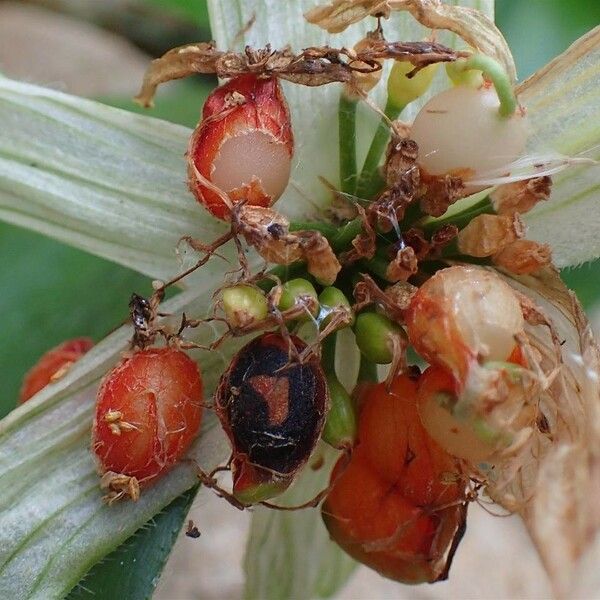
- 🫐 The Fruit: After the flowers fade, the plant produces translucent, pearly-white or pinkish berries that add a secondary decorative charm.
🏡 In Your Garden
- ☁️ Microclimate Matters: This plant thrives in "bright shade," mimicking its home in the South African mist-belts. Unlike many succulents, it prefers high humidity and stays evergreen if kept in a stable, frost-free environment.
- 🪴 Pot Preference: It has a relatively shallow root system and actually enjoys being slightly root-bound. Because it grows slowly, it hates being moved—only repot it when the bulb is literally pushing against the sides of the container.
⚠️ Safety & Toxicity
- 🚫 Harmful if Ingested: As a member of the Amaryllis family, the bulb and leaves contain lycorine and other alkaloids that are toxic to humans and animals.
- 🐾 Pet Warning: Keep this plant on a high shelf away from cats and dogs; ingestion can cause severe stomach upset, drooling, and lethargy.
✨ Fun Fact
The species name pauculifolius is a literal Latin description of the plant's minimalist lifestyle: paucus means "few" and folius means "leaf." It is one of the only species in its genus that consistently produces just one leaf per season!

Detailed Care Instructions
| Humidity | High |
| Lighting | Part Sun |
| Toxicity | Poisonous |
| Difficulty | Easy |
| Temperature | 16°C - 18°C |
| Hardiness Zones | Min 10 |
To grow Haemanthus Pauculifolius plant, also known as the elephant ear plant or African blood lily, follow these steps:
- Select a suitable location: Haemanthus Pauculifolius prefers bright, indirect light. It can tolerate partial shade, but avoid direct sunlight. Place the plant indoors near a window with filtered light or outdoors in a shaded area.
- Choose the right soil: Use well-draining soil that retains some moisture but doesn't become waterlogged. A mix of potting soil, perlite, and organic matter like compost or peat moss works well.
- Planting: If starting from a bulb, plant it in a pot with the pointed end facing upwards. Bury it about 1-2 inches deep, leaving the neck of the bulb exposed. If starting from seeds, plant them 1/4 inch deep in the soil.
- Watering: Keep the soil consistently moist but not soggy. Water thoroughly, allowing excess water to drain out. Avoid overwatering, as it can cause root rot. The plant may enter a dormancy period during winter when it requires less water.
- Temperature and humidity: Haemanthus Pauculifolius prefers moderate temperatures between 65-75°F (18-24°C). It can tolerate slightly cooler temperatures during winter if kept dry. The plant appreciates some humidity, so misting the leaves occasionally can be beneficial.
- Fertilization: Feed the plant every 2-4 weeks during the growing season (spring and summer) with a balanced, water-soluble fertilizer. Follow the instructions on the fertilizer package for proper dosage.
- Repotting: As the plant grows and fills the pot, you may need to repot it every 2-3 years. Choose a slightly larger pot and use fresh potting soil. Repotting can encourage healthy growth.
- Pruning: Remove any dead or decaying leaves regularly. Trim away any unsightly or overgrown foliage to maintain an attractive appearance.
- Pests and diseases: The Haemanthus Pauculifolius plant is generally resistant to pests. However, occasionally, it may be susceptible to infestations by mealybugs or spider mites. Treat any pest issues promptly with appropriate insecticides or by gently washing the plant with mild soapy water.
Remember that Haemanthus Pauculifolius is a slow-growing plant that may take several years to reach maturity. Be patient and consistent with care, and you should enjoy the beautiful foliage and striking red flowers when the plant blooms.

Place in a window with dappled sun or a spot in the middle of a room. Or directly in a window facing west or east.
Haemanthus pauculifolius is a type of plant that belongs to the Amaryllidaceae family. It requires moderate watering according to the weather conditions and soil moisture. During the growing season, the plant needs regular watering, especially when the topsoil feels dry. It is essential not to allow the soil to dry out completely, as it can harm the plant's growth.
When watering Haemanthus pauculifolius, it is best to use filtered or rainwater as tap water can contain high levels of chlorine or fluoride, which can cause burning and damage to the plant. Water the plant at the base, directing the water towards the soil and avoiding the foliage. Overwatering can cause root rot, so it is essential to ensure that the soil is well-drained and does not hold an excessive amount of moisture.
In the dormant season, the water requirements of the Haemanthus pauculifolius plant decrease. Therefore it is best to reduce watering frequency. It is also essential to let the soil dry out slightly between watering, preventing the bulb from rotting. It is advisable to reduce watering further during winters, as the plant requires a dormant period.
To fertilize this plant, use a balanced liquid fertilizer that is diluted to half strength. Apply the fertilizer once a month during the growing season, which usually spans from early spring to late summer. Avoid fertilizing during the dormant season as the plant will not be actively growing. Ensure that the soil is moist before fertilizing to prevent damage to the roots.
Haemanthus Pauculifolius is a plant that requires a well-draining soil mix that is moist but not waterlogged. It prefers a slightly acidic soil with a pH level of around 6.0 to 6.5. A good soil mix for this plant can be made by combining equal parts of peat moss, perlite, and coarse sand or grit. This soil mix provides good aeration and drainage while also retaining enough moisture for the plant's needs. It is important to avoid using heavy soils that can cause waterlogging and root rot. Additionally, the soil should be rich in organic matter to provide the necessary nutrients for the plant's growth. A slow-release fertilizer can also be added to the soil mix, which will provide a steady supply of nutrients to the plant over time.
Propagation of this plant can be done by division or by seed. Division involves carefully separating the plant into smaller sections, ensuring that each section has enough roots and foliage to survive on its own. This can be done when the plant is actively growing and can be dug up without disturbing the roots too much.
Alternatively, the plant can be propagated from seed. This involves collecting ripe seed heads from the plant and sowing them in a well-draining potting mix. The seeds should be kept moist and warm until they germinate, which can take several weeks.
Once the new plants are established, they can be planted in their final location and cared for like mature plants. This species prefers well-drained soil, partial shade, and regular watering during the growing season. It can also benefit from fertilization with a balanced fertilizer to promote healthy growth and flowering.








