Plant Overview
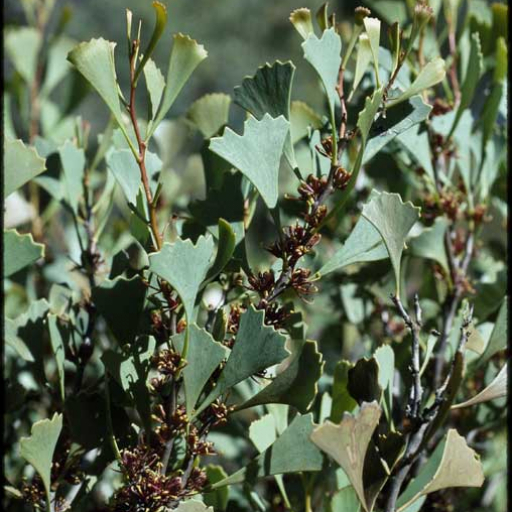
Known as the Wedge-leaved Hakea, this Western Australian native looks like it belongs in a botanical art gallery rather than a wild heathland. Its leaves aren't just foliage; they are rigid, ribbed fans that help the plant survive the intense sun and wind of the coastal "kwongan" shrublands. It is a slow-growing, structural masterpiece that provides a distinct prehistoric aesthetic to any drought-tolerant garden.
🔍 How to Identify
- 🍃 Fan-Shaped Foliage: The most striking feature is the "flabellate" leaves, which are broad, wedge-shaped, and feature several prominent parallel veins running to the outer edge.
- 🌼 Hidden Blooms: The flowers are relatively subtle, appearing as small, creamy-yellow or greenish-white clusters tucked away in the leaf axils (where the leaf meets the stem).
- 🪵 Woody Follicles: Like many of its relatives, it produces tough, woody seed pods that are ovoid in shape and designed to protect seeds from the harshest bushfires.
🏡 In Your Garden
- 🏜️ Drainage is Vital: Originating from sandy plains, this Hakea will not tolerate "wet feet." It requires extremely well-draining soil—think sandy or gravelly mixes—to prevent root rot.
- 🧪 The Phosphorus Trap: As a member of the Proteaceae family, it possesses "proteoid roots" designed to scavenge nutrients from poor soils. This means common garden fertilizers are often too strong; always use a dedicated low-phosphorus "Native" fertilizer.
- ✂️ Pruning Strategy: It has a somewhat sprawling, low-shrub habit. Light pruning after flowering can help maintain a tighter shape, but avoid cutting back into very old, leafless wood.
⚠️ Safety & Toxicity
- ✅ Non-Toxic: Hakea flabellifolia is generally considered safe and non-toxic for humans, dogs, and cats.
- 🌵 Physical Stiffness: While it lacks the lethal "needles" of some other Hakea species, the leaves are very rigid and leathery. They won't cause a rash, but they can be uncomfortably stiff if you accidentally brush against them.
✨ Fun Fact
The name flabellifolia is a direct Latin translation of its appearance: flabellum means "fan," and folium means "leaf." Because it keeps its woody seed pods for years, it is considered "serotinous," meaning it waits for the heat of a fire to release its seeds into the fresh ash bed.

Detailed Care Instructions

Some plants require more regular watering than others, which should be done every few days. It's critical to maintain the soil moist all of the time. The water requirements of the same plant placed in pots with varying sizes will differ. Because the water in the smaller pot evaporates faster than the water in the larger pot, it will require more watering. Regardless of pot size, the surface should constantly be maintained moist.








