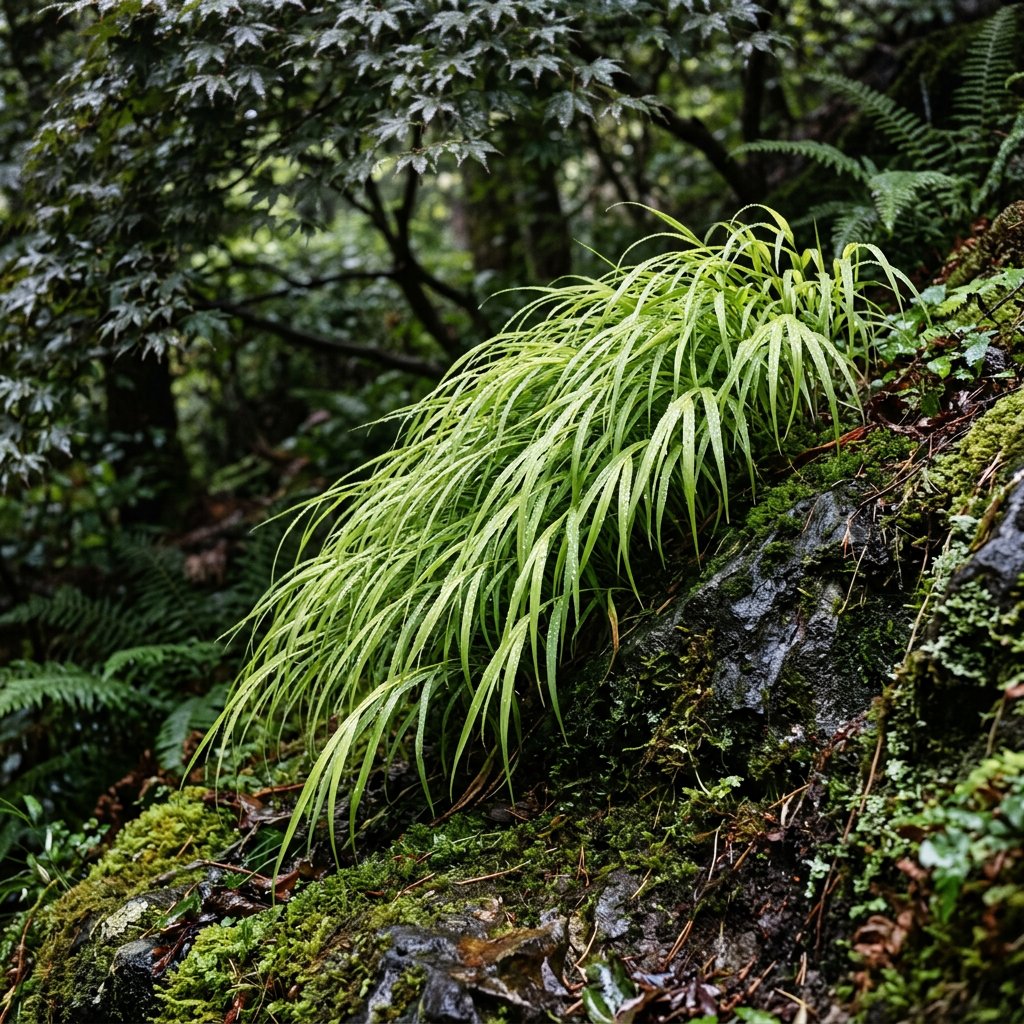
Plant Overview
Often called the "Waterfall Grass," Hakonechloa macra is a slow-growing perennial that brings a touch of Zen to any shaded corner. Native to the moist mountain slopes of Japan’s Hakone region, it creates a soft, flowing texture that mimics the movement of running water. It is a favorite among landscape designers for its ability to illuminate dark garden spots with its shimmering, bamboo-like foliage.
🔍 How to Identify
- 🌿 Growth Habit: It forms low, mounding clumps of graceful, arching stems that spill over edges like a fountain.
- 🍃 Leaf Texture: The foliage consists of narrow, papery blades that are remarkably soft to the touch, unlike the sharp edges of many other ornamental grasses.
- 🎨 Color Transitions: Depending on the variety, leaves can be solid green, striped with gold (Aureola), or lime-yellow. In autumn, the entire plant often shifts into a warm coppery-bronze or pinkish hue.
🏡 In Your Garden
- 🌑 The Shade Solution: While most grasses crave the sun, Hakonechloa is a true woodland inhabitant. It performs best in partial to full shade; in fact, too much direct afternoon sun will scorch the delicate tips of its leaves.
- 💧 Moisture Consistency: This plant hates "wet feet" but demands consistent moisture. It thrives in rich, organic soil that mimics a forest floor. If the soil dries out completely, the plant will quickly brown and shrivel.
- 🐌 Slow and Steady: It is a "clump-former" and spreads very slowly via rhizomes. This means it won't become invasive or take over your garden, but it does require several years of patience to reach its full, cascading glory.
⚠️ Safety & Toxicity
- ✅ Non-Toxic: Hakonechloa is generally considered safe and non-toxic to humans, cats, dogs, and horses.
- 👐 Gentle Foliage: Because the leaves lack the silica-based "saw-teeth" found on other grasses (like Pampas grass), it is safe to plant near walkways where skin contact is likely.
✨ Fun Fact
In its native Japan, this plant is known as Urahagusa, which literally means "leaves with their backsides facing up." This refers to a unique botanical quirk: the leaf blades twist at the base so that the anatomical "underside" of the leaf is what actually faces the sun!

Detailed Care Instructions
To grow Hakonechloa, also known as Japanese forest grass, follow these steps:
- Choose the right location: Hakonechloa prefers partial shade to full shade, although it can tolerate some morning or late afternoon sun. Ensure the location has well-draining soil and enough space for the plant to spread.
- Prepare the soil: Loosen the soil in the planting area to a depth of at least 8 inches. Mix in organic matter like compost or peat moss to improve drainage and provide nutrients.
- Planting: Dig a hole slightly larger than the root ball of the plant. Place the plant in the hole, ensuring it is at the same level it was in the container. Backfill with soil and firm it gently around the plant. Water thoroughly to settle the soil.
- Watering: Hakonechloa prefers consistent moisture but not standing water. Water deeply once or twice a week, depending on rainfall, to keep the soil evenly moist. Avoid overwatering, as it can lead to root rot.
- Mulching: Apply a layer of organic mulch around the plant, such as bark chips or shredded leaves. Mulching helps retain moisture, suppresses weeds, and insulates the roots.
- Fertilizing: Use a balanced slow-release fertilizer in spring to provide necessary nutrients. Follow the package instructions for application rates.
- Pruning: Hakonechloa typically doesn't require much pruning. However, you can trim back any damaged or dead leaves as needed. In early spring, you can cut back the entire plant to a few inches above the ground to rejuvenate it.
- Division: Every few years, you can divide the plant to maintain its health and vigor. Dig up the clump and carefully separate it into smaller sections. Replant the divided sections in prepared soil, ensuring they are at the same level they were before.
By following these steps, your Hakonechloa plant should grow well and provide a beautiful addition to your garden.

Place in a window with dappled sun or a spot in the middle of a room. Or directly in a window facing west or east.

To ensure proper watering for this plant, it is important to consider its growing conditions. This plant prefers moist, well-draining soil, and it does not tolerate drought well. When watering, it is important to avoid overwatering, which can lead to root rot and other problems.
One way to water this plant is to use a watering can or hose with a gentle spray nozzle. Water should be applied slowly and evenly over the soil, taking care to avoid getting the foliage wet. It is important to allow the soil to dry out slightly between waterings, but not to the point of wilting or drying out completely.
Another method is to use a drip irrigation system, which delivers water slowly and evenly to the soil around the plant. This can be a good option for larger plantings or for those who prefer a more hands-off approach to watering.
In addition to proper watering, it is important to fertilize this plant regularly and to ensure that it receives adequate sunlight and shade. With the right care, this plant can thrive and add beauty to any garden or landscape.
To provide optimal nourishment to your Hakonechloa plant, follow these fertilizing instructions:
- Choose a balanced, slow-release fertilizer specifically formulated for ornamental grasses.
- Before applying fertilizer, ensure that the soil is moist but not waterlogged.
- Measure the recommended amount of fertilizer according to the package instructions.
- Scatter the fertilizer evenly around the base of the plant, keeping it away from the plant's stems.
- Gently work the fertilizer into the top few inches of soil using a hand trowel or cultivator.
- Water the area thoroughly after fertilizing to allow the nutrients to penetrate the soil and reach the plant's roots.
- Adjust the fertilizing schedule based on the specific fertilizer's recommendations, usually once or twice a year.
- Avoid over-fertilizing, as excessive nutrients can lead to weak growth and increased susceptibility to diseases.
- Keep an eye on your plant's response to the fertilizer and adjust the amount or frequency if necessary.
- Regularly monitor the overall health of your Hakonechloa plant by checking for signs of nutrient deficiency or excess, such as yellowing leaves or stunted growth, and adjust the fertilizing routine accordingly.
Remember, it is always recommended to refer to the specific fertilizer product's instructions for tailored guidance on application rates and frequency.
The ideal soil for this particular plant should be one that has good drainage properties. It should be somewhat sandy in texture to allow for proper water absorption and air circulation. However, it should also contain some organic matter to provide essential nutrients for the plant's growth. The pH level of the soil should be slightly acidic to neutral, preferably in the range of 6.0 to 7.0. Avoid using heavy, clay-like soil as it may cause waterlogging and root rot. A well-draining potting soil mix containing perlite, peat moss, and Vermiculite is recommended for potted plants. In outdoor gardens, amending the soil with compost or organic matter can help improve soil structure and fertility, providing the right conditions for this plant to thrive.
Hakonechloa is a perennial grass that can be propagated through a few methods. Here is a detailed guide on how to propagate Hakonechloa plant:
- Division: One of the most common ways to propagate Hakonechloa is through division. In early spring or late fall, dig up the mature plant and carefully separate the clumps into smaller sections. Each section should have a good amount of roots attached. Replant these divisions in well-draining soil, ensuring that the crown is level with the soil surface. Water the newly planted divisions thoroughly and provide adequate sunlight.
- Rhizomes: Hakonechloa spreads through rhizomes, which are underground horizontal creeping stems. To propagate using rhizomes, carefully dig up the plant and locate the rhizomes. Cut away a section of rhizome with a sharp and sterile knife, making sure to include some roots. Plant the rhizome section in a prepared hole with well-draining soil. Water the area deeply and keep it consistently moist until new growth appears.
- Seed sowing: While less commonly practiced, Hakonechloa can also be propagated through seed sowing. Collect ripe seeds from the plant during late summer or early fall. Remove the seeds from the plant and allow them to dry for a couple of days. Fill a seed tray or small pots with a well-draining seed-starting mix. Place the seeds on the soil surface and gently press them down without covering them. Mist the seeds with water, cover the tray or pots with a plastic bag, and place them in a warm spot with indirect light. After a few weeks, the seeds should germinate. Keep the soil moist and provide adequate light as the seedlings grow. Once they reach a suitable size, transplant them into larger pots or directly into the garden.
- Stem cuttings: This method is less commonly used for Hakonechloa propagation but can be successful. In early spring or late fall, select healthy stems from the parent plant that are around 4-6 inches long. Using clean and sharp garden shears, make a clean cut just below a node – the area where a leaf or bud emerges. Remove any lower leaves, leaving only a few at the top. Dip the cut end into a rooting hormone to encourage root development. Plant the cutting in a pot or tray filled with a well-draining rooting mix. Keep the soil moist and place the cutting in a warm and humid environment. After a few weeks, roots should start to develop. Once the roots are well-established, transfer the cutting to a larger pot or into the garden.
Remember to provide proper care and maintenance to the propagated Hakonechloa plants, including regular watering, well-draining soil, and adequate sunlight based on the specific requirements of the variety.
Common pests of the hakone grass include Thrips. Make a habit of checking your hakone grass frequently for pests so that any infestations can be caught and managed early.







