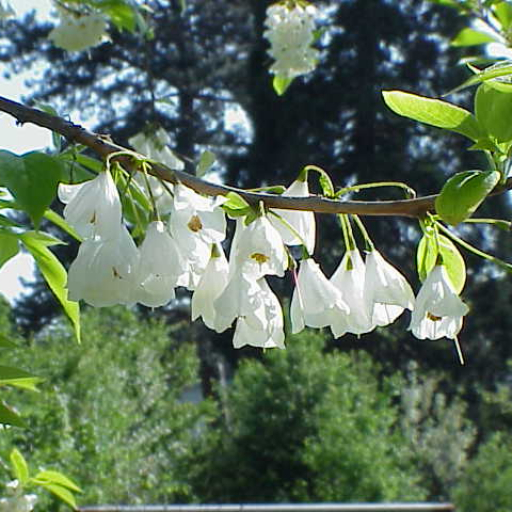
Plant Overview
Commonly known as the Carolina Silverbell or the "Snowdrop Tree," this elegant native of the southeastern United States is a true garden showstopper. In mid-spring, its branches are draped in thousands of delicate, pendulous white blossoms that look like they’ve been plucked straight from a forest fantasy. It is a refined understory tree that brings a sense of quiet, woodland grace to any shaded landscape.
🔍 How to Identify
- 🔔 The Blossoms: Clusters of white, four-petaled, bell-shaped flowers hang gracefully from the undersides of the branches before the leaves fully unfurl.
- 🍃 Foliage: The leaves are simple, ovate (egg-shaped), and finely serrated. They emerge a soft lime green and transition to a warm, golden yellow in the autumn.
- 🪵 The Bark: On mature specimens, the bark is particularly striking, featuring grayish-brown scales and shallow, orange-tinted furrows that provide beautiful winter texture.
🏡 In Your Garden
- 🌳 The Understory Lifestyle: In the wild, this tree thrives beneath the canopy of larger oaks and maples. In your garden, it prefers "dappled" sunlight; too much harsh afternoon sun can scorch its delicate leaves.
- 💧 Soil Nuances: The Silverbell is a bit of a "Goldilocks" when it comes to dirt. It demands rich, organic, and acidic soil. It is highly sensitive to lime or alkaline conditions, which can cause the leaves to turn yellow and sickly.
- 🌱 Root Sensitivity: This species is known for being a "homebody." It has a sensitive root system and deeply resents being moved once established, so it is vital to choose its permanent location carefully to avoid transplant shock.
⚠️ Safety & Toxicity
- 🌿 Pet & Child Friendly: The Carolina Silverbell is generally considered non-toxic to humans, dogs, and cats.
- 👐 General Caution: While it lacks the "poison" reputation of other spring-blooming plants, it is always a good practice to prevent pets from chewing on the woody stems or the dry fruits, as the fibrous material can cause minor digestive upset.
✨ Fun Fact
Unlike many flowering trees that produce soft berries, the Carolina Silverbell grows unique, dry, four-winged fruits. These "winged nutlets" turn brown and hang onto the branches long after the leaves have fallen, looking like tiny, dried lanterns throughout the winter!

Detailed Care Instructions
With the proper care and conditions, this tree can live for 100 years or more.
What trees are similar to Carolina silverbell?
Mountain silverbell looks very much like Carolina silverbell but tends to be much bigger, growing up to a height of 80 feet. It also has a conical habit, rather than the delicate spreading of the Carolina variety.
How fast does Carolina silverbell grow?
Given optimum conditions, your tree might grow up to 15 inches each year, perhaps a bit more.
| Color | White |
| Soil Ph | Acidic |
| Soil Type | Moist But Well-Drained |
| Bloom Time | Spring |
| Plant Type | Tree |
| Mature Size | 15–40 Ft. Tall, 10–30 Ft. Wide |
| Native Area | North America |
| Sun Exposure | Full Sun, Partial Shade |
| Hardiness Zones | 4-8 |
To grow Halesia carolina (Carolina silverbell) plants, follow these steps:
- Choose a suitable planting location: Select a spot in your garden that receives partial shade to full sun. Ensure the soil is well-draining and rich in organic matter.
- Prepare the soil: Dig a hole that is twice as wide and just as deep as the root ball. Loosen the soil at the bottom of the hole and mix in compost or well-rotted manure to improve drainage and nutrient content.
- Plant the tree: Gently remove the plant from its container and place it in the hole, ensuring that the top of the root ball is level with or slightly above the soil surface. Backfill the hole with soil, firming it gently to eliminate air pockets.
- Water thoroughly: After planting, give the tree a generous amount of water. Maintain soil moisture during the first year, ensuring the plant doesn't dry out but also isn't waterlogged.
- Mulch: Apply a layer of organic mulch, such as wood chips or shredded bark, around the base of the tree. This will help retain moisture, suppress weeds, and regulate soil temperature.
- Pruning: Minimal pruning is required for Halesia carolina plants. Only remove damaged or dead branches. Prune in late winter or early spring when the tree is dormant.
- Fertilize: Once the plant is established, you can fertilize it with a balanced slow-release fertilizer in early spring. Follow the manufacturer's instructions for dosage.
- Pest and disease control: Halesia carolina is generally resistant to pests and diseases. However, monitor the tree regularly for any signs of issues, such as aphids or leaf spot, and treat accordingly.
- General care: Ensure the tree is adequately watered, especially during hot and dry periods. Regularly monitor soil moisture levels and adjust watering accordingly. Apply a fresh layer of mulch annually to maintain moisture and protect the roots.
With proper care and growing conditions, your Halesia carolina plant should thrive and produce beautiful bell-shaped flowers in spring.

Place in a bright room that is sun drenched almost all day. Or directly in a south-facing window.

To properly water this plant, one must first assess the soil moisture level by sticking a finger into the soil about one inch deep. If the soil feels dry to the touch, it is time to water. When watering, one should be careful not to get the leaves or flowers wet as this can cause damage. It is best to water slowly and deeply, allowing the water to soak down to the root zone. It is important not to overwater, as this can lead to root rot. A good rule of thumb is to water when the soil feels dry to the touch, but before it becomes completely dry. It is also important to ensure good drainage, as standing water can also lead to root rot.
To fertilize this plant, use a balanced, slow-release fertilizer in early spring before new growth appears. Make sure to follow the instructions on the fertilizer packaging, as over-fertilization can harm the plant. Water the plant deeply after fertilizing to help distribute the nutrients in the soil. In subsequent years, repeat the process as necessary according to the plant's growth and the condition of the soil.
The ideal soil for this plant should be well-draining with a pH level of 5.0 to 6.5. It should be rich in nutrients and organic matter to help with the plant's growth and development. The soil should be moist but not waterlogged as this can lead to root rot. The plant prefers soil that is slightly acidic to neutral. It can tolerate some clay content in the soil, but the soil should be aerated and free of large clumps to promote healthy root growth. It is recommended to add compost or other organic matter to the soil to improve its structure and fertility.
To propagate this plant, first take semi-ripe cuttings from the stem of the mother plant during the summer months. Cuttings should be between 10-15cm long and make sure to remove any leaves from the bottom half of the cutting.
Then, dip the bottom of the cutting in rooting hormone powder to promote root growth. Plant the cutting in a pot filled with moist, well-draining soil, and cover the pot with a plastic bag to create a humid environment. Ensure that the soil is kept moist, but not waterlogged, and place the pot in bright and indirect light.
After 4-6 weeks, check for roots by gently tugging on the cutting. If there is resistance, roots have likely formed, and you can transplant the cutting to a larger pot or the garden. If not, re-cover the pot and wait another week or two.
Alternatively, this plant can also be propagated through layering. This involves bending a branch down to the ground and securing it with a U-shaped pin, then covering the section of stem with soil. After a few months, roots should form, and the new plant can be separated from the mother plant.








