Plant Overview
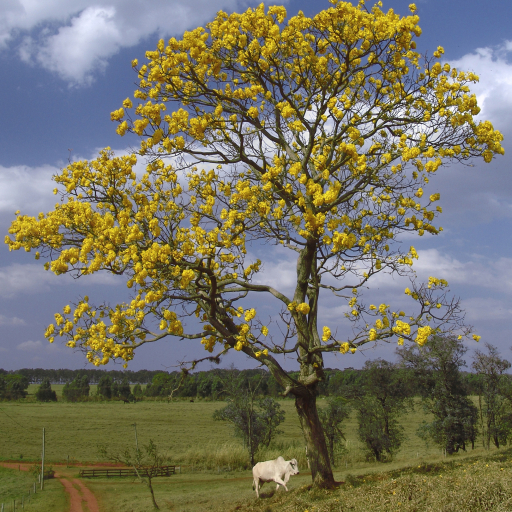
Known as the Golden Trumpet Tree or Ipê Amarelo, Handroanthus chrysotrichus is a show-stopping Brazilian native that paints the landscape in molten gold. It is famous for its dramatic "magic trick": the tree sheds every single leaf before bursting into a dense, cloud-like canopy of vibrant yellow blossoms. In its homeland, it is celebrated as a national symbol of resilience, signaling the transition of the seasons with an explosion of color.
🔍 How to Identify
- 🌼 Trumpet Blooms: Large, bell-shaped flowers in brilliant canary yellow, often featuring subtle reddish-brown nectar streaks inside the throat to guide pollinators.
- ✨ Golden Fuzz: The species name chrysotrichus literally means "golden hair," referring to the fine, rusty-colored velvet that covers the young buds, leaf stalks, and branch tips.
- 🍃 Hand-Shaped Leaves: When not in bloom, the tree produces "palmately compound" leaves, meaning five leaflets radiate out from a single point like the fingers on a hand.
🏡 In Your Garden
- ☀️ The Sun Requirement: This tree is a true sun-worshipper. To get that iconic "blanket of gold" look, it must be planted in a spot that receives full, unobstructed sunlight; shade will result in sparse flowering and weak limbs.
- 💧 Stress for Success: The most spectacular blooms occur after a distinct dry spell. It has evolved to use water stress as a trigger to drop leaves and put all its energy into reproduction (flowers).
- 🪵 Wind Protection: While it grows relatively quickly, the wood can be somewhat brittle. It is best to plant it in a location sheltered from high-velocity winds to prevent the branches from snapping during summer storms.
⚠️ Safety & Toxicity
- ✅ Safe Standing: The Golden Trumpet Tree is generally considered non-toxic to humans, dogs, and cats, making it a popular choice for suburban sidewalks and backyards.
- 🧤 Skin Sensitivity: While not poisonous, the "golden fuzz" on the new growth can be a mild mechanical irritant for people with very sensitive skin. Wearing gloves while pruning is a simple way to avoid any "itchy" reactions.
✨ Fun Fact
🇧🇷 A National Icon: The Ipê Amarelo is the national flower of Brazil. It is deeply embedded in South American culture, appearing in countless poems and songs as a metaphor for the "golden spirit" of the people.

Detailed Care Instructions
To grow Handroanthus chrysotrichus, also known as the golden trumpet tree or yellow poui, you can follow these steps:
- Climate: Handroanthus chrysotrichus thrives in a tropical or subtropical climate. It prefers warm temperatures above 60°F (15°C) and can withstand temperatures up to 100°F (38°C). It is not frost-tolerant, so if you live in a colder region, consider growing it in a greenhouse or as a container plant that can be brought indoors during winter.
- Soil: The golden trumpet tree prefers well-draining soil. Use a mix of fertile soil, compost, and sand to ensure good drainage. A slightly acidic to neutral soil pH (around 6.0 to 7.5) is ideal.
- Sunlight: These plants thrive in full sunlight. Choose a location in your garden that receives at least 6-8 hours of direct sunlight daily.
- Planting: Plant the Handroanthus chrysotrichus sapling in a hole that is two to three times the width of the root ball. Ensure the top of the root ball is level with or slightly above the soil surface. Backfill the hole with soil, pressing firmly around the base of the plant. Water thoroughly after planting.
- Watering: Golden trumpet trees prefer regular watering, especially during the first year after planting. Once established, these trees can tolerate mild drought conditions. Water the plant deeply once or twice weekly, allowing the soil to dry out slightly between waterings.
- Mulching: Apply a layer of organic mulch around the base of the tree to help retain moisture, suppress weeds, and regulate soil temperature. Avoid piling mulch against the trunk, as it can lead to rot.
- Fertilization: Handroanthus chrysotrichus benefits from regular feeding. Use a balanced fertilizer, such as a slow-release granular formula, during the growing season (spring and summer) according to the package instructions. Avoid fertilizing during the dormant period in winter.
- Pruning: Prune the tree in early spring to shape it, remove dead or damaged branches, and encourage bushier growth. Trim back any long, straggly growth to maintain a desired size and shape.
- Pests and diseases: Golden trumpet trees are generally hardy and not highly susceptible to pests or diseases. However, occasionally they may be affected by leaf spot diseases, scale insects, or mealybugs. Monitor the plant regularly to catch any issues early and treat accordingly.
- Propagation: Handroanthus chrysotrichus can be propagated from seeds or cuttings. Seeds can be sown directly in pots or growing trays filled with well-draining soil. Keep them warm and moist until germination. For cuttings, take 6 to 8-inch hardwood cuttings during late spring or early summer and place them in a rooting hormone before planting in a well-draining soil mix.

Place in a bright room that is sun drenched almost all day. Or directly in a south-facing window.

1. Determine the watering needs of the plant - Handroanthus Chrysotrichus has specific watering needs that require attention to detail. Understanding the watering needs of the plant is essential for its growth and survival.
2. Choose the right watering method - When watering Handroanthus Chrysotrichus, it is essential to select the right method. You may need to use a watering can or hose with a nozzle that allows for gentle spraying. Make sure that water does not splash on the foliage to avoid damaging it.
3. Check the soil moisture - Before watering, check the moisture level of the soil by poking your finger into the soil. If the soil feels dry an inch below the surface, it's time to water. If it's still moist, then hold off on watering.
4. Water deeply - When watering, it is crucial to provide enough water to the roots for proper development. This can be done by watering deeply, allowing the water to soak through the soil. You will need to avoid watering shallowly as it can lead to shallow root development.
5. Water at the right time - The best time to water Handroanthus Chrysotrichus is in the morning or late afternoon when it's cooler. Avoid watering during the midday when the sun is at its hottest. It can cause the water to evaporate before it reaches the roots.
6. Be consistent - Consistency in watering is key to the health of the plant. Water the plant regularly, depending on the environment and the moisture level of the soil. Avoid overwatering and underwatering as both can lead to plant problems.
7. Observe the plant - Finally, observe the plant to check if it needs additional watering. Signs of under-watering include wilting of the leaves, while over-watering can lead to root rot. If you notice any of these signs, adjust your watering schedule accordingly.
- Choose a fertilizer that is balanced in nutrients (N-P-K) such as a 10-10-10 or 20-20-20.
- Apply the fertilizer in early spring before new growth appears or in early fall after the plant has finished blooming.
- Follow the manufacturer’s instructions for the appropriate amount of fertilizer to use based on the size of your plant.
- Spread the fertilizer evenly around the base of the plant, being careful not to touch the stems or leaves.
- Water the fertilizer in thoroughly to help it reach the plant's roots.
- Repeat fertilization once a year, preferably in the same season as the original application.
- Be sure to monitor the plant for any signs of over-fertilization such as burnt leaves or stunted growth, and adjust your fertilizer application accordingly.
Handroanthus Chrysotrichus is a plant that prefers a well-draining soil that has a slightly acidic to neutral pH level. The soil should be rich in organic matter, such as composted leaves or peat moss, to provide adequate nutrition and moisture retention. It is also important to ensure that the soil is free of any toxic materials, such as heavy metals or pesticides, as this can affect the health of the plant. A soil mixture that is commonly used for this plant consists of equal parts of sand, perlite, and loam, with some added organic matter. The plant should also be watered regularly, but not over-watered as this can lead to root rot. Overall, the soil should support healthy root growth and provide the necessary nutrients for the plant to thrive.
To propagate this plant, begin by taking a stem cutting from a healthy and mature plant. Make the cut just below a node, and remove any leaves from the bottom of the stem. Dip the cut end in rooting hormone powder and plant it in a pot or tray filled with a well-draining soil mixture. Keep the soil consistently moist and place the cutting in a warm, bright location with indirect light. Mist the leaves regularly to increase humidity. After several weeks, new roots should begin to form, indicating successful propagation.








