Plant Overview
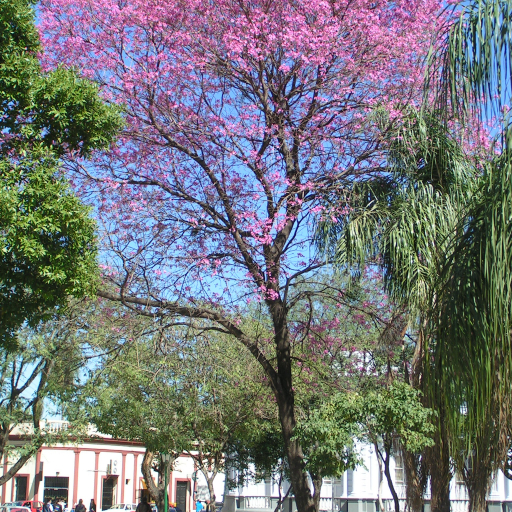
Often called the "Pink Trumpet Tree" or "Pink Lapacho," this spectacular neotropical beauty is famous for its breathtaking floral display that marks the end of the dry season. In many South American cultures, it is hailed as a "Tree of Life" due to its medicinal bark and its ability to transform a barren landscape into a cloud of vibrant magenta. It is the national tree of Paraguay and a favorite for urban designers looking to add a splash of royalty to city streets.
🔍 How to Identify
- 🌸 The Blooms: Large, trumpet-shaped flowers that grow in dense clusters. They are typically rose-pink or lavender with a golden-yellow throat that fades to white.
- 🍃 The Foliage: Leaves are "palmately compound," meaning they fan out like the fingers of a hand, usually with five to seven saw-toothed leaflets.
- 🌳 The Bark: A distinctive grayish-brown bark that becomes deeply furrowed and cork-like as the tree matures.
- 🎋 The Silhouette: It often drops its leaves entirely just before blooming, resulting in a stunning canopy of pure flowers without any green interference.
🏡 In Your Garden
- ☀️ Sun Seeker: This tree is a sun-worshiper. To get that iconic "explosion" of flowers, it needs to be placed in the brightest spot possible; shade will lead to leggy growth and few blooms.
- 💧 Establishment Phase: While very drought-tolerant once mature, young Pink Trumpet Trees have a deep taproot that sensitive to transplant shock. Once planted, it prefers to stay put for life.
- 🪴 Soil Nuance: It isn't picky about soil type but demands excellent drainage. It thrives in volcanic or sandy soils and will suffer from "wet feet" if kept in heavy, soggy clay.
⚠️ Safety & Toxicity
- ✅ General Safety: The Pink Trumpet Tree is considered non-toxic to touch and is generally safe for planting in yards with curious pets or children.
- ☕ Bark Ingestion: The inner bark (known as Pau d'Arco) is used in traditional medicine, but it contains potent compounds like lapachol. It should never be ingested as a "home remedy" without professional guidance, as high doses can cause nausea or interfere with blood clotting.
✨ Fun Fact
The wood of the Pink Lapacho is so incredibly dense and rich in tannins that it is naturally resistant to rot, insects, and even fire. It is often compared to "ironwood" and was historically used to make durable archery bows and railway ties.

Detailed Care Instructions
To grow Handroanthus impetiginosus, also known as the Pink Trumpet Tree or Purple Trumpet Tree, here are some steps to follow:
- Choose a suitable location: These trees prefer full sun, so select a spot in your garden or yard that receives at least 6-8 hours of direct sunlight daily.
- Soil preparation: The Pink Trumpet Tree can thrive in various soil types, but it prefers well-draining soil. Mix organic matter like compost or aged manure into the soil to improve its fertility and drainage.
- Planting: Dig a hole twice as wide and slightly deeper than the root ball of the plant. Place the tree, making sure the top of the root ball is level with or slightly above the soil surface. Backfill the hole with soil, gently firming it around the roots to eliminate any air pockets.
- Watering: After planting, ensure the tree receives sufficient water. Water deeply enough to saturate the root ball but avoid overwatering. Once established, Pink Trumpet Trees are highly drought-tolerant, but regular watering during dry spells can promote healthy growth.
- Mulching: Apply a layer of organic mulch around the base of the tree, leaving a gap around the trunk to prevent rot. Mulching helps retain moisture, regulate soil temperature, and suppress weed growth.
- Pruning: Prune any dead or damaged branches, as well as any that are crossing or rubbing against each other. Pruning should be done during late winter or early spring before new growth appears.
- Fertilizing: Pink Trumpet Trees are generally low-maintenance and don't require heavy fertilization. However, applying a balanced, slow-release fertilizer in spring can help promote blooming and growth. Follow the package instructions for recommended dosage.
- Protection from frost: These trees are susceptible to frost damage, so if you live in a region with cold winters, consider providing winter protection, such as covering the tree with a frost blanket or moving potted plants indoors during cold spells.
With proper care, your Handroanthus impetiginosus plant should grow well and reward you with beautiful pink or purple trumpet-shaped flowers.
To water this plant, you should first check the soil for moisture. Stick your finger about an inch into the soil and see if it feels damp or dry. If it feels dry, water the plant deeply until the water runs out of the drainage holes at the bottom of the pot. Avoid letting the soil become completely dry, but also be careful not to overwater as this can lead to root rot. Watering once a week is usually sufficient, but adjust your watering schedule based on the environment in which the plant is located. If the plant is in a sunny, warm spot it may need more frequent watering.
To fertilize this plant, use a balanced fertilizer with equal amounts of nitrogen, phosphorus, and potassium. Apply the fertilizer once a month during the growing season, which is typically in the spring and summer. Mix the fertilizer with water according to the instructions on the label and apply it to the soil around the base of the plant, avoiding contact with the leaves. Water the plant thoroughly after fertilizing. Avoid over-fertilizing as it can damage the plant.
The Handroanthus Impetiginosus plant prefers a well-draining soil that is slightly acidic with a pH of 5.5 to 6.5. It also prefers a soil that is rich in nutrients such as nitrogen, phosphorus, and potassium. A mixture of peat moss, perlite, and vermiculite can provide the plant with the necessary nutrients and drainage it needs to thrive. Additionally, the plant prefers soil that is consistently moist but not waterlogged, so make sure to water it regularly.
To propagate this plant, one can take stem cuttings approximately 6 inches long from the parent plant. The cuttings should be taken from healthy, mature stems. Remove the bottom leaves and dip the cut end into a rooting hormone powder. Plant the cutting into a well-draining soil mix in a small pot. Water the cutting thoroughly and place it in a warm, bright area with indirect sunlight. Ensure the soil stays moist and monitor the cutting for signs of new growth in the coming weeks. Once new growth is evident, the cutting can be gradually acclimated to more direct sunlight and eventually transplanted into a larger pot or into the ground.








