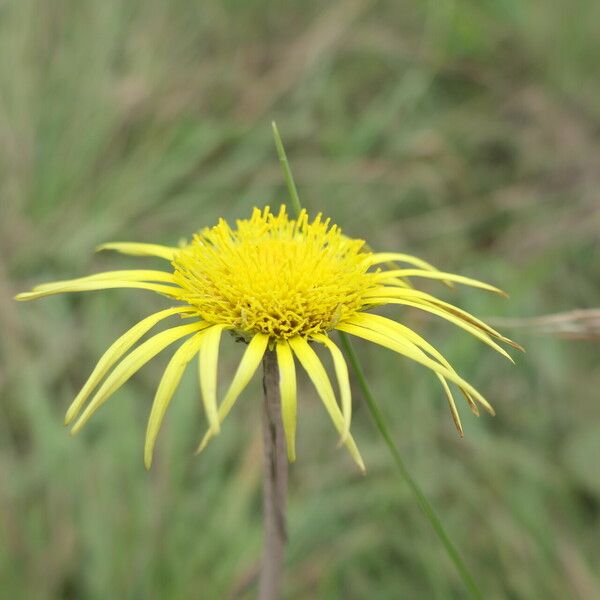
Plant Overview
Often mistaken for a miniature yellow Gerbera, Haplocarpha scaposa is a rugged South African native known for its sunny disposition. Commonly called the "False Gerbera" or "Marigold-leaf Haplocarpha," it hugs the ground closely, making it a favorite for rockeries and low-maintenance garden paths. Its ability to thrive in harsh, rocky terrains has earned it a reputation as one of nature’s most resilient "sun-worshippers."
🔍 How to Identify
- 🌻 The Flower: A bright, lemon-yellow daisy-like flower head that sits solo on a long, leafless stalk (the "scape").
- 🍃 Bi-colored Leaves: The broad, ovate leaves are a striking contrast; they are deep green on the upper surface but covered in a dense, silvery-white felt underneath.
- 🌱 Basal Rosette: The foliage grows in a flat, circular cluster right at the soil surface, forming a dense mat that helps suppress weeds.
🏡 In Your Garden
- ☀️ Sunlight Sensitivity: These flowers are "nyctinastic," meaning they respond to light levels. Expect them to open wide in full sun and tuck themselves away during cloudy weather or at dusk.
- 🪨 Drainage is Key: While it is incredibly hardy against drought, it "hates wet feet." It thrives best in well-draining, sandy, or rocky soils where water doesn't pool around its crown.
⚠️ Safety & Toxicity
- 🐾 General Safety: Haplocarpha scaposa is generally considered non-toxic to humans and common household pets. It does not carry the high alkaloid risks associated with some other members of the daisy family.
- 🧤 Skin Sensitivity: The soft, woolly hairs on the leaf undersides are usually harmless, though individuals with very sensitive skin might experience mild irritation after heavy handling.
✨ Fun Fact
The white, woolly coating on the bottom of the leaves acts like a biological mirror. It reflects intense sunlight and traps a layer of cool air against the leaf surface, allowing the plant to survive in blistering heat where other wildflowers would wither!

Detailed Care Instructions

Some plants require more regular watering than others, which should be done every few days. It's critical to maintain the soil moist all of the time. The water requirements of the same plant placed in pots with varying sizes will differ. Because the water in the smaller pot evaporates faster than the water in the larger pot, it will require more watering. Regardless of pot size, the surface should constantly be maintained moist.







