Plant Overview
Known affectionately as the Wild Plum, the Harpephyllum caffrum is a majestic South African evergreen that brings a lush, tropical architecture to any landscape. Despite its name, it is actually a relative of the Mango and Cashew families, prized for its glossy, "scimitar-shaped" foliage. In its native habitat, it is a cornerstone of the ecosystem, often serving as a bustling hub for birds, butterflies, and traditional healers.
🔍 How to Identify
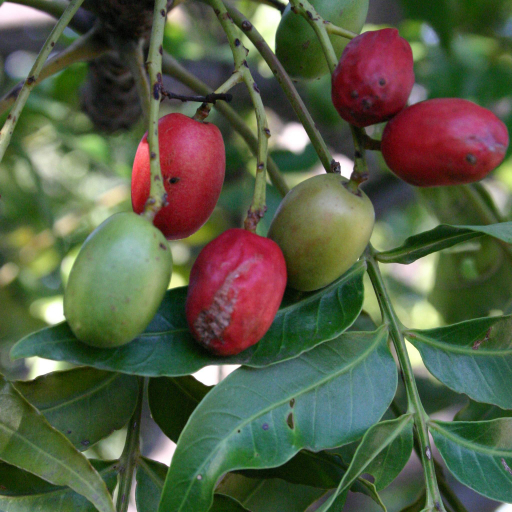
- 🍃 Sword-Shaped Leaflets: The leaves are "falcate" (sickle-shaped), curving elegantly toward the tip. They are arranged in a feather-like pattern with a deep, glossy green finish.
- 🍒 Ruby-Red Fruits: During late summer, female trees produce clusters of oblong, fleshy fruits that transition from green to a brilliant, glowing red when ripe.
- 🌳 Rugged Bark: As the tree matures, the bark becomes dark, rough, and deeply fissured, providing a beautiful textural contrast to the smooth, shiny leaves.
🏡 In Your Garden
- 🕊️ A Living Bird Feeder: If you plant this tree, prepare for visitors. The tart, vitamin-rich fruits are a favorite for Loeries, Barbets, and Mousebirds, making it the ultimate choice for a wildlife-friendly "safari" garden.
- 🛡️ Natural Architecture: Because of its thick, spreading canopy, it is one of the best choices for a fast-growing shade tree or a living windbreak. However, be mindful of its aggressive root system; keep it away from swimming pools or house foundations.
⚠️ Safety & Toxicity
- ✅ Safe & Edible: The fruit is entirely safe for human consumption, though it is famously tart. It is frequently harvested to make gourmet jams, jellies, and even a tart, pink-hued wine.
- 🐾 Pet Precautions: While the fruit pulp is non-toxic, the large internal seeds (pits) can be a choking hazard for dogs who might scavenge fallen fruit from the grass.
- 🧴 Traditional Use: In some cultures, the bark is used to make a wash for facial skin, though people with extremely sensitive skin should always patch-test any botanical extracts.
✨ Fun Fact
The genus name Harpephyllum literally translates from Greek as "Sickle Leaf." Beyond its beauty, the tree is a staple in South African folklore and traditional medicine, where its bark is often used to create a "royal" red dye.

Detailed Care Instructions
Here are some steps you can follow to grow a Harpephyllum caffrum plant:
- Obtain seeds or cuttings: You can acquire Harpephyllum caffrum plant seeds or cuttings from a reputable nursery or specialized plant supplier.
- Prepare the soil: Harpephyllum caffrum plants thrive in well-draining soil. Use a mixture of equal parts loam, sand, and organic compost to create a fertile soil mixture.
- Select an appropriate location: Find a spot in your garden or outdoor space that receives partial to full sunlight. Harpephyllum caffrum plants need about 4-6 hours of direct sunlight per day.
- Planting seeds or cuttings: If using seeds, sow them in the prepared soil and cover lightly with a thin layer of soil. If using cuttings, plant them directly into the soil at a depth of about 2 inches. Water thoroughly after planting.
- Watering: Harpephyllum caffrum plants enjoy regularly watered but not waterlogged soil. Water the plant deeply, allowing the soil to dry slightly between waterings.
- Fertilization: Apply a balanced organic fertilizer to the plant every four to six weeks during the growing season to promote healthy growth.
- Pruning: Regularly prune the plant to maintain its shape and remove any dead or diseased branches. This will also encourage new growth.
- Mulching: Apply a layer of organic mulch around the base of the plant to help retain moisture, suppress weed growth, and add nutrients to the soil.
- Protection from frost: Harpephyllum caffrum plants are sensitive to frost. If you live in a colder climate, consider protecting your plant during the winter months by covering it with a frost cloth or moving it indoors.
- Monitor for pests and diseases: Keep an eye out for common pests like aphids, scale insects, or caterpillars. Treat any infestations promptly using organic pest control methods.
By following these steps and providing proper care, you can successfully grow a Harpephyllum caffrum plant. Remember to research the specific needs of this plant species to ensure optimal growth.

Place in a bright room that is sun drenched almost all day. Or directly in a south-facing window.

To properly water this plant, it is important to consider its soil type and drainage capabilities. One should check the soil moisture level before watering and wait until the top inch of soil is dry to the touch. When watering, it is best to use room temperature water and water deeply, making sure that water is reaching the roots and not just staying on the surface. It is important to allow excess water to drain out of the pot or planting area to prevent waterlogging and root rot. During the growing season, this plant may require more frequent watering, while during dormancy it may require less. Overall, it is important to observe the plant's individual watering needs and adjust watering accordingly.
To fertilize the Harpephyllum Caffrum plant, it is recommended to use a balanced fertilizer with equal amounts of nitrogen, phosphorus, and potassium. Apply the fertilizer in early spring and again in mid-summer, following the instructions on the product label. Water the plant thoroughly before and after fertilizing to prevent root burn. Avoid over-fertilizing, as it can lead to leaf burn and other issues.
Harpephyllum caffrum is a type of tree that requires well-draining soil that is slightly acidic in nature. This plant prefers soil that is rich in nutrients and organic matter, such as compost or other organic materials. The soil should have a pH level between 6.0 and 7.0 to ensure optimal growth and development.
When planting Harpephyllum caffrum, it is important to prepare the soil by digging a hole that is slightly larger than the root ball of the plant. The soil should be loosened and mixed with compost to ensure that it is well-draining and nutrient-rich.
During the growing season, it is important to water the plant regularly to ensure that the soil remains moist but not waterlogged. However, care should be taken not to overwater the plant, as this can lead to root rot and other problems.
Overall, Harpephyllum caffrum is a relatively easy plant to grow and care for, as long as it is provided with the right soil conditions and proper watering. With the right care, this plant can thrive and provide beautiful, ornamental foliage year-round.
Propagation of this plant can be done through seeds or cuttings. For seeds, collect the ripe fruit and remove the pulp by washing it off with water. Dry the seeds and plant them in well-draining soil, keeping it moist until germination occurs.
For cuttings, take a stem cutting from a healthy plant and remove the bottom leaves. Dip the cut end in rooting hormone and plant it in a pot with well-draining soil. Keep the soil moist and place the pot in a warm, bright spot, avoiding direct sunlight. With time and proper care, roots will develop and a new plant will grow.








