Plant Overview
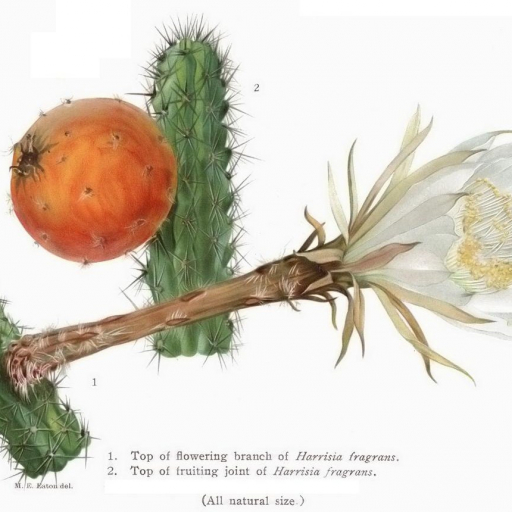
Known as the Fragrant Applecactus, Harrisia fragrans is one of Florida's rarest and most enchanting botanical treasures. Found naturally only along a narrow strip of the Atlantic coast, it is a lanky, night-blooming beauty that looks like a tangled sculpture until the sun goes down. In local lore, it is often called a "ghost of the hammocks" because its spectacular flowers appear only briefly under the moonlight.
🔍 How to Identify
- 🌵 The Stems: Slender, upright, or leaning green columns that can reach up to 15 feet tall. They typically feature 10 to 12 distinct longitudinal ribs that give the plant a fluted appearance.
- 🪡 The Spines: Each cluster contains 9 to 13 needle-like spines. They are generally grey with yellowish tips, creating a slightly "hazy" or bristly look along the ridges of the plant.
- 🌸 The Bloom: Massive, white, funnel-shaped flowers that can reach 8 inches in length. They open only at night, releasing a heavy, sweet citrus fragrance to attract nocturnal pollinators like hawkmoths.
🏡 In Your Garden
- 🏝️ Coastal Roots: This cactus evolved in Florida’s shell mounds and coastal hammocks, meaning it craves high-calcium (alkaline) soil. While it is salt-tolerant, it absolutely hates "wet feet"; perfectly draining sandy soil is vital to prevent root rot.
- 🧗 Growth Habit: Unlike many columnar cacti that stand perfectly straight, the Fragrant Applecactus is a "clamberer." In its natural habitat, it often leans on nearby trees for support. If grown in a landscape, it may eventually need a trellis or a sturdy fence to rest against.
⚠️ Safety & Toxicity
- ⚔️ Physical Hazard: The plant is not chemically toxic, but the spines are sharp, stiff, and brittle. They can easily puncture skin or paws, making this a "look but don't touch" specimen.
- 🐾 Pets & Kids: While the flesh and fruit are not known to be poisonous, the structural spines pose a significant physical risk to curious pets or wandering toddlers. It is best planted away from high-traffic walkways.
✨ Fun Fact
The "Apple" in its name comes from its stunning fruit—a bright red, fleshy, golf-ball-sized sphere that appears after the flowers fade. While these fruits are a favorite snack for local birds, the plant is a federally endangered species; it is illegal to harvest or disturb them in the wild!

Detailed Care Instructions

Place in a bright room that is sun drenched almost all day. Or directly in a south-facing window.








