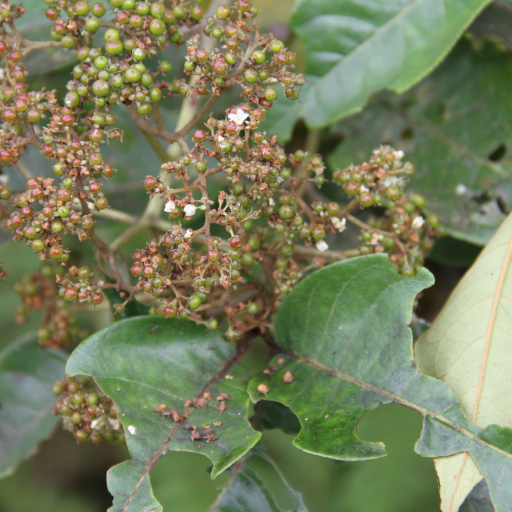
Plant Overview
Known as the "Orange-milk Tree" or "Dragon's Blood Tree," Harungana madagascariensis is a vibrant pioneer of the African and Madagascan landscape. It is most famous for its startling orange sap that "bleeds" whenever the bark or leaves are wounded, a trait that has cemented its place in local folklore and traditional medicine. This resilient tree acts as a forest protector, often being the first species to reclaim land after a fire or clearing.
🔍 How to Identify
- 🍃 The Leaves: Large, elliptical, and arranged in opposite pairs. When young, the undersides are covered in a beautiful, rusty-brown fuzz that glows in the sunlight.
- 🩸 The "Blood" Sap: The most iconic feature; snapping a leaf or twig reveals a vivid, thick orange-to-yellow latex that stains skin and fabric almost instantly.
- 🌼 The Flowers: Small, creamy-white, and densely packed into flat-topped clusters. They produce a heavy, sweet scent that can perfume an entire garden corner.
🏡 In Your Garden
- 🌳 Pioneer Resilience: Because this is a "pioneer species," it is incredibly tough. It thrives in full sun and is excellent for stabilizing soil in areas that have been recently disturbed or eroded.
- 💧 Humidity Lover: It prefers a tropical "sauna" environment. While it can adapt to various soils, it performs best when kept consistently moist, mimicking its natural habitat near riverbanks and rainforest edges.
⚠️ Safety & Toxicity
- 🚫 Skin Irritant: The bright orange sap contains powerful phytochemicals. While used medicinally by experts, it can cause contact dermatitis or "staining" irritation on sensitive skin.
- 🐾 Keep Pets Away: If ingested, the sap and leaves can cause stomach upset in cats and dogs. It is best placed in a spot where curious paws can't reach the foliage.
✨ Fun Fact
🎨 Nature’s Paint: The sap of the Harungana is so pigment-rich that it has been used for centuries as a natural dye for traditional African textiles. In some regions, the "dragon's blood" is even used as a protective cosmetic skin paint for rituals!

Detailed Care Instructions
To grow Harungana madagascariensis, also known as the Madagascar Jatropha or Dragon's Blood Tree, follow these steps:
- Obtain the seeds: Start by getting seeds from a reputable nursery or online store. Make sure the seeds are fresh and viable.
- Choose a suitable location: Harungana madagascariensis prefers a sunny location with well-draining soil. It grows well in tropical and sub-tropical climates, but it can also be grown in a greenhouse or as a houseplant in colder regions.
- Prepare the planting area: Clear the planting area of any weeds, grass, or debris. Loosen the soil to a depth of 6-8 inches (15-20 cm) using a garden fork or tiller. If the soil is heavy clay, amend it with organic matter, such as compost or well-rotted manure, to improve drainage.
- Sow the seeds: Plant the seeds about ½ to 1 inch (1-2.5 cm) deep in the prepared soil. Space the seeds at least 2-3 feet (60-90 cm) apart as these trees can grow up to 30 feet (9 meters) tall.
- Water the seeds: Water the planting area thoroughly after sowing the seeds. Keep the soil evenly moist but not waterlogged during the germination period.
- Provide regular watering: Once the seeds germinate and the seedlings emerge, water them regularly, especially during dry spells. However, be cautious not to overwater as excessive moisture can cause root rot.
- Mulch the soil: Apply a layer of organic mulch around the base of the seedlings to help conserve moisture, suppress weed growth, and regulate soil temperature.
- Prune and shape the tree: As the tree grows, you may need to prune it to maintain its shape or remove any dead or damaged branches. Pruning can be done in late winter or early spring.
- Protect from frost: If you're growing Harungana madagascariensis in a region with occasional frosts, protect the trees by covering them with frost blankets or bringing potted plants indoors during cold spells.
- Fertilize sparingly: Harungana madagascariensis doesn't require heavy fertilization. You can fertilize it once a year in early spring with a balanced slow-release fertilizer, following the manufacturer's instructions.
- Monitor for pests and diseases: Keep an eye out for common pests, including scale insects and mealybugs. Treat any infestations immediately with appropriate insecticides or by removing the pests manually. Also, watch for signs of diseases like root rot and treat them promptly if detected.
By following these steps, you can successfully grow Harungana madagascariensis, providing your garden with a unique and beautiful tree species.

To water this plant, observe the soil moisture level and water it when the top inch of soil is dry to the touch. Deep watering is preferred over frequent shallow watering. Use a watering can or hose to water directly at the base of the plant, avoiding getting the foliage wet. Avoid overwatering, which can lead to root rot. Make sure the pot or soil has proper drainage to allow excess water to drain out.
To fertilize this plant, use a slow-release fertilizer or organic compost once per year in the spring or early summer. Avoid over-fertilizing as it can cause the plant to grow too quickly and become weak. Water the plant thoroughly after fertilizing to help the nutrients reach the roots. Additionally, it is recommended to mulch around the base of the plant to help retain moisture and nutrients in the soil.
The soil recommended for planting Harungana Madagascariensis should be well-draining with a pH range of 6 to 7.5. The soil should have a good balance of organic matter and minerals, such as nitrogen, phosphorus, and potassium. The plant prefers well-aerated soil with good water retention, but not waterlogging. It is recommended to mix compost or organic matter with the soil to improve its structure and nutrient content. The plant thrives in soils with good fertility that are not saline, alkaline, or acidic. It is important to avoid using soils that are contaminated with heavy metals or other harmful substances.
To propagate this plant, you will need to first collect mature seeds from the parent plant. Once you have the seeds, soak them in water for 24 hours to soften the seed coat. After soaking, plant the seeds in a well-draining soil mix in a pot or tray. Cover the seeds with a thin layer of soil and keep the soil moist by misting it with water regularly.
Place the pot or tray in a warm, bright location but avoid direct sunlight. The seeds should germinate within a week or two. Once the seedlings have grown to about 2-3 inches tall, you can transplant them into individual pots or into the ground if you live in a warm climate.
To ensure that the Harungana Madagascariensis plant thrives, provide it with plenty of sunlight and water, and fertilize it with a balanced fertilizer every 2-3 weeks during the growing season. With proper care and attention, your Harungana Madagascariensis plant will grow into a healthy and beautiful plant.








